 Back
Operant Conditioning and Learning: Key Concepts and Applications
Study Guide - Smart Notes
 Tailored notes based on your materials, expanded with key definitions, examples, and context.
Operant Conditioning
Terminology and Key Concepts
Operant conditioning is a form of learning in which behavior is shaped by its consequences. The main elements include reinforcement and punishment, which can be positive or negative.
Reinforcer: An outcome that strengthens the probability of a response.
Positive Reinforcement: Giving a stimulus to increase behavior.
Negative Reinforcement: Removing a stimulus to increase behavior.
Punishment: Any outcome that weakens the probability of a response.
Positive Punishment: Presenting a stimulus to decrease behavior.
Negative Punishment: Removing a stimulus to decrease behavior.
Disciplinary actions: Only considered punishment if they decrease the likelihood of the behavior recurring.
Distinguishing Reinforcement from Punishment
The following table summarizes the differences between reinforcement and punishment:
Procedure | Effect on Behaviour | Typical Example |
|---|---|---|
Positive Reinforcement | Increases target behaviour | Giving a gold star on homework, resulting in more studying |
Negative Reinforcement | Increases target behaviour | Static on phone subsides when standing in a specific spot, causing repetition of the behavior |
Positive Punishment | Decreases target behaviour | Scolding a dog, reducing shoe chewing |
Negative Punishment | Decreases target behaviour | Confiscating a toy, stopping tantrums |
Effectiveness of Punishment
Punishment is generally less effective than reinforcement and has several disadvantages:
Tells a person what not to do, but not what to do
Creates anxiety
Encourages subversive behavior
May model aggressive behavior
Operant Conditioning Terminology
Discriminative Stimulus: Signals the presence of reinforcement.
Acquisition: Initial learning of the behavior.
Extinction: Reduction of behavior when reinforcement is removed.
Spontaneous Recovery: Reappearance of a behavior after extinction.
Stimulus Generalization: Responding similarly to similar stimuli.
Stimulus Discrimination: Responding only to specific stimuli.
Schedules of Reinforcement
Types of Schedules
Schedules of reinforcement refer to the pattern of delivering reinforcers. They influence how quickly and strongly behaviors are learned and maintained.
Continuous Reinforcement: Every response is rewarded.
Partial Reinforcement: Only some responses are rewarded; more resistant to extinction.
Specific Schedules
Fixed Ratio: Reinforcement after a specific number of responses.
Variable Ratio: Reinforcement after an average number of responses.
Fixed Interval: Reinforcement after a specific amount of time.
Variable Interval: Reinforcement after an average amount of time.
Applications of Operant Conditioning
Animal Training and Clinical Settings
Shaping: Reinforcing successive approximations toward a desired behavior.
Chaining: Linking behaviors together in a sequence.
Premack Principle: Using a more frequent behavior to reinforce a less frequent one.
Token Economies: Using tokens as secondary reinforcers in clinical settings.
Primary Reinforcers: Naturally reinforcing (e.g., food).
Secondary Reinforcers: Reinforcing through association (e.g., tokens).
Combining Classical and Operant Conditioning
Two-Process Theory of Anxiety
Anxiety can begin with classical conditioning and be maintained by operant conditioning, specifically negative reinforcement.
Example: Being bitten by a dog (UCS) leads to fear (CR) of dogs (CS). Avoiding dogs reduces anxiety (negative reinforcement), maintaining the fear.
Skinner and Radical Behaviourism
Role of Cognition in Learning
Early behaviorists, such as Skinner, argued that thinking and emotions are covert behaviors. Today, most psychologists recognize the role of cognition in learning.
Latent Learning
Definition and Evidence
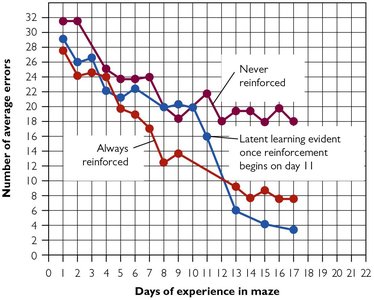
Latent learning is learning that is not immediately observable. It suggests that reinforcement is not necessary for learning to occur.
Competence vs. Performance: Learning may occur without being demonstrated until reinforcement is provided.
Tolman & Honzik's Studies: Rats learned a maze without reinforcement and only showed their learning when reinforcement was introduced.
Cognitive Maps
Rats developed cognitive maps of the maze, used only when a reinforcer was present. This challenges radical behaviorism and supports the role of thinking in learning.
Observational Learning
Learning by Watching Others
Observational learning occurs when individuals learn by watching others, without direct experience or trial and error.
Bandura's Research: Demonstrated that observing aggression can lead to aggressive behavior.
Media Violence and Real-World Violence
Impact of Media Violence
Research suggests that media violence can impact real-world aggression, but it is only one of many contributing factors.
Mirror Neurons
Role in Learning and Empathy
Mirror neurons are activated when an animal observes or performs an action. They may play a role in observational learning and empathy.

Insight Learning
Sudden Understanding
Insight learning involves sudden realization or "Aha!" moments, as seen in Koehler's chimpanzee experiments. It suggests that humans and some animals can gain insight without trial-and-error learning.
Biological Influences on Learning
Conditioned Taste Aversion
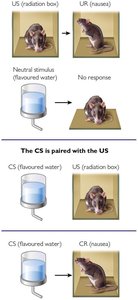
Conditioned taste aversion is a unique form of learning where an association is formed between a specific taste and illness, often after only one trial and with long delays.
Shows little generalization and contradicts the principle of equipotentiality.
Preparedness and Phobias
Preparedness refers to the evolutionary predisposition to develop certain phobias more easily (e.g., snakes and spiders vs. cars and guns). This also contradicts equipotentiality and may lead to illusory correlations.
Instinctive Drift
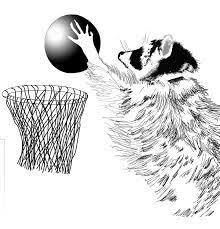
Instinctive drift is the tendency for animals to revert to innate behaviors after repeated reinforcement, placing biological limits on what can be learned.

Learning Fads
Effectiveness of Learning Techniques
Many techniques claim to improve learning, such as sleep-assisted learning, accelerated learning, and discovery learning. However, none are more effective than traditional learning methods.
Direct instruction is almost always better.
Learning Styles
The concept of learning styles refers to an individual's preferred method of acquiring information. Research shows that tailoring teaching to learning styles does not improve learning outcomes.
