 Back
Back13. Pain and the Brain: Biological, Psychological, and Social Aspects
Study Guide - Smart Notes
 Tailored notes based on your materials, expanded with key definitions, examples, and context.
Pain and the Brain
Introduction
Pain is a complex experience that involves biological, psychological, and social processes. Understanding pain requires examining how it is sensed, perceived, and modulated at multiple levels within the nervous system and the mind. This guide explores the functions of pain, the pathways involved in sensing and perceiving pain, and the influence of psychological and social factors.
Functions of Pain
Protective and Adaptive Roles
Warning Signal: Pain alerts the body to potential or actual tissue damage, prompting protective behaviors.
Learning: Painful experiences teach avoidance of harmful situations, supporting survival.
Healing Facilitation: Pain encourages rest and care for injured areas, aiding recovery.
Social Communication: Expressing pain can elicit help and support from others.
Sensing and Perceiving Pain
Biological Level
The biological basis of pain involves specialized neurons and pathways that transmit pain signals from the site of injury to the brain.
Nociceptors: Specialized sensory neurons that detect noxious (harmful) stimuli.
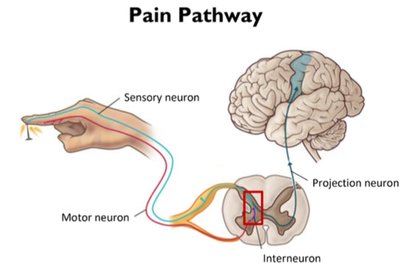
Pain Pathway: Pain signals travel from nociceptors through sensory neurons to the spinal cord, then ascend to the brain for processing.
Spinal Cord Processing: The spinal cord acts as a relay and processing center, integrating and modulating pain signals before they reach the brain.
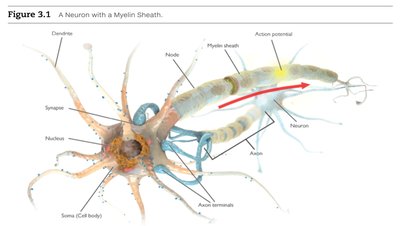
Neural Transmission: Myelinated and unmyelinated fibers carry pain signals at different speeds; myelin sheaths increase conduction velocity.
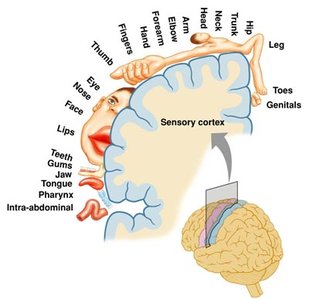
Somatosensory Cortex: The brain region responsible for processing sensory information, including pain, with a map-like representation of the body (homunculus).
Multidimensional Pain Perception
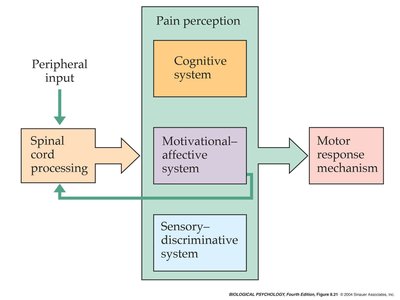
Pain perception involves several interacting systems within the brain:
Sensory-Discriminative System: Identifies the location, intensity, and quality of pain.
Motivational-Affective System: Produces the unpleasant emotional response to pain.
Cognitive System: Involves attention, expectations, and interpretation of pain.
Motor Response Mechanism: Initiates protective or withdrawal responses.
Psychological Level
Top-Down Processing and Pain Modulation
Pain is not solely determined by sensory input; psychological factors such as attention, expectation, and prior experience can modulate pain perception. This is known as top-down processing.
Placebo Effect: Belief in pain relief can activate endogenous pain control systems, reducing perceived pain even without active medication.
Study Example: Levine, Gordon & Fields (1978) investigated the placebo effect in dental surgery patients using three conditions: pain alone (control), pain plus placebo, and pain plus placebo plus naloxone (an opioid antagonist).
Results: Placebo reduced pain compared to control; naloxone blocked the placebo effect, indicating endogenous opioids are involved in placebo analgesia.
Key Terms:
Top-Down Processing: Influence of higher cognitive processes (e.g., expectations, beliefs) on perception.
Endogenous Opioids: Naturally occurring chemicals in the brain that reduce pain.
Social Level
Social Influences on Pain
Social context and interactions can shape pain experiences. Observing others in pain, cultural attitudes, and social support all influence how pain is perceived and expressed.
Social Support: Presence of supportive individuals can reduce pain perception and distress.
Cultural Factors: Cultural norms affect pain expression and coping strategies.
Integration: Is Pain All in Your Head?
Emergentist vs. Reductionist Views
Pain is best understood as an emergent phenomenon resulting from interactions among biological, psychological, and social factors. Lower-level processes (e.g., neural activity) influence higher-level experiences (e.g., emotions), and vice versa. This supports an emergentist rather than a strictly reductionist view of the mind.
Emergentism: Complex experiences arise from interactions among simpler processes.
Reductionism: Attempts to explain complex phenomena solely in terms of their simplest components.
Special Topics
Phantom Limb Pain
Phantom limb pain is the sensation of pain in a limb that has been amputated. This phenomenon demonstrates that pain is not solely dependent on sensory input from the body, but also on brain processes and representations.
Mechanisms: Reorganization of the somatosensory cortex and persistent neural activity can produce pain sensations in the absence of physical input.
Summary Table: Levels of Pain Processing
Level | Main Features | Examples |
|---|---|---|
Biological | Nociceptors, spinal cord, brain pathways, somatosensory cortex | Withdrawal reflex, pain localization |
Psychological | Attention, expectation, placebo effect, top-down modulation | Reduced pain with distraction, placebo analgesia |
Social | Social support, cultural norms, observational learning | Less pain with supportive friends, cultural differences in pain expression |
