 Back
Personality Psychology: Foundations and Theories
Study Guide - Smart Notes
 Tailored notes based on your materials, expanded with key definitions, examples, and context.
Personality Psychology
Introduction to Personality Psychology
Personality psychology is a major branch of psychology that seeks to understand the enduring characteristics and patterns that make each individual unique. It explores how people differ in their thoughts, feelings, and behaviors, and how these differences influence their interactions with the world.
Definition: Personality refers to the distinctive and relatively stable patterns of behavior, thoughts, and emotions that characterize an individual's adaptation to life situations.
Importance: Understanding personality helps explain individual differences and predict behavior across various contexts.
Applications: Personality assessment is used in clinical, educational, and occupational settings.

Definitions of Personality
Multiple definitions of personality exist, reflecting the complexity and diversity of perspectives in psychology. The following are key definitions from leading theorists and organizations:
Walter Mischel (1976): Personality is the distinctive patterns of behavior (including thoughts and emotions) that characterize each individual's adaptations to the situations of his or her life.
American Psychological Association (APA): Personality refers to individual differences in characteristic patterns of thinking, feeling, and behaving.
Larsen and Buss (2022): Personality is the set of psychological traits and mechanisms within the individual that are organized and relatively enduring and that influence interactions with, and adaptations to, the intrapsychic, physical, and social environments.
Schultz and Schultz (2017): Personality is the unique, relatively enduring internal and external aspects of a person's character that influence behavior in different situations.
Cervone and Pervin (2022): Personality is the psychological qualities that contribute to an individual's enduring and distinctive patterns of feeling, thinking, and behaving.
Key Terms: behavior, thoughts, feelings, individual, enduring, environments, patterns, intrapsychic.

Personality: Individuality and Universality
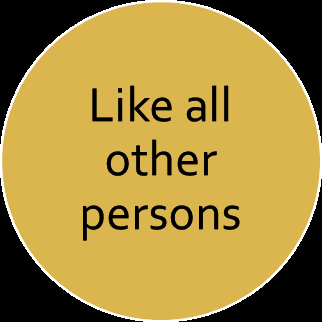
Every Person is Like Some, Like None, and Like All Other Persons
Personality psychology recognizes that each person is unique, yet shares similarities with others, and also possesses universal human traits. This concept is often illustrated as:
Like all other persons: Universal human characteristics.
Like some other persons: Shared traits within groups or cultures.
Like no other persons: Unique individual differences.

Theories of Personality
Overview of Personality Theories
The study of personality is guided by various theoretical approaches, each offering unique perspectives on how personality develops and is expressed. Understanding these theories is essential for grasping the complexity of human behavior.
Psychoanalytic Approach (Freud): Focuses on unconscious motives and childhood experiences.
Neopsychoanalytic Approach (Jung): Emphasizes collective unconscious and archetypes.
Life-span Approach (Erikson): Considers psychosocial development across the lifespan.
Behaviourist Approach (Skinner): Stresses the role of environmental reinforcement and learning.
Trait Approach (Cattell): Identifies stable traits that define personality.
Humanistic Approach (Maslow and Rogers): Highlights self-actualization and personal growth.
Cognitive Approach (Kelly): Focuses on personal constructs and cognitive processes.
Social Learning Approach (Bandura): Examines observational learning and social influences.
Synoptic Theory of the Modern African Self (Nwoye): Integrates African cultural perspectives into personality theory.


Example: The parable of the blind men and the elephant illustrates how different theories may capture only part of the truth about personality.
Factors Influencing Personality Development
Personality is shaped by a combination of genetic and environmental factors. These influences interact to produce the unique patterns observed in individuals.
Genetic Influence: Heredity and genetic mechanisms contribute to individual differences.
Gene-Environment Interactions: Genes and environment work together to shape personality.
Environmental Factors: Family, culture, experiences, education, and peers all play significant roles.

Example: Cultural context can influence the expression and development of personality traits.
Assessment and Measurement of Personality
Personality Assessment
Personality assessment involves the use of standardized tools and techniques to measure individual differences in personality traits and characteristics. These assessments are used in research, clinical practice, and organizational settings.
Methods: Self-report questionnaires, projective tests, behavioral observations.
Applications: Diagnosis, selection, counseling, and personal development.
Example: The Big Five Personality Traits model is widely used to assess personality dimensions.
Summary Table: Major Theories of Personality
Theory | Main Proponent | Key Features |
|---|---|---|
Psychoanalytic | Sigmund Freud | Unconscious motives, childhood experiences |
Neopsychoanalytic | Carl Jung | Collective unconscious, archetypes |
Life-span | Erik Erikson | Psychosocial development across lifespan |
Behaviourist | B.F. Skinner | Environmental reinforcement, learning |
Trait | Raymond Cattell | Stable traits, factor analysis |
Humanistic | Maslow, Rogers | Self-actualization, personal growth |
Cognitive | George Kelly | Personal constructs, cognitive processes |
Social Learning | Albert Bandura | Observational learning, social influences |
Synoptic African Self | Nwoye | African cultural perspectives |
Next Steps in Personality Psychology
Psychoanalytic Approach (Freud)
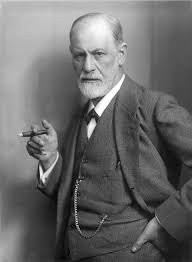
The next lecture will focus on the psychoanalytic approach, pioneered by Sigmund Freud. This theory emphasizes the role of unconscious processes and early childhood experiences in shaping personality.
Recommended Reading: Pages 116 to 119 in the assigned textbook.
Additional info: The notes have been expanded to provide academic context and examples for clarity and completeness. Images included are only those directly relevant to the explanation of each paragraph.
