 Back
BackPersonality Theories and Trait Perspectives in Psychology
Study Guide - Smart Notes
 Tailored notes based on your materials, expanded with key definitions, examples, and context.
Part 3: Other Personality Theories
Carl Jung and Analytical Psychology
Carl Jung expanded on Freud's ideas by introducing new concepts about the unconscious mind and personality development. His theory, known as analytical psychology, emphasizes the influence of both personal and collective unconscious elements.
Personal Unconscious: A vast repository of experiences and patterns absorbed throughout an individual's life.
Collective Unconscious: A non-personal realm containing the collective memories and mythologies of humankind, inherited from our ancestors.
Archetypes: Universal symbolic images (e.g., the Hero, the Earth Mother) that appear in myths, art, stories, and dreams, representing the collective unconscious.
Jungian Archetypes as Aspects of the Self: Examples include the Shadow (the bestial side of human nature), the Anima (feminine archetype in men), and the Animus (masculine archetype in women).
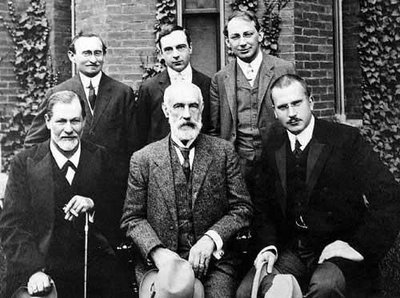

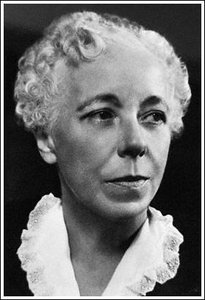
Karen Horney: Social and Cultural Influences
Karen Horney challenged Freud's emphasis on childhood sexuality, focusing instead on the impact of present social and cultural factors on personality.
Emphasized the importance of parent-child relationships over childhood sexuality.
Womb Envy: The idea that men compensate for their inability to give birth by focusing on work and devaluing women.
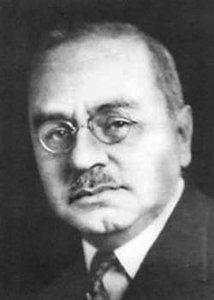
Alfred Adler: Inferiority and Striving for Superiority
Alfred Adler introduced the concept of the inferiority complex, suggesting that feelings of inferiority from childhood drive people to strive for superiority and self-improvement.
Inferiority Complex: Stemming from childhood helplessness and powerlessness.
Mental health is seen as a positive state, not just the absence of impairments.
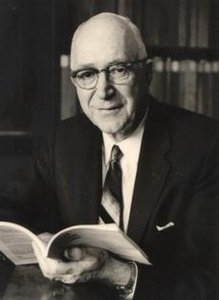
Carl Rogers and Humanistic Psychology
Carl Rogers' humanistic approach emphasizes free will, personal growth, and the drive for self-actualization.
Person-centred Perspective: People are basically good and will develop fully in the right environment.
Self-actualization: The drive to grow and fulfill one’s potential.
Part 4: The Trait Perspective
Idiographic vs. Nomothetic Approaches
Trait theories focus on describing and measuring individual differences in personality traits.
Idiographic Approach: Detailed descriptions of a specific person’s unique personality characteristics (e.g., criminal profiling).
Nomothetic Approach: Examining personality in large groups to make generalizations about personality structure (e.g., links between traits and behaviors).
Personality Traits
A personality trait is a habitual pattern of thinking, feeling, and behaving that helps predict behavior across situations.
Organizing Traits: Gordon Allport
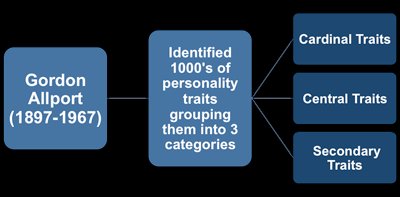
Gordon Allport identified thousands of words describing personality and grouped them into three categories:
Category | Description |
|---|---|
Cardinal Traits | Dominant traits that shape a person's behavior |
Central Traits | General characteristics found to some degree in every person |
Secondary Traits | Traits that appear only in certain situations |
Factor Analysis and Personality: Raymond Cattell and Hans Eysenck
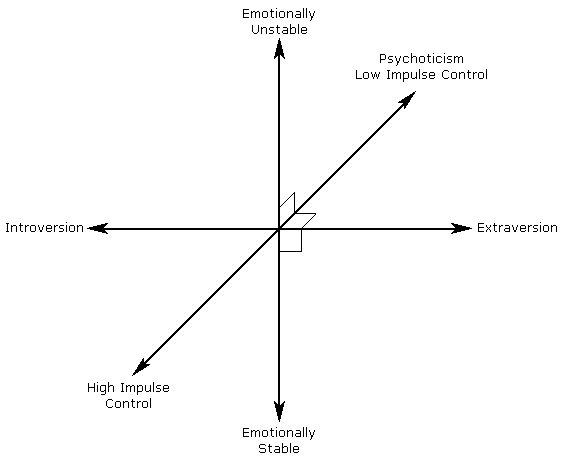
Factor analysis is a statistical method used to identify clusters of related traits. Raymond Cattell used this method to identify 16 personality dimensions. Hans Eysenck later developed the PEN theory:
Psychoticism: Aggression, vulnerability to psychoses
Extraversion: Outgoingness
Neuroticism: Negative emotionality
The Five Factor Model (Big Five)
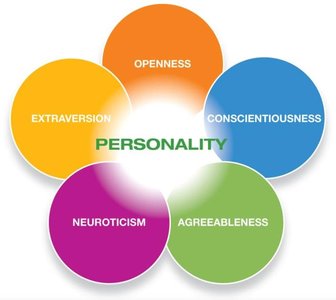
The Five Factor Model (FFM) describes personality using five major dimensions, often remembered by the acronym OCEAN:
Openness (to experience)
Conscientiousness
Extraversion
Agreeableness
Neuroticism
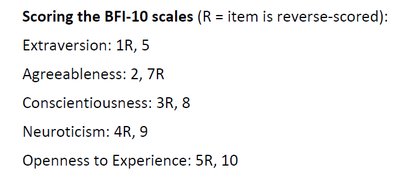
Big Five Example Items and Scoring
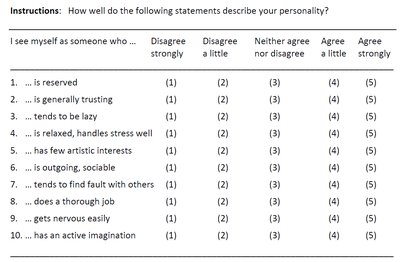
Personality questionnaires often use statements rated on a scale to assess the Big Five traits. Scoring involves reverse-coding some items.
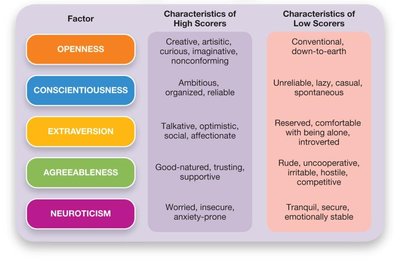
Characteristics of High and Low Scorers
Factor | High Scorers | Low Scorers |
|---|---|---|
Openness | Creative, artistic, curious | Conventional, down-to-earth |
Conscientiousness | Ambitious, organized | Unreliable, lazy |
Extraversion | Talkative, optimistic | Reserved, introverted |
Agreeableness | Good-natured, trusting | Rude, uncooperative |
Neuroticism | Worried, insecure | Tranquil, secure |
Beyond the Big Five: HEXACO and the Dark Triad/Tetrad
The HEXACO model adds a sixth factor, Honesty–Humility, to the Big Five. High scorers are sincere and modest; low scorers are deceitful and pompous.
Dark Triad: Machiavellianism (manipulativeness), Psychopathy (shallow emotions), Narcissism (self-importance).
Dark Tetrad: Adds Sadism (enjoyment of others' suffering) to the Dark Triad.


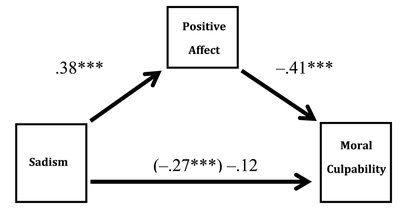
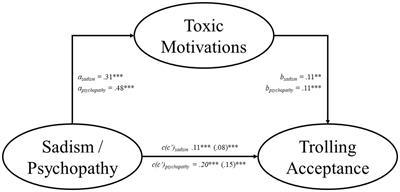
Sadism and Online Behavior
Research shows that sadists experience positive emotions and reduced moral guilt when causing others' discomfort, especially online.
Authoritarian Personality and Right-Wing Authoritarianism (RWA)
Some personality types are characterized by rigid thinking and a strong belief in social hierarchies.
Authoritarian Personality: Rigid, dogmatic, and categorizes people as 'Us' vs. 'Them.'
Right-Wing Authoritarianism: Obedience to authority, support for aggression against dissenters, and belief in maintaining social order.
Temperaments and Personality Stability
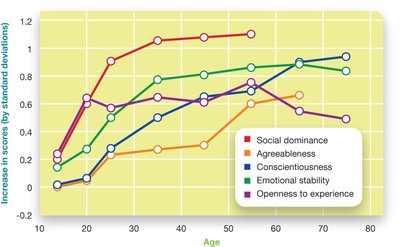
Temperaments are innate, biological foundations of personality, varying in activity level, mood, and attention span. Personality traits are largely stable but interact with environmental factors over the lifespan.
Part 5: Behaviourist and Social-Cognitive Perspectives
States and Situational Influences
A state is a temporary physical or psychological condition that influences behavior. Four aspects of situations affect how traits are expressed:
Locations (e.g., work, school, home)
Associations (e.g., friends, family, alone)
Activities (e.g., studying, relaxing)
Subjective states (e.g., mood, health)
Behaviourist Perspective
The behaviourist perspective emphasizes the role of the environment in shaping behavior through learning and reinforcement.

Social-Cognitive Perspective
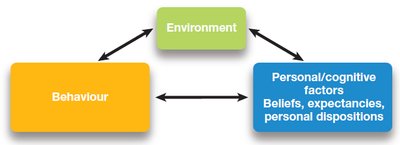
The social-cognitive perspective, especially reciprocal determinism, posits that behavior, personal factors, and environmental factors all influence each other in determining personality.
Part 6: Culture and Personality
WEIRD Cultures and Cross-Cultural Research
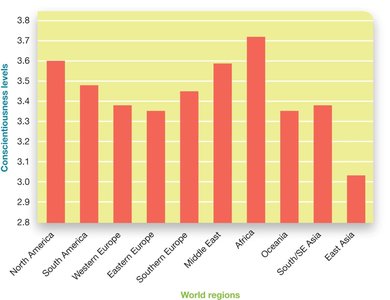
Most psychological research has focused on WEIRD (Western, Educated, Industrialized, Rich, Democratic) populations, which represent only a small fraction of the world's population. However, the Big Five personality factors have been found in many cultures worldwide.
Cross-cultural studies show the Big Five in 56 countries and 28 languages.
Some cultures, such as Chinese, identify different core traits (e.g., Dependability, Social Potency, Individualism, Interpersonal Relatedness).
Cultural Variations and Response Styles
Personality may differ across cultures due to varying social norms, values, and response styles (e.g., whether self-praise is acceptable or boastful).
