 Back
BackPhysical and Cognitive Development in Adolescence
Study Guide - Smart Notes
 Tailored notes based on your materials, expanded with key definitions, examples, and context.
Physical and Cognitive Development in Adolescence
Introduction
Adolescence is a critical period of development marked by significant physical, cognitive, and psychosocial changes. This stage bridges childhood and adulthood, with profound transformations in the body, brain, and behavior. Understanding these changes is essential for grasping the complexities of adolescent development.
Physical Changes in Adolescence
Brain Development and Physical Growth
During adolescence, the brain undergoes a series of developmental milestones that enhance cognitive abilities and behavioral regulation. These changes are facilitated by the maturation of various brain structures and the increased plasticity of the adolescent brain.
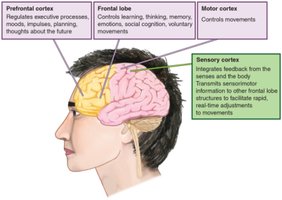
Prefrontal Cortex: Responsible for executive functions such as planning, impulse control, and decision-making. Its maturation supports improved logical thinking and future-oriented behavior.
Frontal Lobe: Involved in learning, memory, emotions, and voluntary movements.
Motor Cortex: Controls voluntary movements, contributing to improved coordination and physical endurance.
Sensory Cortex: Integrates sensory feedback, facilitating real-time adjustments in movement.
Plasticity: The adolescent brain is highly sensitive to experiences, which can shape cognitive and emotional development.
Neurological and Neuro-Endocrine Influences
Adolescent behavioral development is influenced by the interaction of neurological and neuro-endocrine systems. Key brain structures and hormonal axes regulate growth, emotional responses, and cognitive functions.
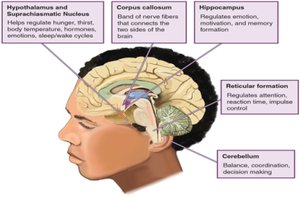
Hypothalamus: Regulates hunger, thirst, body temperature, hormones, emotions, and sleep/wake cycles.
Corpus Callosum: Connects the two brain hemispheres, facilitating communication.
Hippocampus: Involved in emotion regulation, motivation, and memory formation.
Reticular Formation: Controls attention, reaction time, and impulse control.
Cerebellum: Coordinates balance, decision making, and motor skills.
Endocrine System and Hormonal Regulation
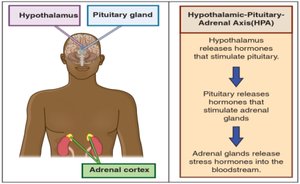
The hypothalamic-pituitary-adrenal (HPA) axis plays a central role in regulating hormonal changes during adolescence. This axis coordinates the release of hormones that drive physical growth and the onset of puberty.
Hypothalamus: Releases hormones that stimulate the pituitary gland.
Pituitary Gland: Releases hormones that stimulate the adrenal glands and gonads.
Adrenal Cortex: Releases stress hormones and androgens into the bloodstream.
Physical Growth Patterns
Adolescence is characterized by rapid physical growth and changes in body composition. Growth spurts, changes in body proportions, and increased muscle mass are typical during this period.
Growth Spurts: Males may grow 3–6 inches per year for 2–3 years; females attain most of their height by age 16, while males continue growing until 18–20.
Body Proportions: Growth follows a reversed cephalocaudal and proximodistal pattern—hands and feet grow first, followed by arms and legs, with the trunk growing last.
Muscle and Endurance: Muscle fibers thicken and become denser, increasing strength. Heart and lung size increase, especially in males, leading to greater endurance after puberty.
Milestones of Puberty
Hormonal Changes and Sexual Maturation
Puberty encompasses all changes necessary for reproductive maturity, initiated by a sequence of hormonal events beginning around ages 7 or 8.
Gonadarche: Pituitary gland signals adrenal glands to increase androgen production, stimulating growth of ovaries in females and testes in males.
Sex Hormones: Testosterone in boys and estradiol (a form of estrogen) in girls drive the development of primary and secondary sex characteristics.
Other Hormones: Thyroid-stimulating hormone and general growth hormone interact with sex hormones to regulate overall growth.
Primary and Secondary Sex Characteristics
Puberty triggers the development of both primary and secondary sex characteristics.
Primary Sex Characteristics: Organs and physiological factors necessary for reproduction (e.g., growth of penis and testes in males; ovaries, uterus, and vagina in females).
Secondary Sex Characteristics: Physical traits not directly involved in reproduction but indicative of sexual maturity (e.g., breast development, pubic hair, facial hair, voice changes).
Sexual Development in Female Adolescents
Females typically experience changes in secondary sex characteristics before menarche (the first menstrual period), which usually occurs 2–3 years after other visible changes.
Menarche: Most girls experience menarche between ages 10 and 14; early menarche can occur before age 10.
Fertility: Pregnancy is possible shortly after menarche.
Sexual Development in Male Adolescents
Males experience a later peak in growth and sexual maturation compared to females.
Spermarche: The first ejaculation, typically between ages 13 and 14, marks the onset of sperm production, which increases gradually over several years.
Other Changes: Development of facial hair and voice deepening occur toward the end of puberty.
The Secular Trend
The average age of puberty onset, particularly menarche, has declined over the past two centuries, a phenomenon known as the secular trend.
Causes: Improved nutrition, increased protein and fat intake, and rising childhood obesity rates contribute to earlier puberty.
Genetic Limits: There is a genetic range within which puberty can occur, but environmental factors can influence timing.
Precocious Puberty
Precocious puberty refers to the onset of true puberty before age 9 in males, 7 in White females, and 6 in Black females. This condition can compromise health and is often treated with puberty blockers if no underlying cause is found.
Risks: Early exposure to sex hormones can halt bone growth prematurely, leading to shorter adult stature.
Causes: May include genetic disorders, central nervous system tumors, or unknown factors.
The Timing of Puberty and Its Effects
Individual Differences in Pubertal Timing
There is significant individual variability in the timing and sequence of pubertal changes, influenced by genetics, diet, exercise, and body fat.
Psychological Effects: Discrepancies between expectations and actual development can impact self-esteem and psychological well-being.
Sex Differences in Pubertal Timing
Early or late development can have different psychological and social effects for males and females.
Females: Early-developing girls often have more negative body images and may face increased psychological risks.
Males: Early-developing boys tend to have higher self-esteem and more prosocial behavior, while late-developing boys are at greater risk for depression and low self-esteem.
Personality and Family Influences
The impact of pubertal timing is moderated by family environment and personality factors.
Low-Risk Households: Stable, resource-rich families can buffer negative effects of early or late maturation.
Family Stress: Maternal depression and family stress increase the risk of depression, especially among early-maturing females.
Summary Table: Major Hormones in Adolescent Development
Hormone | Source | Main Function |
|---|---|---|
Testosterone | Testes (males), adrenal glands (both sexes) | Development of male primary and secondary sex characteristics |
Estradiol (Estrogen) | Ovaries (females), adrenal glands (both sexes) | Development of female primary and secondary sex characteristics |
Growth Hormone | Pituitary gland | Stimulates overall body growth |
Thyroid-Stimulating Hormone | Pituitary gland | Regulates metabolism and growth |
Adrenal Androgens | Adrenal glands | Development of pubic hair and other secondary sex characteristics |
Additional info: The above table is reconstructed based on standard developmental psychology content, as the original table was not fully visible.
