 Back
BackPhysical and Cognitive Development in Early Childhood: Study Guide
Study Guide - Smart Notes
 Tailored notes based on your materials, expanded with key definitions, examples, and context.
Physical and Cognitive Development in Early Childhood
7.1 Physical Changes in Early Childhood
Early childhood is marked by significant, though less dramatic, physical changes compared to infancy. These changes lay the foundation for cognitive and social development.
Growth: Children between ages 2 and 6 grow steadily, adding 2–3 inches in height and about 6 pounds in weight annually.
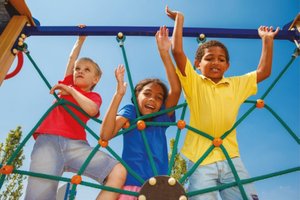
Motor Development: Steady progress in both gross and fine motor skills. By age 5 or 6, children can run, jump, hop, climb, and skip.
Example: Playground activities such as climbing and running demonstrate gross motor skill development.
7.1.1 Growth and Motor Development in Early Childhood
Motor development in early childhood includes both gross and fine motor skills, with milestones achieved at different rates.
Gross Motor Skills: Involve large muscle groups; activities include running, jumping, and climbing.
Fine Motor Skills: Involve small muscles, especially of the hands; skills such as drawing, writing, and manipulating small objects improve during these years.
Training: Early training can accelerate fine motor skill development, especially in drawing and writing.
Example: Children’s drawing abilities progress from simple scribbles to more complex compositions between ages 2 and 7.

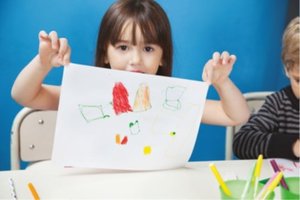

Table 7.1: Milestones of Gross and Fine Motor Development
This table summarizes key milestones in motor development during early childhood.
Age | Gross Motor Skills | Fine Motor Skills |
|---|---|---|
2 years | Runs, climbs, kicks ball | Scribbles, turns pages |
3 years | Jumps, rides tricycle | Draws circles, uses scissors |
4 years | Hops, throws ball overhand | Draws simple figures, cuts along lines |
5–6 years | Skips, balances on one foot | Prints letters, ties shoelaces |
Additional info: | Milestones may vary by individual maturation and training | Older preschoolers benefit more from instruction |
7.1.2 The Brain and Nervous System
Brain development continues rapidly in early childhood, supporting advances in thinking and language.
Brain Growth: Synapse formation and myelination continue, though at a slower rate than infancy.
Milestones: Important milestones include maturation of the reticular formation and hippocampus, which improve memory and attention.
Infantile Amnesia: Most children cannot recall personal experiences from the first three years of life.
Brain Lateralization in Early Childhood
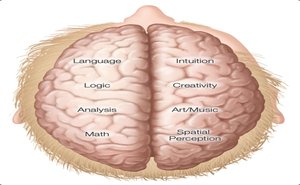
The corpus callosum matures, enabling functional specialization of the left and right hemispheres—a process known as lateralization.
Left Hemisphere: Typically responsible for language, logic, and analysis.
Right Hemisphere: Associated with intuition, creativity, art/music, and spatial perception.
Timing: Lateralization is influenced by both genetic and experiential factors.
Language: In 95% of humans, language functions are carried out in the left hemisphere.
The Reticular Formation and the Hippocampus
Reticular Formation: Myelination of neurons in this area is crucial for attention and alertness.
Hippocampus: Maturation leads to improvements in long-term memory.
Infantile Amnesia: The inability to remember experiences from the first three years is linked to hippocampal development.
Handedness
Definition: The tendency to rely primarily on the right or left hand.
Prevalence: 83% right-handed, 14% left-handed, 3% ambidextrous.
Genetics: Right-handedness is likely influenced by genetic inheritance.
Development: Handedness appears early but is not fully established until preschool years.
7.2 Health and Wellness in Early Childhood
Health and wellness are critical in early childhood, with regular medical care, immunizations, and monitoring of growth and development.
Medical Care: Periodic check-ups and immunizations are essential.
Monitoring: Doctors track growth and motor development, and help identify sensory or developmental disabilities.
7.2.1 Young Children’s Health-Care Needs
Most preschoolers are healthy, but sleep problems, eating patterns, and exposure to illness are common concerns.
Sleep: Sleep problems are frequent in early childhood.
Eating Patterns: Children may eat less, develop food aversions, and acquire habits that can lead to later weight problems.
Obesity: 26% of U.S. preschoolers are overweight, 14% obese, 2% severely obese. The COVID-19 pandemic increased rates of overweight and obesity.
Illness: Preschoolers average 7–8 colds per year and are prone to accidents, which are a major cause of death at this age.
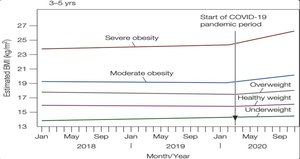
Table: Health and Wellness Concerns in Early Childhood
Concern | Description |
|---|---|
Sleep Problems | Common, may affect mood and behavior |
Eating Patterns | Food aversions, conflicts with parents, risk of obesity |
Illness | Frequent colds, gastrointestinal issues |
Accidents | Major cause of injury and death, most occur at home |
Additional info: | Stress and major life events can compromise immune function |
7.2.2 Abuse and Neglect
Child maltreatment, including abuse and neglect, has significant effects on development. Definitions and prevalence vary by culture and context.
Child Maltreatment: Act or failure to act by a caregiver resulting in death, physical injury, or psychological injury.
Types: Abuse (physical, emotional) and neglect (failure to provide basic needs).
Prevalence: Neglect is more common than abuse; 1–2% of young children treated for injuries from abuse; over 1,700 children die annually from maltreatment.
Risk Factors: Sociocultural values, child characteristics (age, disabilities), abuser characteristics (parental status), and family stresses (poverty, unemployment).
Consequences: Frequent or severe abuse can lead to posttraumatic stress disorder (PTSD), developmental delays, and anxiety. Neglected children often recover once abuse stops.
Prevention: Education, identification of at-risk families, prevention from further harm, parenting classes, and enforcement of abuse laws.
Table: Child Maltreatment Risk Factors and Consequences
Risk Factor | Description |
|---|---|
Sociocultural | Values regarding acceptable treatment of children |
Child Characteristics | Younger age, physical/developmental disabilities |
Abuser Characteristics | Parent perpetrator, personal stress |
Family Stresses | Poverty, unemployment, bereavement |
Consequence | Description |
PTSD | Anxiety, flashbacks, nightmares |
Developmental Delays | Delayed cognitive, social, and emotional development |
Recovery | Neglected children often recover after maltreatment ends |
