 Back
BackPhysical and Cognitive Development in Middle Childhood CH. 9
Study Guide - Smart Notes
 Tailored notes based on your materials, expanded with key definitions, examples, and context.
Physical and Cognitive Development in Middle Childhood
Physical Changes
Middle childhood is marked by significant, though sometimes less visible, physical changes that support both motor and cognitive development.
Growth Patterns: Children grow 5–8 cm in height and gain about 2.75 kg per year. Large muscle coordination, strength, speed, and hand-eye coordination all improve, enabling activities such as writing, playing musical instruments, and sports.
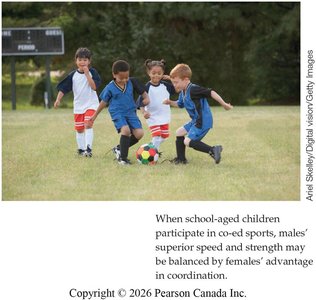
Sex Differences: Females are generally ahead of males in growth, have more body fat, and less muscle tissue. These differences result in better coordination for females, but greater speed and strength for males.
Brain and Nervous System Development
Brain development during middle childhood underlies advances in cognitive and motor skills.
Adrenarche: A surge in adrenal hormones contributes to neurocognitive development.
Myelination: Increased myelination of neural axons, especially in sensory, motor, and frontal areas, enhances processing speed, logic, planning, and selective attention.
Right Hemisphere Lateralization: Improves spatial perception and cognition, with males often scoring higher on spatial orientation tasks, possibly due to early play preferences.
Health Promotion and Wellness
Health in middle childhood is influenced by sleep, nutrition, physical activity, and injury prevention.
Sleep: Poor sleep, often due to electronic media use, is common and affects health.
Weight and Nutrition: A significant proportion of children are overweight or obese, with risk factors including parental weight, birth size, and early onset of overweight. Obesity results from genetic, epigenetic, and environmental factors, with higher risk among lower-income and food-insecure families.
Physical Activity: Most children do not meet recommended activity levels, contributing to increased weight and decreased strength.
Injury Prevention: Unintentional injuries, especially from motor vehicle accidents and playground falls, are the leading cause of death. Traumatic brain injuries are common in playground accidents.


Cognitive Changes
Children between ages 6 and 12 make significant gains in memory, logical thinking, and information processing.
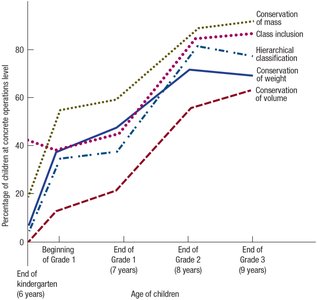
Piaget’s Concrete Operational Stage: Children develop logical thinking about real-world objects and events. They understand conservation, decentration, and reversibility, and can classify objects hierarchically. Inductive logic improves, but deductive logic is still developing.
Horizontal Decalage: The gradual application of new cognitive skills to different problems over time.
Advances in Information-Processing Skills
Improvements in memory and processing efficiency are hallmarks of middle childhood.
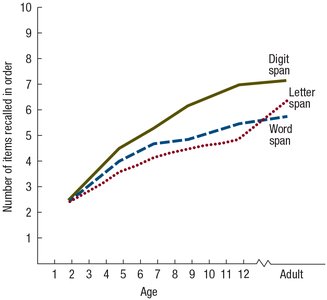
Processing Efficiency: Short-term memory capacity and processing speed increase with age.
Automaticity: Practice allows children to recall information from long-term memory without using short-term memory, freeing up resources for complex tasks.
Executive and Strategic Processes: Metacognition (thinking about thinking) and strategy use improve, allowing better problem-solving and memory.
Expertise: Deep knowledge in a specific area enhances memory and reasoning in that domain.
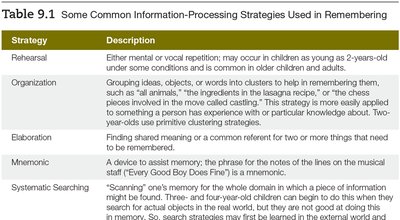
Strategy | Description |
|---|---|
Rehearsal | Repeating information to remember it. |
Organization | Grouping related items together. |
Elaboration | Finding shared meaning or connections. |
Mnemonic | Using memory aids, such as acronyms. |
Systematic Searching | Scanning memory for relevant information. |
Language Development
Language skills continue to grow rapidly in middle childhood.
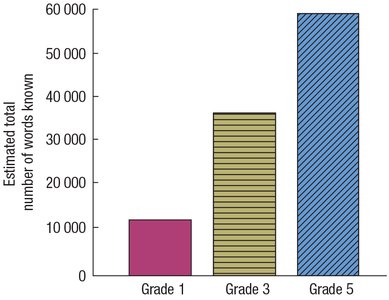
Grammar and Vocabulary: Children master grammar, pronunciation, and add 5,000–10,000 words per year. By age 8 or 9, they understand relationships between word categories.
Schooling and Literacy
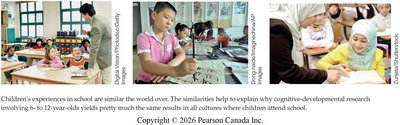
Formal education is a major influence on cognitive development during middle childhood.
Literacy: Reading and writing are central. Phonological awareness and explicit phonics instruction are foundational. A balanced approach combines phonics with strategies for comprehension and vocabulary development.
Early Intervention: Early identification and support for poor readers is crucial.
Multilinguistic Learners
Many children in Canada are English Language Learners (ELL) or participate in bilingual education programs.
Bilingual Education: Instruction in two languages, such as French immersion, supports cognitive and academic development. Heritage language preservation is important for cultural diversity.

Measuring Student Achievement
Student achievement is assessed through tests and alternative assessments, and intelligence is understood as multifaceted.
Achievement Tests: Assess specific knowledge, but may not reflect all learning.
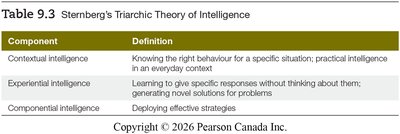
Sternberg’s Triarchic Theory of Intelligence: Proposes contextual, experiential, and componential intelligence.
Goleman’s Emotional Intelligence: Involves awareness, expression, and regulation of emotions, which are linked to academic success.
Component | Definition |
|---|---|
Contextual intelligence | Knowing the right behaviour for a specific situation |
Experiential intelligence | Learning to give specific responses without thinking about them |
Componential intelligence | Deploying effective strategies |
Inclusive Education
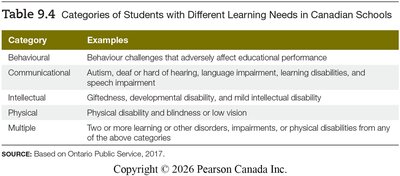
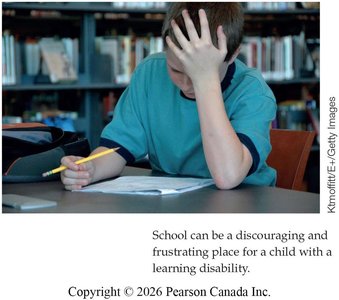
Inclusive education emphasizes supporting all students, including those with learning disabilities and ADHD, by focusing on strengths and providing appropriate accommodations.
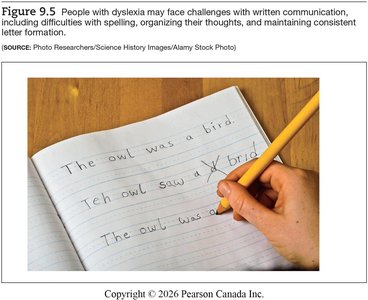
Learning Disabilities: Neurological disorders affecting information processing, such as dyslexia (reading), dysgraphia (writing), and dyscalculia (math). Early identification and intervention are key.
ADHD: Characterized by high activity, impulsivity, and/or inattention. Causes are multifactorial, and treatment may include medication, behavioural strategies, and support from caregivers and teachers.
Category | Examples |
|---|---|
Behavioural | Behaviour challenges affecting performance |
Communicational | Autism, hearing impairment, language impairment, learning disabilities |
Intellectual | Giftedness, developmental disability |
Physical | Physical disability, blindness |
Multiple | Two or more disorders or disabilities |
Additional info: Early, multi-faceted intervention and inclusive educational practices are essential for supporting children with diverse learning needs and optimizing their academic and social outcomes.
