 Back
BackPhysical Development in Infancy: Biological and Sensory Foundations
Study Guide - Smart Notes
 Tailored notes based on your materials, expanded with key definitions, examples, and context.
Physical Development in Infancy
Overview
This chapter explores the rapid physical, neurological, and sensory development that occurs during infancy. It covers principles of growth, brain development, integration of bodily systems, sleep, nutrition, and the emergence of sensory and motor skills.
The Principles of Physical Growth
Patterns and Principles of Growth
Cephalocaudal Principle: Growth begins with the head and proceeds downward through the body.
Proximodistal Principle: Development starts at the center of the body and moves outward toward the extremities.
Principle of Hierarchical Integration: Simple skills develop separately and independently but are later integrated into more complex skills.
Principle of Independence of Systems: Different body systems grow at different rates (e.g., nervous system vs. sexual maturation).
Example: Infants develop visual abilities before motor abilities, and control of the arms precedes control of the hands.
Development of the Nervous System and Brain
Neuronal Structure and Function
Neurons: Basic cells of the nervous system responsible for transmitting information.
Dendrites: Receive messages from other neurons.
Axon: Carries messages away from the neuron to other cells.
Myelin: Fatty substance that insulates axons and speeds up neural transmission.

Neuronal Development and Synaptic Pruning
Neurotransmitters: Chemical messengers that cross synapses to transmit signals between neurons.
Synaptic Pruning: The process by which unused neural connections are eliminated, making the brain more efficient.
Neural connections increase rapidly in infancy, especially those stimulated by experience.

Brain Growth and Plasticity
Plasticity: The brain's ability to adapt and reorganize, especially high in infancy.
Brain growth spurts precede advances in behavior and perception.
Damage to one area of the infant brain can sometimes be compensated for by other areas.
Integration of Bodily Systems
Rhythms and States
Rhythms: Repetitive, cyclical patterns of behavior (e.g., sleep-wake cycles, feeding).
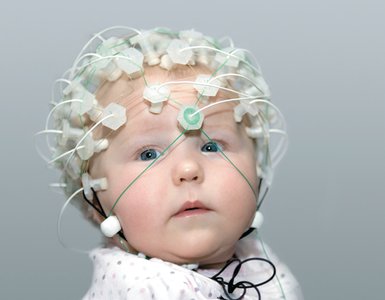
States: Degrees of awareness to internal and external stimulation, such as wakefulness, alertness, fussing, and crying.
States are measured by changes in brain wave patterns (e.g., via EEG).
Sleep in Infancy
Infants sleep in short spurts, averaging 16-17 hours per day at birth.
REM Sleep: Rapid Eye Movement sleep is associated with brain development and is more prevalent in infants than adults.
Sleep patterns are influenced by cultural practices and environmental factors.

SIDS and SUID
Sudden Infant Death Syndrome (SIDS) and Sudden Unexpected Infant Death (SUID)
SIDS: The sudden, unexplained death of an apparently healthy infant, often during sleep.
SUID: Includes SIDS and other unexpected infant deaths, such as accidental suffocation.
Prevention: "Back-to-sleep" guideline (placing infants on their backs to sleep), sharing a bedroom (not a bed), and keeping cribs free of extra items.
Motor Development
Reflexes
Reflexes: Inborn, automatic responses to specific stimuli (e.g., rooting, sucking, grasping).
Reflexes serve as the foundation for later voluntary motor skills and can be diagnostic tools for neurological health.

Gross and Fine Motor Skills
Gross Motor Skills: Involve large muscle groups (e.g., crawling, walking).
Fine Motor Skills: Involve smaller movements (e.g., reaching, grasping objects).
Development follows a predictable sequence but varies individually.

Dynamic Systems Theory
Motor development is a result of the interaction between the child’s motivation, physical abilities, and environmental opportunities.
Each new skill builds on previous ones and is influenced by the child’s goals and context.
Developmental Norms and Assessment
Norms: Average ages at which children achieve developmental milestones, based on large, diverse samples.
Brazelton Neonatal Behavioral Assessment Scale (NBAS): Measures infants’ neurological and behavioral responses, including interactions, motor behavior, physiological control, and stress response.
Nutrition and Physical Development
Nutrition in Infancy
Infants require about 50 calories per pound per day for rapid growth.
Proper nutrition is essential for physical, cognitive, and social development.
Breastfeeding vs. Bottle Feeding
Breast Milk: Contains all necessary nutrients, supports immunity, is easily digested, and may enhance cognitive development.
Breastfeeding provides emotional and health benefits for both mother and child.
Bottle feeding was once preferred for perceived nutritional control, but breast milk is now recommended by authorities.
Introducing Solid Foods
Solid foods are introduced between 6-12 months, starting with cereals and gradually adding new foods to monitor for allergies.
Timing of weaning varies by culture and individual needs.
Malnutrition and Food Insecurity
Malnutrition: Inadequate or imbalanced nutrition can lead to stunted growth and lower cognitive outcomes.
Food Insecurity: Lack of reliable access to sufficient, nutritious food, often leading to stunted growth in underdeveloped regions.
In the U.S., programs like SNAP aim to combat malnutrition, though undernutrition may still occur.
Forms of Malnutrition
Marasmus: Severe protein and calorie deficiency causing wasting and potentially death.
Kwashiorkor: Protein deficiency leading to swelling in the abdomen, limbs, and face.
Nonorganic Failure to Thrive: Growth disorder due to lack of parental stimulation and attention.
Obesity in Infancy
Defined as BMI at or above the 95th percentile for age and sex.
Evidence linking infant obesity to adult obesity is inconclusive, but overfeeding may increase risk.
Sensory and Perceptual Development
Sensation and Perception
Sensation: Physical stimulation of sense organs.
Perception: Interpretation and integration of sensory input by the brain.
Visual Perception
Newborns have limited distance vision (20/200 to 20/600) but improve rapidly.
Develop binocular vision and depth perception by about 14 weeks.
Prefer complex patterns over simple stimuli.
Auditory Perception
Fetuses and infants respond to sounds and show preferences for certain sound combinations.
Can discriminate between different sounds and languages early in life.
Sound localization is present but less precise due to small head size.
Smell, Taste, and Touch
Infants have a well-developed sense of smell and can distinguish their mother’s scent within days of birth.
Show innate preference for sweet tastes and develop taste preferences based on prenatal exposure.
Touch is one of the earliest developed senses and is crucial for reflexes and exploration.
Pain Perception
Infants are capable of experiencing pain, as indicated by physiological and behavioral responses.
Early exposure to pain may increase sensitivity later in life.
Multimodal Perception
Refers to the integration and coordination of information from multiple sensory systems.
Affordances: The action possibilities that a situation or object provides, learned through sensory exploration.
Additional info: This summary integrates textbook content with foundational developmental psychology concepts, ensuring coverage of all major learning objectives for a college-level psychology course.
