 Back
BackPositive Reinforcement and Behavioral Contingencies in Psychology
Study Guide - Smart Notes
 Tailored notes based on your materials, expanded with key definitions, examples, and context.
Positive Reinforcement
Definition and Principle
Positive reinforcement is a foundational principle in behavioral psychology. It occurs when a response is immediately followed by the presentation of a stimulus, resulting in an increased likelihood of similar responses in the future.
Positive Reinforcement: The process by which presenting a favorable stimulus after a behavior increases the probability of that behavior recurring.
Example: Giving a child a treat for completing their homework encourages them to repeat the behavior.
Two-Term Contingency
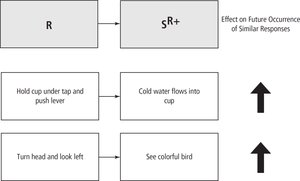
The two-term contingency describes the relationship between a response (R) and a reinforcing stimulus (SR+). The response is followed closely in time by the stimulus, which increases the future occurrence of similar responses.
Response (R): The behavior performed by the individual.
Positive Stimulus (SR+): The reinforcing event or item presented after the response.
Effect: Increased frequency of the response in the future.
Reinforcement vs. Reinforcers
Reinforcement: The process or principle that increases behavior.
Positive Reinforcer: The actual stimulus presented as a consequence, responsible for the future increase in responding.
Temporal Aspect: Reinforcers do not affect the response they follow immediately; their effect is seen in future behavior.

Immediacy of Reinforcement
The effectiveness of reinforcement depends on its immediacy. The behavior closest in time to the presentation of the reinforcer is most likely to be strengthened.
Immediate Reinforcement: Directly strengthens the behavior it follows.
Delayed Consequences: Do not reinforce behavior directly; every second counts.

Rule-Governed Behavior
Definition and Indicators
Rule-governed behavior is influenced by verbal descriptions of behavioral contingencies, rather than direct reinforcement.
Rule: A verbal statement describing the relationship between behavior and consequence.
Indicators:
No apparent immediate consequence
Consequence is delayed at least 30 seconds
Behavior changes without direct reinforcement
Large increase in behavior after one reinforcement
Behavior occurs because the rule exists, not the consequence
Stimulus Control and Antecedents
Changing Function of Stimuli
Reinforcement changes the function of stimuli that immediately precede the reinforced behavior. Antecedent events acquire the ability to evoke behavior within the reinforced response class.
Stimulus Control: When antecedent events (stimuli) become associated with reinforcement, they can evoke specific behaviors.
SD (Discriminative Stimulus): Signals the availability of reinforcement.
SΔ (Delta): Signals the absence of reinforcement.
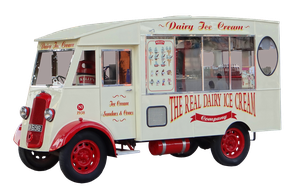
Example: Ice cream truck music becomes associated with access to ice cream, evoking approach behavior.

Behavioral Contingencies
Three-Term Contingency
The three-term contingency is a fundamental concept in behavioral psychology, describing the relationship between antecedent, behavior, and consequence.
Antecedent (SD): The stimulus that signals the opportunity for reinforcement.
Behavior (R): The action performed.
Consequence (SR+): The reinforcing stimulus presented after the behavior.
Four-Term Contingency
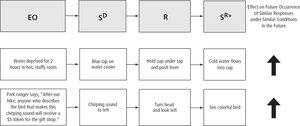
The four-term contingency expands the model by including motivating operations (MO), which alter the effectiveness of reinforcers and the frequency of behavior.
Motivating Operation (MO): Alters the value of a reinforcer and the likelihood of behavior.
SD: Discriminative stimulus
R: Response
SR+: Reinforcing stimulus
Motivation and Reinforcement
Motivating Operations
Motivating operations have two primary effects: they alter the reinforcing effectiveness of a stimulus and the current frequency of a behavior that has been historically reinforced.
Effectiveness: MO can make a reinforcer more or less valuable.
Frequency: MO can increase or decrease the likelihood of a behavior.
Automatic Reinforcement
Definition and Application
Automatic reinforcement occurs when a behavior–stimulus change relation happens without the presentation of consequences by other people. It is observed when a behavior persists in the absence of any known reinforcer.
Example: A person humming to themselves for self-stimulation.
Origins and Types of Reinforcers
Unconditioned vs. Conditioned Reinforcers
Unconditioned Reinforcer: Naturally reinforcing without prior learning (e.g., food, water).
Conditioned Reinforcer: Gains reinforcing properties through association with other reinforcers (e.g., money, social attention).
Generalized Conditioned Reinforcer: Does not depend on a current motivating operation for its effectiveness (e.g., money, social attention).

Classification of Reinforcers
Formal Properties
Reinforcers can be classified by their formal properties, such as their physical characteristics or the context in which they are presented.
Examples: Food, toys, praise, money.
Premack Principle
Definition and Examples
The Premack Principle, also known as "Grandma's Law," states that access to a high-frequency behavior is contingent upon the occurrence of a low-frequency behavior. The opportunity to engage in the high-frequency behavior serves as reinforcement for the low-frequency behavior.
Example: "After you eat your carrots, you can play Legos."
Example: "After you complete your homework, you can play soccer with your friends."


Summary Table: Types of Reinforcers
Type | Definition | Example |
|---|---|---|
Unconditioned Reinforcer | Reinforcing without prior learning | Food, water |
Conditioned Reinforcer | Reinforcing due to association | Money, praise |
Generalized Conditioned Reinforcer | Effective regardless of current MO | Money, social attention |
Additional info:
Behavioral contingencies are central to learning theory and applied behavior analysis.
Understanding the immediacy and type of reinforcement is crucial for effective behavior modification.
