 Back
BackPsychological and Biomedical Therapies: An Overview
Study Guide - Smart Notes
 Tailored notes based on your materials, expanded with key definitions, examples, and context.
Mental Health Providers
Types of Providers
Mental health care is delivered by a range of professionals, each with distinct training and roles:
Clinical Psychologists: Hold PhDs, treat mild to severe psychological disorders, and complete extensive graduate training and internships.
Counselling Psychologists: Hold MA, MSc, MEd, or PhD degrees, and focus on common issues such as stress, relationships, identity, anxiety, and depression.
Psychiatrists: Medical doctors (MDs) who can prescribe medication and complete medical school plus residency.
Other Providers: Include clinical social workers and psychiatric nurses.
Providers often collaborate, combining therapy and medication. Treatment settings include hospitals, private offices, institutions, and both inpatient and outpatient care.
Psychological Therapies
Overview and Evidence-Based Practice
Psychological therapies aim to resolve personal, emotional, behavioral, and social problems, improving overall well-being. These therapies must be evaluated for effectiveness to avoid harm, and evidence-based treatments are those supported by scientific research. The therapeutic alliance—the relationship between therapist and client—is a strong predictor of successful outcomes.
Insight Therapies
Involve dialogue between patient and therapist to promote self-understanding and change.
Examples include psychodynamic and humanistic therapies.
Psychodynamic Therapies
Core Concepts
Psychodynamic therapies focus on resolving unconscious conflicts, often rooted in early childhood experiences. Techniques include:
Free Association: Patient speaks freely to uncover unconscious thoughts.
Dream Analysis: Distinguishes between manifest content (actual dream) and latent content (hidden meaning).
Resistance: Patient unconsciously resists confronting distressing thoughts.
Transference: Patient projects feelings about significant others onto the therapist, facilitating resolution of conflicts.
Object relations therapy emphasizes how early emotional attachments shape psychological functioning and adult relationships.
Humanistic–Existential Psychotherapy
Principles and Approaches
Humanistic and existential therapies emphasize positive human nature, personal growth, and conscious experience. Key features include:
Humanistic Therapy: Focuses on removing obstacles to self-actualization and expressing the authentic self.
Existential Therapy: Encourages facing pain and fears, taking responsibility, and finding meaning.
Client-Centred Therapy: Developed by Carl Rogers, relies on empathy, trust, and unconditional positive regard.
Emotion-Focused Therapy (EFT): Helps clients accept and process difficult emotions.
Problems arise when individuals internalize conditions of worth (external standards for acceptance). Therapy aims to foster self-acceptance and personal responsibility.
Behavioural Therapies
Principles and Techniques
Behavioural therapies directly address maladaptive behaviours and environmental triggers, using principles of conditioning and learning. The goal is to recondition behaviour to more adaptive responses.
Systematic Desensitization: Gradual exposure to feared stimuli paired with relaxation training. Involves building an anxiety hierarchy and progressing from least to most anxiety-provoking situations.
Flooding: Immediate exposure to the most feared stimulus (rarely used due to distress).
Virtual Reality Exposure (VRE): Uses virtual environments for controlled exposure, effective for phobias, PTSD, and stress-related disorders.
Observational Learning (Modeling): Learning by observing others' behaviours and outcomes.
Aversive Conditioning
Aversive conditioning replaces a positive response to a stimulus with a negative one, often using classical conditioning principles. For example, Antabuse (disulfiram) causes nausea when alcohol is consumed, discouraging drinking.
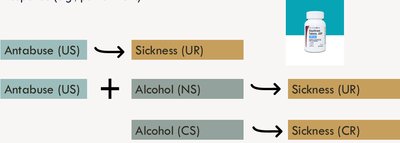
Key Terms:
Unconditioned Stimulus (US): Antabuse
Unconditioned Response (UR): Sickness
Neutral Stimulus (NS): Alcohol (before conditioning)
Conditioned Stimulus (CS): Alcohol (after pairing with Antabuse)
Conditioned Response (CR): Sickness (in response to alcohol)
Effectiveness depends on patient motivation and adherence to treatment.
Cognitive-Behavioural Therapies (CBT)
Principles and Applications
CBT combines cognitive and behavioural techniques to change negative thought patterns and maladaptive behaviours. Developed by Aaron Beck and Albert Ellis, CBT includes:
Cognitive Restructuring: Replacing irrational thoughts with realistic ones.
Stress Inoculation Training: Preparing individuals to cope with stressors.
Exposure: Confronting avoided situations to reduce anxiety.
CBT addresses internal, stable, and global attributions that contribute to psychological distress. It leads to measurable changes in brain function, such as reduced fear activation.
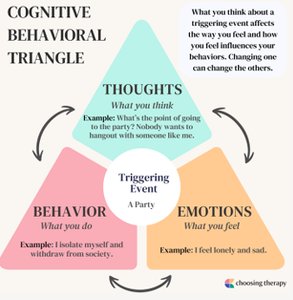
Example: The cognitive-behavioral triangle illustrates how thoughts, emotions, and behaviors interact in response to a triggering event. Changing one component can influence the others.
Mindfulness-Based Cognitive Therapy (MBCT)
MBCT integrates CBT with mindfulness meditation, emphasizing self-acceptance and non-judgmental awareness (COAL: curious, open, accepting, loving). It is effective for depression, anxiety, bipolar disorder, and suicidal ideation. MBCT improves emotional regulation and attention through decentring—observing thoughts objectively.
Group and Family Therapies
Group Therapy: Provides shared experiences and social support; cost-effective.
Family Therapy: Addresses dysfunctional family systems using a systems approach; effective for schizophrenia when combined with medication.
Biomedical Therapies
Psychotropic Drugs
Psychotropic drugs alter psychological functioning by affecting neurotransmitters in the brain. They are often combined with psychological therapies.
Antidepressants
Monoamine Oxidase Inhibitors (MAOIs): Prevent breakdown of neurotransmitters; can have dangerous side effects.
Tricyclics: Block reuptake of neurotransmitters; side effects include weight gain and seizures.
SSRIs & SNRIs: Selective serotonin reuptake inhibitors (SSRIs) increase serotonin; serotonin-norepinephrine reuptake inhibitors (SNRIs) affect both serotonin and norepinephrine. These promote neurogenesis in the hippocampus and are most commonly prescribed.
Effects on the amygdala, hippocampus, nucleus accumbens, and prefrontal cortex take weeks to manifest due to brain changes.
Herbal Treatments
St. John’s Wort affects serotonin, epinephrine, and glutamate. Meta-analyses show effectiveness for mild to moderate depression, but quality varies due to lack of regulation and potential drug interactions.
Mood Stabilizers
Lithium: Effective for mood stabilization but can damage kidneys and endocrine system.
Alternatives: Valproate and atypical antipsychotics; side effects include nausea, fatigue, and weight gain.
MDMA (PTSD Treatment)
MDMA (Ecstasy) is used experimentally for PTSD treatment, often in combination with talk therapy. It reduces amygdala activity, increases serotonin, dopamine, and norepinephrine, and enhances fear extinction and emotional processing. Studies show 83% of patients no longer meet PTSD criteria versus 25% for placebo.
Antipsychotic Drugs
First-Generation: Block dopamine; can cause severe side effects such as tardive dyskinesia.
Second-Generation: Affect both dopamine and serotonin; fewer motor side effects. Clozapine is effective but requires blood monitoring.
Brain Stimulation & Surgical Methods
Overview
Lobotomy & Leucotomy: Historical surgical interventions for severe mental illness.
Focal Lesions: Created using stereotaxic apparatus or high-intensity focused ultrasound.
Electroconvulsive Therapy (ECT): Used for severe depression and treatment-resistant conditions.
Repetitive Transcranial Magnetic Stimulation (rTMS): Non-invasive brain stimulation for depression.
Deep Brain Stimulation (DBS): Targets the subgenual cingulate gyrus to reduce depression, often used when other treatments fail. Effectiveness varies and is often combined with other therapies.
