 Back
BackPsychological Disorders: Classification, Causes, and Major Categories
Study Guide - Smart Notes
 Tailored notes based on your materials, expanded with key definitions, examples, and context.
Psychological Disorders
Introduction to Psychopathology
Psychopathology is the scientific study of mental disorders, including their classification, causes, and manifestations. Understanding psychological disorders involves considering how abnormality is defined, how disorders are diagnosed, and the factors that contribute to their development.
Mental disorder: A significant impairment in psychological functioning, such as schizophrenia or major depression.
Psychopathology: The study of mental disorders, their symptoms, and their impact on personal growth and happiness.
Defining Abnormality
Criteria for Abnormal Behavior
Determining what constitutes abnormal behavior is complex and involves several considerations:
Statistical Abnormality: Behavior that deviates significantly from the average, such as extremely high or low levels of anxiety or intelligence. However, statistical deviation alone does not always indicate a disorder.
Nonconformity: Disobeying social norms may be seen as abnormal, but not all nonconformity is unhealthy. Cultural relativity plays a significant role in defining abnormality.
Subjective Discomfort: Private feelings of pain, unhappiness, or emotional distress. Not all distress is pathological, and not all disorders cause distress.
Maladaptive Behavior: Actions that interfere with daily functioning, resulting from psychological or biological dysfunction. This is a core criterion for psychopathology.
Classification and Diagnosis of Mental Disorders
The DSM-5 System
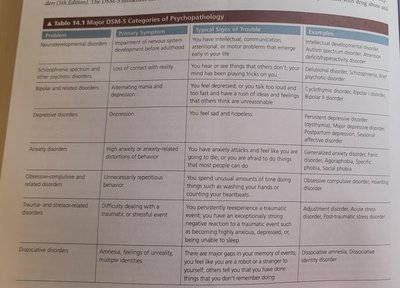
The Diagnostic and Statistical Manual of Mental Disorders, Fifth Edition (DSM-5) is the primary tool for classifying mental disorders. It organizes hundreds of specific disorders into over 20 major categories and guides diagnosis, treatment, and insurance billing.
Comorbidity: The presence of more than one disorder in the same individual, complicating diagnosis and treatment.
Symptoms and Signs: Diagnosis is based on the presence, duration, and impact of symptoms. Positive symptoms are excesses (e.g., hallucinations), while negative symptoms are deficits (e.g., flat affect).
Evolution and Critique of Diagnostic Categories
The DSM has evolved over time, reflecting changes in scientific understanding and cultural norms. Some terms (e.g., neurosis, homosexuality) have been removed or redefined. Critics argue that the proliferation of diagnoses may pathologize normal behavior and increase stigma.
Culture and Stigma
Culture-bound syndromes: Disorders unique to specific cultures, not always captured by the DSM-5.
Stigma: Psychiatric labels can lead to prejudice, discrimination, and reluctance to seek help.
Legal Aspects: The Insanity Defense
Insanity is a legal term indicating inability to manage one's affairs or understand the consequences of actions due to mental disorder. It is determined by expert testimony and does not automatically follow from a psychiatric diagnosis.
Causes of Mental Disorders
Biological Factors
Organic causes: Brain injuries, tumors, hormonal imbalances, and exposure to toxins (e.g., lead, mercury).
Genetics: Many disorders have a genetic component, such as schizophrenia and neurodevelopmental disorders (e.g., Down syndrome, autism).
Neurocognitive disorders: Disorders like Alzheimer's disease involve brain deterioration, affecting memory, reasoning, and personality.
Psychosocial Factors
Psychological: Stress, trauma, learning disorders, lack of control or mastery.
Family: Dysfunctional family dynamics, abuse, poor discipline.
Social: Poverty, homelessness, social disorganization.
The Stress-Vulnerability Model
This model posits that mental disorders result from the interaction of inherited vulnerability and environmental stressors. It aligns with the biopsychosocial approach to understanding mental illness.
Major Categories of Psychological Disorders
Psychotic Disorders
Psychotic disorders involve a loss of contact with reality, including symptoms such as delusions, hallucinations, and disorganized thought or behavior. Schizophrenia is a primary example, with both biological and psychosocial contributing factors.
Mood Disorders
Mood disorders are characterized by disturbances in emotional state. They include depressive disorders and bipolar disorders.
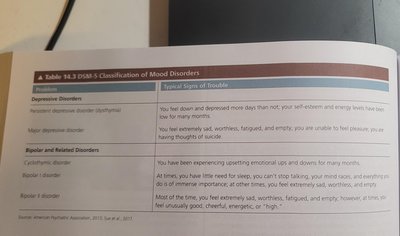
Depressive Disorders: Persistent sadness, hopelessness, and loss of interest. Major depressive disorder is severe and disabling.
Seasonal Affective Disorder (SAD): Depression related to seasonal changes, often treated with phototherapy.
Bipolar Disorders: Alternating periods of depression and mania. Bipolar I involves full mania; Bipolar II involves hypomania.
Personality Disorders
Personality disorders are enduring, inflexible patterns of behavior that cause distress or impairment. Examples include paranoid, antisocial, narcissistic, and borderline personality disorders.
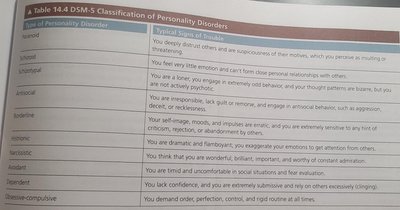
Antisocial Personality Disorder: Marked by lack of conscience, empathy, and regard for others. Often associated with criminal behavior and poor treatment outcomes.
Anxiety and Anxiety-Related Disorders
Anxiety disorders involve excessive fear, worry, or avoidance that interferes with daily life. Major types include:
Generalized Anxiety Disorder: Persistent, excessive worry about various topics.
Panic Disorder: Sudden, intense episodes of fear and physical symptoms.
Phobias: Irrational fears of specific objects or situations (e.g., agoraphobia, social anxiety disorder, specific phobias).
Theoretical Approaches to Anxiety Disorders
Psychodynamic: Unconscious conflicts and defense mechanisms.
Humanistic: Faulty self-image and incongruence.
Behavioral: Learned responses and avoidance (anxiety reduction hypothesis).
Cognitive: Distorted thinking and magnification of threats.
Anxiety-Related Disorders
These include obsessive-compulsive and related disorders, trauma- and stressor-related disorders, dissociative disorders, and somatic symptom disorders.
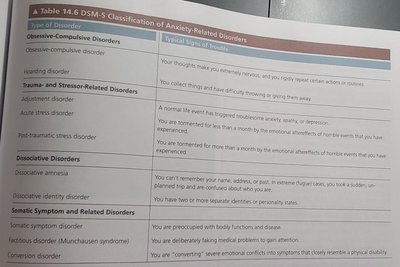
Obsessive-Compulsive Disorder (OCD): Intrusive thoughts (obsessions) and repetitive behaviors (compulsions).
Trauma- and Stressor-Related Disorders: Problems following exposure to trauma (e.g., PTSD, acute stress disorder, adjustment disorder).
Dissociative Disorders: Disruptions in memory, identity, or consciousness (e.g., dissociative amnesia, dissociative identity disorder).
Somatic Symptom and Related Disorders: Physical symptoms without medical explanation (e.g., somatic symptom disorder, factitious disorder, conversion disorder).
Perseverance and Mental Health
Developing Grit
Overcoming mental health challenges often requires perseverance, or "grit." Grit involves passion and sustained effort toward long-term goals. It can be developed through cultivating interest, deliberate practice, a sense of purpose, and hope.
Interest: Developing a passion over time through exploration and commitment.
Practice: Engaging in focused, deliberate practice with feedback.
Purpose: Connecting actions to a greater meaning or benefit for others.
Hope: Maintaining optimism and resilience in the face of setbacks.
Psychological research suggests that grit is a better predictor of success than intelligence alone, and it is a skill that can be improved with effort.
