 Back
BackPsychological Disorders: Classification, Causes, and Major Categories
Study Guide - Smart Notes
 Tailored notes based on your materials, expanded with key definitions, examples, and context.
Psychological Disorders Rối loạn tâm lý
Introduction to Psychopathology Giới thiệu về Tâm lý học
Psychopathology is the scientific study of mental disorders rối loạn tâm thần, including their classification, causes, and manifestations. Understanding psychological disorders involves considering how abnormality bất thường is defined, how disorders are diagnosed Rối loạn được chẩn đoán như thế nào, and the factors that contribute to their development.
Defining Abnormality Xác định bất thường
Criteria for Abnormal Behavior
Statistical Abnormality: Behavior that deviates significantly from the average, such as extremely high or low scores on measures of anxiety or intelligence. However, statistical deviation alone does not always indicate a disorder.
Nonconformity: Disobeying social norms or standards. Not all nonconformity is unhealthy; context and cultural relativity are important.
Subjective Discomfort: Experiencing significant personal distress, pain, or unhappiness. Not all distress is pathological, and not all disorders cause distress.
Maladaptive Behavior: Actions that interfere with daily functioning or pose danger to oneself or others. This is a core criterion for diagnosing psychopathology.
Easier explain
Statistical Abnormality: This means a behavior is very rare or far from the average (like extremely high anxiety or very low intelligence scores). However, just being rare doesn’t always mean it’s a disorder—some rare traits (like genius-level intelligence) aren’t unhealthy.
Nonconformity: This is when someone doesn’t follow social rules or norms. Not all rule-breaking is bad—sometimes it’s creative or brave! Whether it’s a problem depends on the situation and culture.
Subjective Discomfort: This is when a person feels a lot of distress, pain, or unhappiness. But not all distress means there’s a disorder (for example, grief after a loss is normal), and some disorders don’t cause obvious distress.
Maladaptive Behavior: This is when actions get in the way of daily life or put someone (or others) in danger. This is the most important sign of a psychological disorder.
Key Point: No single criterion is enough on its own. Psychologists look at all these factors together, plus the person’s culture and situation, to decide if behavior is truly abnormal or a sign of a disorder.
Cultural relativity and situational context are crucial in judging abnormality, as behaviors considered normal in one culture or situation may be abnormal in another.
Classification and Diagnosis of Mental Disorders Phân loại và chẩn đoán rối loạn tâm thần
The DSM-5 System
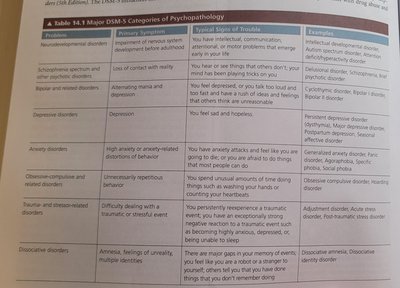
The Diagnostic and Statistical Manual of Mental Disorders, Fifth Edition (DSM-5) is the primary tool for classifying mental disorders. It organizes hundreds of disorders into major categories and guides diagnosis, treatment, and insurance billing. Comorbidity Bệnh đi kèm,, or the presence of more than one disorder in an individual, is common and complicates diagnosis and treatment. Sổ tay Chẩn đoán và Thống kê Rối loạn Tâm thần, Ấn bản thứ năm (DSM-5) là công cụ chính để phân loại rối loạn tâm thần. Nó sắp xếp hàng trăm rối loạn thành các danh mục chính và hướng dẫn chẩn đoán, điều trị và thanh toán bảo hiểm. Bệnh đi kèm, hoặc sự hiện diện của nhiều hơn một rối loạn ở một cá nhân, là phổ biến và làm phức tạp chẩn đoán và điều trị.
Classification Using Symptoms
Positive Symptoms: Excesses or distortions of normal behavior (e.g., hallucinations, delusions).
Negative Symptoms: Deficits or losses in normal functioning (e.g., flat affect, apathy).
Diagnosis involves assessing the presence, duration, and impact of symptoms, as well as ruling out other possible causes.
Easier version
Positive Symptoms: These are behaviors or experiences that are added to normal functioning. Examples include hallucinations (seeing or hearing things that aren’t there) and delusions (strongly held false beliefs). They are called "positive" because they are excesses or distortions thái quá hoặc biến dạng, not because they are good.
Negative Symptoms: These are losses or reductions in normal abilities. Examples include flat affect (showing little or no emotion), apathy (lack of motivation), or social withdrawal. They are called "negative" because something normal is missing.
Diagnosis Process: Mental health professionals look for these symptoms, consider how long they’ve been present, and how much they affect daily life. They also rule out other possible causes (like medical conditions or substance use) before making a diagnosis.
Summary: Diagnosing psychological disorders involves identifying both positive and negative symptoms, understanding their impact, and making sure they aren’t caused by something else.
Evolution and Critique of Diagnostic Categories Tiến hóa và phê bình các danh mục chẩn đoán
Diagnostic categories have changed over time, reflecting advances in science and shifts in cultural norms (e.g., removal of homosexuality as a disorder).
Critics argue that the proliferation of diagnoses may pathologize normal behavior and make psychiatric labeling easier, increasing the risk of stigma.
Easier
Evolution: Diagnostic categories for psychological disorders have changed over time as science advances and cultural values shift. For example, homosexuality was once considered a disorder but was removed from diagnostic manuals as understanding and social attitudes evolved. khi sự hiểu biết và thái độ xã hội phát triển
Critique: Some experts worry that creating more and more diagnostic categories can lead to "pathologizing" normal behaviors—labeling everyday struggles as mental disorders. This can make it easier to assign psychiatric labels, which may increase stigma and affect how people are treated by society.
Stigma and Legal Aspects Kỳ thị và các khía cạnh pháp lý
Stigma: Psychiatric labels can lead to prejudice, discrimination, and self-stigmatization Định kiến, phân biệt đối xử và tự kỳ thị discouraging people from seeking help.
Insanity Defense: A legal, not psychological, term referring to inability to understand the consequences of one's actions due to mental disorder. Few criminal cases result in a successful insanity defense.
Easier
Psychiatric labels are the official names or diagnoses given to mental health conditions, such as "major depressive disorder," "schizophrenia," or "generalized anxiety disorder." These labels are used by mental health professionals to:
Communicate clearly about a person's symptoms and treatment needs
Guide treatment decisions and insurance coverage
Help researchers study and understand mental health conditions
Stigma: Psychiatric labels can sometimes lead to negative attitudes and unfair treatment. This includes:
Prejudice: Holding negative beliefs about people with mental health diagnoses.
Discrimination: Treating people unfairly because of their diagnosis (e.g., in jobs or social situations).
Self-stigmatization: When individuals internalize these negative views, which can lower self-esteem and discourage them from seeking help.
Insanity Defense: This is a legal concept, not a psychological diagnosis. It means that, due to a mental disorder, a person could not understand the nature or wrongfulness of their actions at the time of a crime. It's important to note:
It is rarely used and even less often successful in court.
It focuses on the person's mental state during the crime, not just having a diagnosis.
Summary: While psychiatric labels can help with treatment, they can also lead to stigma. The insanity defense is a special legal issue related to mental health, but it is not commonly successful.
Important Note: While psychiatric labels can help with treatment and understanding, they can also lead to stigma or stereotypes if not used carefully. It's important to remember that a label describes a condition, not the whole person.
Causes of Mental Disorders
Biological Factors
Organic causes: Brain injury, tumors, hormonal imbalances, exposure to toxins (e.g., lead, mercury).
Genetic factors: Inherited vulnerabilities, as seen in schizophrenia and neurodevelopmental disorders (e.g., Down syndrome, autism).
Neurocognitive disorders: Disorders arising in adulthood, such as Alzheimer's disease, often involve brain atrophy and cognitive decline.
Biological factors—such as physical damage, genetics, and changes in the brain—can play a major role in the development of psychological disorders.
Psychosocial Factors
Psychological:
Stress, trauma, learning disorders, lack of control or mastery.
Family: Dysfunctional family dynamics, abuse, poor discipline.
Social: Poverty, homelessness, social disorganization.
The Stress-Vulnerability Model Mô hình căng thẳng-dễ bị tổn thương
This model posits cho rằng that mental disorders result from the interaction of inherited vulnerability and environmental stressors. It aligns with the biopsychosocial approach to understanding mental illness.
Biopsychosocial Approach
The biopsychosocial approach is a comprehensive way of understanding mental health and illness. It recognizes that psychological disorders are influenced by a combination of:
Biological factors: Genetics, brain chemistry, hormones, physical health, and neurobiology.
Psychological factors: Thoughts, emotions, coping skills, personality, and learned behaviors.
Social factors: Family relationships, culture, socioeconomic status, peer influences, and life experiences.
Key idea: No single factor fully explains mental health or illness. Instead, the biopsychosocial approach looks at how these three areas interact to shape a person's well-being or challenges. This model is widely used in psychology and psychiatry to guide assessment, diagnosis, and treatment.
Major Categories of Psychological Disorders
Neurodevelopmental and Neurocognitive Disorders Rối loạn phát triển thần kinh và nhận thức thần kinh
Include intellectual disabilities, autism spectrum disorders, and disorders like Alzheimer's disease. Bao gồm khuyết tật trí tuệ, rối loạn phổ tự kỷ và các rối loạn như bệnh Alzheimer.
Psychotic Disorders
Schizophrenia Tâm thần phân liệt:: Characterized by delusions, hallucinations, disorganized thought and behavior, and social withdrawal. Causes include genetic vulnerability, prenatal factors, brain abnormalities bất thường não, and neurotransmitter imbalances (dopamine, glutamate).
Delusional Disorders: Persistent false beliefs without other major symptoms of schizophrenia.
“These beliefs last for at least one month” means that, to be diagnosed with delusional disorder, a person must have their false belief(s) for a minimum of one month.
“Not explained by other major symptoms of schizophrenia” means that the person does not have the main symptoms seen in schizophrenia, such as:
Hallucinations: Seeing or hearing things that aren’t there.
Disorganized speech: Talking in a way that is hard to follow or doesn’t make sense.
Severely impaired functioning: Having serious trouble with daily life, work, or relationships because of their symptoms.
Mood Disorders Rối loạn tâm trạng
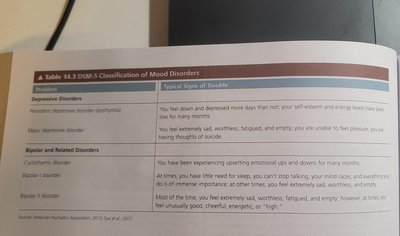
Depressive Disorders: Persistent sadness, hopelessness, loss of interest, fatigue, and suicidal thoughts. Includes major depressive disorder and persistent depressive disorder (dysthymia).
Bipolar Disorders Rối loạn lưỡng cực: Alternating periods of depression and mania (elevated mood, hyperactivity). Bipolar I involves full mania; Bipolar II involves hypomania.
Depressive disorders are marked by persistent sadness, hopelessness, loss of interest in activities, fatigue mệt mỏi, and sometimes suicidal thoughts. Major depressive disorder features intense episodes, while persistent depressive disorder (dysthymia) involves chronic, less severe symptoms. Bipolar disorders, or rối loạn lưỡng cực, involve alternating giai đoạn xen kẽ periods of depression and mania hưng cảm—mania being elevated mood and hyperactivity hiếu động thái quá. Bipolar I includes full manic episodes, while Bipolar II involves hypomania, a less intense form of mania. Both depressive and bipolar disorders significantly impact mood, energy, and daily functioning
Personality Disorders
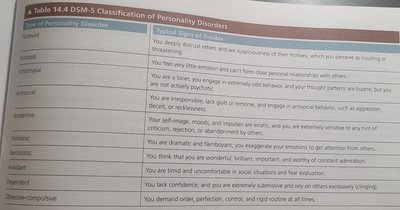
Long-standing: They begin in adolescence or early adulthood and continue over time. Inflexible Không linh hoạt: The person has trouble adapting their behavior to different situations. Causing distress or impairment: These patterns make life difficult for the person or those around them.
Long-standing, inflexible patterns of behavior causing distress or impairment. Examples include antisocial, borderline, narcissistic, and obsessive-compulsive personality disorders chống đối xã hội, ranh giới, tự ái.
Antisocial Personality Disorder: Marked by lack of conscience, empathy, and remorse; manipulative and often criminal behavior. Causes include childhood conduct disorder, neurological underarousal, and emotional coldness.
Antisocial Personality Disorder (ASPD): People with ASPD often do not feel guilt or empathy for others. They may lie, break laws, or act aggressively without remorse. Possible causes include having conduct disorder as a child, differences in brain activity (neurological underarousal), and growing up in emotionally cold environments.
Anxiety and Anxiety-Related Disorders
Generalized Anxiety Disorder Rối loạn lo âu tổng quát: Chronic Mãn tính,, excessive worry lo lắng quá mức and physical symptoms (e.g., sweating, racing heart).
Panic Disorder: Sudden, intense episodes of fear with physical symptoms.
Phobias Ám ảnh: Irrational fears of specific objects or situations (e.g., agoraphobia, social anxiety disorder, specific phobias).
Theoretical Approaches to Anxiety Disorders Phương pháp tiếp cận lý thuyết đối với rối loạn lo âu
Psychodynamic: Unconscious conflicts and defense mechanisms.
Humanistic: Faulty self-image and threats to self-concept.
Behavioral: Learned responses and avoidance behaviors (anxiety reduction hypothesis).
Cognitive: Distorted thinking and magnification of threats.
Explained Simply
Psychodynamic: Anxiety comes from unconscious (hidden) conflicts in your mind. Defense mechanisms (ways your mind tries to protect you) may cause anxiety if they don’t work well.
Humanistic: Anxiety happens when you have a negative or faulty self-image, or when something threatens your sense of who you are (your self-concept).
Behavioral: Anxiety is learned. For example, if you avoid something that makes you anxious, you feel relief, so you keep avoiding it. This is called the “anxiety reduction hypothesis.”
Cognitive: Anxiety is caused by distorted thinking suy nghĩ méo mó—like exaggerating phóng đại how dangerous something is or always expecting the worst.
Summary: Each theory explains anxiety disorders in a different way: hidden conflicts (psychodynamic), self-image problems (humanistic), learned avoidance (behavioral), or negative thinking patterns (cognitive).
Anxiety-Related Disorders Rối loạn liên quan đến lo âu
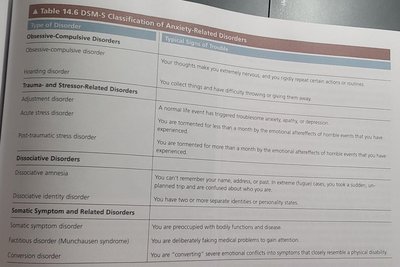
Obsessive-Compulsive and Related Disorders: Obsessions (intrusive thoughts) and compulsions (repetitive behaviors). Includes hoarding disorder.
Trauma- and Stressor-Related Disorders: Caused by exposure to traumatic events (e.g., PTSD, acute stress disorder, adjustment disorder).
Dissociative Disorders: Disruptions in consciousness, memory, or identity (e.g., dissociative amnesia, dissociative identity disorder).
Somatic Symptom and Related Disorders: Physical symptoms without medical cause (e.g., somatic symptom disorder, factitious disorder, conversion disorder).
Explain
Obsessive-Compulsive and Related Disorders:
Obsessions: Unwanted, intrusive thoughts that keep coming back (e.g., fear of germs). sợ vi trùng
Compulsions Sự cưỡng chế: Repetitive behaviors or mental acts done to reduce anxiety from obsessions (e.g., washing hands repeatedly).
Also includes hoarding disorder (difficulty discarding possessions). Cũng bao gồm rối loạn tích trữ (khó vứt bỏ tài sản).
Trauma- and Stressor-Related Disorders:
Caused by experiencing or witnessing traumatic events.
Examples: PTSD (Post-Traumatic Stress Disorder), acute stress disorder, adjustment disorder.
Dissociative Disorders:
Involve disruptions in consciousness Ý thức, memory, or identity.
Examples: dissociative amnesia (forgetting important information), dissociative identity disorder (having two or more distinct identities).
Somatic Symptom and Related Disorders:
Physical symptoms that can’t be explained by a medical condition. Các triệu chứng thể chất không thể giải thích bằng tình trạng y tế.
Examples: somatic symptom disorder (excessive worry about physical symptoms), factitious disorder rối loạn giả tạo( faking illness for attention), conversion disorder (neurological symptoms like paralysis with no medical cause).
Summary: These disorders are all related to anxiety, but they show up in different ways—through obsessions and compulsions, reactions to trauma, disruptions in memory or identity, or unexplained physical symptoms.
Summary Table: Major DSM-5 Categories of Psychopathology
Psychopathological Disorder | Primary Symptoms | Typical Signs of Trouble | Examples | ||
|---|---|---|---|---|---|
Neurodevelopmental disorders | Impaired development of the brain or central nervous system | Intellectual, communication, or behavioral problems appear early in life | Intellectual developmental disorder, autism spectrum disorder | ||
Schizophrenia spectrum and other psychotic disorders | Loss of contact with reality | Delusions, hallucinations, disorganized speech or behavior | Schizophrenia, delusional disorder | ||
Mood disorders | Disturbances in emotion and mood Rối loạn cảm xúc và tâm trạng | Prolonged sadness, mania, or both | Major depressive disorder, bipolar I disorder | ||
Anxiety disorders | High anxiety or anxiety-related distortions of behavior | Excessive worry Lo lắng quá mức,, panic attacks, phobias | Generalized anxiety disorder, panic disorder, phobias | ||
Obsessive-compulsive and related disorders | Preoccupation, repetitive behaviors | Obsessions, compulsions, hoarding | Obsessive-compulsive disorder, hoarding disorder | ||
Trauma- and stressor-related disorders | Difficulty dealing with trauma or stress | Persistent re-experiencing of trauma, avoidance, emotional numbness tê liệt cảm xúc | PTSD, acute stress disorder, adjustment disorder | ||
Dissociative disorders Rối loạn phân ly | Amnesia, feelings of unreality, multiple identities | Memory loss, identity confusion | Dissociative amnesia, dissociative identity disorder | ||
Somatic symptom and related disorders | Physical symptoms without medical cause | Preoccupation with health, unexplained physical complaints | Somatic symptom disorder, conversion disorder, factitious disorder rối loạn giả tạo |
Developing Perseverance ('Grit')
Psychology and Your Skill Set
Perseverance, or 'grit,' is the passion and persistence to pursue long-term goals. Research shows that grit is a better predictor of success than intelligence. Grit can be developed through:
Interest: Developing and deepening interests over time.
Deliberate Practice: Focused, effortful practice with feedback and improvement.
Purpose: Connecting actions to a greater meaning or benefit for others.
Hope: Maintaining optimism and resilience in the face of setbacks.
Building grit involves balancing exploration with commitment, seeking feedback, and persisting through challenges.
Tóm lại: Grit is about sticking with your goals, practicing with purpose, and staying hopeful. Anyone can build grit with the right mindset and habits!
