 Back
BackPsychological Disorders: Concepts, Types, and Understanding
Study Guide - Smart Notes
 Tailored notes based on your materials, expanded with key definitions, examples, and context.
Psychological Disorders
Basic Concepts of Psychological Disorders
Psychological disorders are defined as syndromes marked by clinically significant disturbances in an individual’s cognition, emotion regulation, or behavior. These disturbances are typically dysfunctional or maladaptive and are often accompanied by distress. The classification of psychological disorders aims to predict the disorder’s future course, suggest appropriate treatment, and prompt research.
Classification Systems: The Diagnostic and Statistical Manual of Mental Disorders (DSM-5) by the American Psychiatric Association and the International Classification of Diseases (ICD) by the World Health Organization are the primary classification systems.
Criticisms of DSM-5: The DSM-5 has been criticized for pathologizing everyday life, using subjective diagnostic labels, and the biasing power of labels.
Prevalence: Nearly 1 in 5 adult Americans experience a mental, behavioral, or emotional disorder each year (excluding developmental and substance use disorders).
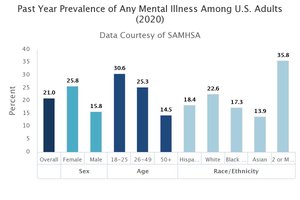
Vulnerability: Risk and protective factors for mental disorders are diverse and cross ethnic and gender lines. Most individuals experience first symptoms by age 24.
Anxiety Disorders, OCD, and PTSD
Anxiety Disorders
Anxiety disorders are characterized by excessive fear or anxiety and related behavioral disturbances. Major types include:
Generalized Anxiety Disorder (GAD): Persistent and excessive worry about various topics, often accompanied by physical symptoms of autonomic arousal.
Panic Disorder: Recurrent, unexpected panic attacks—sudden periods of intense fear with physical symptoms such as chest pain and choking sensations.
Phobias: Persistent, irrational fears of specific objects, activities, or situations, leading to avoidance behavior.
Obsessive-Compulsive Disorder (OCD)
OCD is marked by unwanted repetitive thoughts (obsessions) and/or actions (compulsions) that interfere with daily life. Related disorders include hoarding disorder, body dysmorphic disorder, trichotillomania, and excoriation disorder.
Posttraumatic Stress Disorder (PTSD)
PTSD involves symptoms such as flashbacks, nightmares, hypervigilance, avoidance, social withdrawal, numbness, and insomnia that persist for four weeks or more after a traumatic event.
Understanding Anxiety Disorders, OCD, and PTSD
Conditioning: Classical conditioning, stimulus generalization, and reinforcement can contribute to the development and maintenance of anxiety disorders.
Cognition: Thoughts, memories, interpretations, and expectations influence anxiety and related disorders.
Biology: Genetic factors (e.g., 17 gene variations linked to anxiety symptoms), neurotransmitter regulation, and brain structure (e.g., anterior cingulate cortex) play roles. Experience can affect gene expression through epigenetic mechanisms.
Natural Selection: Some anxiety-related behaviors may have been adaptive in evolutionary history but become maladaptive when extreme.
Major Depressive Disorder and Bipolar Disorder
Major Depressive Disorder
Major depressive disorder is characterized by persistent feelings of sadness, hopelessness, and loss of interest or pleasure in most activities. It is the leading cause of disability worldwide and the most common reason for seeking mental health services. Episodes may have a seasonal pattern.
Bipolar Disorder
Bipolar disorder involves alternating periods of depression and mania (an overexcited, hyperactive state). It is less common but often more severe than major depressive disorder and is a strong predictor of suicide. There are no significant gender differences in prevalence.
Understanding Depressive and Bipolar Disorders
Behavioral and Cognitive Changes: Depression is associated with changes in behavior and thought patterns, including self-defeating beliefs and negative explanatory styles.
Prevalence: Depression is widespread, with women at roughly double the risk compared to men. Most episodes resolve on their own, but stress often precedes onset.
Biological Perspective: Genetic heritability is significant (about 40% for major depressive disorder). Brain activity slows during depression and increases during mania. Nutritional factors (e.g., heart-healthy diet) and substance use (e.g., alcohol) influence risk.
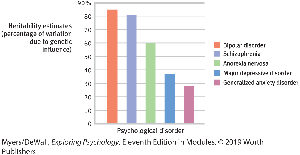
Social-Cognitive Perspective: Environmental factors, such as diet, drugs, and stress, can influence gene expression. Low self-esteem and negative thinking patterns contribute to depression.
Risk of Harm to Self and Others
Understanding Suicide
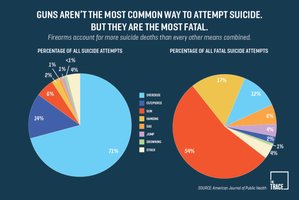
Suicide risk increases with anxiety and depression, especially during periods of symptom rebound. Suicide is often unpredictable and varies by nation, race, gender, age, and other factors. Access to lethal means, such as firearms, significantly increases the risk of fatal suicide attempts.
Helping Someone at Risk: Listen and empathize, ask directly about suicidal thoughts, connect the person with resources, and reduce access to lethal means.
Nonsuicidal Self-Injury (NSSI)
NSSI is more common among adolescents and females and involves deliberate self-harm without suicidal intent. Methods include cutting, burning, hitting, or inserting objects under the skin. Individuals often experience bullying, self-criticism, and other stressors.
Reasons for NSSI: Relief from negative thoughts, attracting attention, relieving guilt, influencing others’ behavior, or fitting in with peers.
Schizophrenia and Other Disorders
Schizophrenia
Schizophrenia is a psychotic disorder characterized by delusions, hallucinations, disorganized speech, and diminished or inappropriate emotional expression. It involves a loss of contact with reality and can include flat affect, impaired theory of mind, and abnormal motor behavior (e.g., catatonia).
Understanding Schizophrenia
Brain Abnormalities: Dopamine overactivity, reduced activity in the frontal lobe, thalamus, and amygdala, and abnormal brain anatomy (e.g., enlarged ventricles, reduced cortex and hippocampus) are common findings.
Genetic Factors: Schizophrenia is influenced by many genes, each with small effects. Lifetime risk increases with genetic relatedness to an affected individual.
Eating Disorders
Types of Eating Disorders
Anorexia Nervosa: Severe restriction of food intake leading to significantly low body weight; highest mortality rate among mental disorders.
Bulimia Nervosa: Cycles of binge eating followed by purging (e.g., vomiting, laxative use); intense concern with body shape and weight.
Binge-Eating Disorder: Recurrent episodes of binge eating without compensatory purging; feelings of loss of control during episodes.
Factors Influencing Eating Disorders
Family Environment: Family attitudes and dynamics can contribute to risk.
Heredity: Genetic predisposition plays a role.
Cultural and Gender Components: Societal standards and gender expectations influence prevalence.
Peer and Media Influence: Peer pressure and media portrayals of body image are significant factors.
