 Back
BackPsychological Research: Methods, Analysis, and Ethics
Study Guide - Smart Notes
 Tailored notes based on your materials, expanded with key definitions, examples, and context.
Psychological Research
Introduction to Psychological Research
Psychological research is the scientific study of the mind and behavior, aiming to understand, explain, and predict human actions. Scientific research in psychology relies on objective, repeatable evidence, distinguishing it from intuition, authority, or personal experience.
Objective Evidence: Research is based on observable, measurable data.
Critical Thinking: Evaluating claims requires assessing expertise, evidence, and peer consensus.
Application: Research findings inform public policy and personal decisions.
The Scientific Method
Overview of the Scientific Method
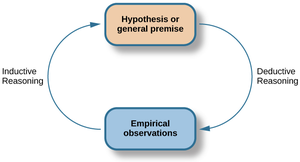
The scientific method is a cyclical process involving hypothesis formation, empirical observation, and theory modification. It ensures that psychological knowledge is built on systematic investigation.
Theory: A well-developed set of ideas explaining observed phenomena.
Hypothesis: A testable, falsifiable prediction about the relationship between variables, often in "if-then" form.
Empirical Observations: Data collected through observation or experimentation.
Research Methods in Psychology
Case Studies
Case studies involve in-depth analysis of individuals with unique psychological characteristics. They provide detailed insights but may lack generalizability.
Example: The case of Phineas Gage, who survived a brain injury that changed his personality.
Naturalistic Observation
Naturalistic observation entails observing behavior in its natural environment, offering realistic data but limited control over variables.
Advantages: Realistic depiction of behavior.
Disadvantages: Observer effect, observer bias, and difficulty in controlling variables.
Masked Observers: Observers unaware of the research question to reduce bias.

Laboratory Observation
Laboratory observation involves studying behavior in a controlled environment, allowing for manipulation of variables but possibly producing artificial behavior.
Advantages: Environmental control, use of specialized equipment.
Disadvantages: Artificiality may limit generalizability.


Surveys
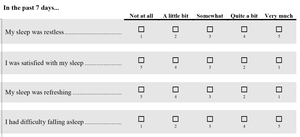
Surveys collect data on attitudes, opinions, or behaviors through structured questions, enabling research on large populations.
Advantages: Efficient data collection from many participants.
Disadvantages: Potential for response bias and limited depth.

Archival, Longitudinal, and Cross-Sectional Research
Archival Research: Analyzing existing records to identify patterns.
Cross-Sectional Research: Comparing different population segments at one time.
Longitudinal Research: Studying the same group over an extended period.
Analyzing Findings: Correlation and Causation
Correlational Research
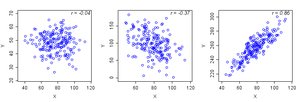
Correlational research examines relationships between variables, quantified by the correlation coefficient (r), which ranges from -1 to 1.
Positive Correlation (r > 0): Variables move in the same direction.
Negative Correlation (r < 0): Variables move in opposite directions.
No Correlation (r ≈ 0): No relationship between variables.
Correlation vs. Causation
Correlation does not imply causation. Only experimental designs can establish cause-and-effect relationships. Confounding variables and illusory correlations can mislead interpretations.
Confounding Variable: An outside factor affecting both variables, creating a false impression of causality.
Illusory Correlation: Perceiving a relationship where none exists.
Confirmation Bias: Tendency to seek information that confirms existing beliefs.
Experimental Research
Experimental Design
Experiments involve manipulating an independent variable (IV) and measuring its effect on a dependent variable (DV) to determine causality.
Experimental Group: Receives the manipulated variable.
Control Group: Does not receive the manipulation; serves as a comparison.
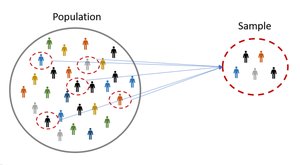
Random Sample: Every member of the population has an equal chance of selection.
Random Assignment: Participants have equal chance of being in any group.
Operational Definition: Precise description of how variables are measured or manipulated.
Potential Issues in Experiments
Confounds: Extraneous variables affecting results.
Experimenter Bias: Researcher expectations influence outcomes.
Participant Bias: Participant expectations influence outcomes.
Single-Masked (Blind) Study: Participants unaware of group assignment.
Double-Masked (Blind) Study: Both researchers and participants are unaware of group assignments.
Placebo Effect: Participants' expectations influence their experience.
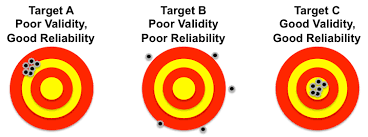
Reliability and Validity
Definitions and Importance
Reliability and validity are essential for ensuring the quality of psychological measurements.
Reliability: Consistency and reproducibility of results.
Validity: The extent to which a tool measures what it is intended to measure.
A valid measure must be reliable, but a reliable measure is not always valid.
Ethics in Psychological Research
Research Involving Humans
Strict ethical guidelines protect human participants in research. Institutional Review Boards (IRBs) review and approve research proposals to ensure safety and ethical standards.
Informed Consent: Participants are informed about the study, risks, and their rights before consenting.
Confidentiality: Data collected is kept confidential.
Research Involving Animals
Animal research is regulated by Institutional Animal Care and Use Committees (IACUCs), which ensure ethical treatment of animals.
Three R's:
Replacement: Use alternatives to animals when possible.
Refinement: Minimize animal distress.
Reduction: Use the fewest animals necessary.
