 Back
BackSelf-Awareness and Personal Growth: Lessons from Steve Jobs
Study Guide - Smart Notes
 Tailored notes based on your materials, expanded with key definitions, examples, and context.
Unit I: Self Awareness
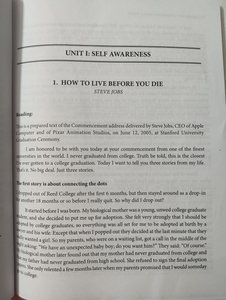
How to Live Before You Die – Steve Jobs
This section presents a structured summary of Steve Jobs' commencement address at Stanford University, focusing on self-awareness, personal growth, and psychological resilience. These themes are directly relevant to psychology, particularly in the areas of emotion and motivation, personality, and developmental psychology.
Stories of Self-Awareness and Growth
Connecting the Dots
Steve Jobs discusses the importance of trusting one's intuition and following one's interests, even when the path is unclear. This story highlights the psychological concept of self-awareness and the role of intrinsic motivation in personal development.
Self-awareness: Understanding one's own values, interests, and motivations is crucial for making life decisions.
Intrinsic motivation: Jobs' decision to drop out of college and pursue his interests (e.g., calligraphy) demonstrates motivation driven by internal satisfaction rather than external rewards.
Example: The calligraphy course, though seemingly impractical, later influenced the design of the Macintosh computer.
Love and Loss
Jobs recounts his experience of being fired from Apple, the company he founded, and how this setback led to new opportunities and personal growth. This story illustrates the psychological concepts of resilience, self-concept, and motivation.
Resilience: The ability to recover from setbacks and adapt to new circumstances.
Self-concept: Jobs' sense of identity was challenged, but he rebuilt his self-concept through new ventures (NeXT, Pixar).
Motivation: Jobs' passion for his work drove him to continue innovating despite adversity.
Example: Founding NeXT and Pixar after leaving Apple, which eventually led to his return and further success.

Death and Meaning
Jobs reflects on his cancer diagnosis and the awareness of mortality, emphasizing the importance of living authentically and making meaningful choices. This story connects to psychological theories of existential psychology, motivation, and self-actualization.
Existential psychology: Confronting mortality can lead to greater self-awareness and a focus on what truly matters.
Self-actualization: The process of realizing one's full potential and living a meaningful life.
Motivation: Awareness of death motivates individuals to pursue their passions and values.
Example: Jobs' advice to "live each day as if it were your last" encourages proactive, authentic living.

Key Psychological Concepts Illustrated
Self-awareness: The ability to recognize and understand one's own thoughts, feelings, and motivations.
Resilience: The capacity to recover from difficulties and adapt to change.
Intrinsic vs. extrinsic motivation: Motivation driven by internal satisfaction versus external rewards.
Self-actualization: Achieving one's fullest potential and living authentically.
Existential meaning: Finding purpose in life, especially when confronted with mortality.
Applications and Exercises
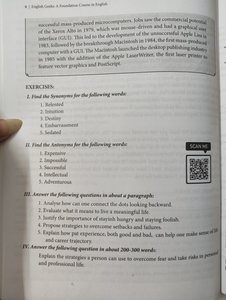
Reflection: Students are encouraged to reflect on their own experiences of overcoming adversity, following their passions, and confronting existential questions.
Discussion: How can self-awareness and resilience help individuals navigate challenges in academic and personal life?
Writing: Exercises prompt students to explore how fear and risk-taking influence personal growth.
Summary Table: Psychological Concepts in Steve Jobs' Stories
Story | Psychological Concept | Application |
|---|---|---|
Connecting the Dots | Self-awareness, Intrinsic Motivation | Trusting intuition, pursuing interests |
Love and Loss | Resilience, Self-concept | Recovering from setbacks, redefining identity |
Death | Existential Psychology, Self-actualization | Living authentically, finding meaning |
Conclusion
Steve Jobs' address provides valuable insights into self-awareness, motivation, resilience, and existential meaning. These concepts are foundational in psychology and are essential for understanding personal growth and development.
