 Back
BackSensation and Perception: Foundations of Experience
Study Guide - Smart Notes
 Tailored notes based on your materials, expanded with key definitions, examples, and context.
Sensation and Perception
Introduction to Sensation and Perception
Sensation and perception are fundamental processes that allow us to experience and interpret the world. Sensation refers to the detection of physical energy from the environment, while perception involves the organization and interpretation of sensory information by the brain. These processes are not always accurate, and can be influenced by expectations, context, and physiological factors.
Our Sensational Senses
The Basics of Sensation
Sensation begins with sense receptors, specialized cells in the sense organs (eyes, ears, tongue, nose, skin) that convert physical energy into electrical impulses. These impulses travel along nerve pathways to specific areas of the brain, a principle known as the doctrine of specific nerve energies. This anatomical coding explains why different senses (vision, hearing, etc.) produce distinct experiences.
Sensation: Detection of physical energy by sense organs.
Perception: Mental operations that organize sensory impulses into meaningful patterns.
Sense Receptors: Convert environmental energy to neural impulses.
Synesthesia: Rare condition where stimulation of one sense evokes another.
Measuring the Senses
Thresholds and Sensory Sensitivity
Psychophysics studies the relationship between physical stimuli and psychological experience. Two key thresholds are:
Absolute Threshold: The smallest quantity of physical energy reliably detected (50% of the time).
Difference Threshold (Just Noticeable Difference, jnd): The smallest difference in stimulation reliably detected.
Our senses are highly sensitive, but tuned to only a narrow band of energies. For example, humans see only a small fraction of the electromagnetic spectrum.
Signal-Detection Theory
This theory divides detection into a sensory process (stimulus intensity) and a decision process (response bias). Four possible outcomes: hit, miss, false alarm, correct rejection. Response bias can be influenced by motivation, alertness, and expectations.
Sensory Adaptation and Deprivation
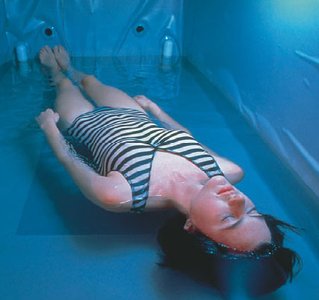
Sensory adaptation is the reduction in responsiveness when stimulation is unchanging. Sensory deprivation, the absence of normal stimulation, can lead to disorientation or hallucinations, but effects depend on context and interpretation.
Selective Attention and Inattentional Blindness
Selective attention allows us to focus on important stimuli and block out others, but can cause us to miss obvious things (inattentional blindness).

Vision
Physical Properties of Light and Visual Experience
Vision is the most studied sense. Light's physical properties correspond to psychological dimensions:
Hue: Related to wavelength (color names).
Brightness: Related to intensity (amplitude).
Saturation: Related to complexity (purity of color).
Anatomy of the Eye
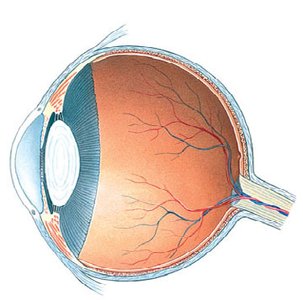
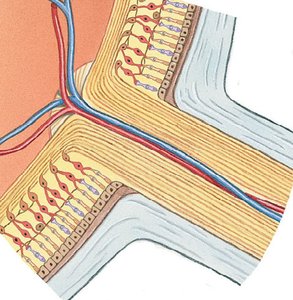
The eye focuses light onto the retina, which contains two types of visual receptors:
Rods: Sensitive to dim light, responsible for night and peripheral vision.
Cones: Sensitive to color, concentrated in the fovea, require more light.
Signals from rods and cones are processed by bipolar and ganglion cells, whose axons form the optic nerve. The retina is an extension of the brain, and the image projected is upside-down, corrected by the brain.
Feature Detection and Specialized Modules
Feature-detector cells in the visual cortex respond to specific patterns (lines, edges, faces). Some evidence suggests specialized modules for face recognition, but these may also respond to other objects depending on experience.

Theories of Color Vision
Trichromatic Theory: Three types of cones (blue, green, red) combine to produce all hues.
Opponent-Process Theory: Opponent-process cells respond in opposite fashion to pairs of colors (red/green, blue/yellow).
Form Perception and Gestalt Principles
The brain organizes sensory information using Gestalt principles:
Figure and Ground: Distinguishing objects from background.
Proximity: Grouping nearby elements.
Closure: Filling in gaps to perceive complete forms.
Similarity: Grouping similar elements.
Continuity: Perceiving lines and patterns as continuous.
Depth and Distance Perception
Depth perception relies on binocular cues (convergence, retinal disparity) and monocular cues (interposition, linear perspective, relative size, texture gradients, motion parallax, light and shadow, relative clarity).
Perceptual Constancies and Illusions
Perceptual constancy allows us to perceive objects as stable despite changes in sensory input (size, shape, location, brightness, color). Illusions occur when these strategies are misapplied or sensory cues are misleading.
Hearing
Physical Properties of Sound and Auditory Experience
Loudness: Related to intensity (amplitude).
Pitch: Related to frequency (Hz).
Timbre: Related to complexity (quality of sound).
Anatomy of the Ear
The ear consists of outer, middle, and inner sections. The cochlea contains the organ of Corti, where hair cells (cilia) serve as receptors for hearing. Damage to hair cells from loud noise can cause hearing loss.
Auditory Perception
Gestalt principles also apply to hearing (figure/ground, proximity, continuity, similarity, closure). Sound localization depends on differences in timing and intensity between the ears.
Other Senses
Taste (Gustation)
Taste occurs when chemicals stimulate receptors in taste buds located on papillae of the tongue. Four basic tastes: salty, sour, bitter, sweet. Some researchers propose a fifth taste, umami, but evidence is debated. Genetic differences (supertasters) and cultural learning influence taste preferences.
Smell (Olfaction)
Smell receptors are located in the nasal cavity and respond to airborne molecules. Distinct odors activate unique combinations of receptor types. Smell is linked to memory and emotion, and can influence behavior unconsciously.
Skin Senses
The skin senses include touch (pressure), warmth, cold, pain, itch, and tickle. Specialized receptors exist for some sensations, but many aspects remain under study.
Pain and the Gate-Control Theory
Pain is both a skin and internal sense. The gate-control theory proposes that pain impulses must pass through a 'gate' in the spinal cord, which can be opened or closed by various factors. Psychological factors (expectations, emotions, attention) and placebos can influence pain perception.
Kinesthesis and Equilibrium
Kinesthesis provides information about body part location and movement, while equilibrium (sense of balance) relies on the semicircular canals in the inner ear.
Perceptual Powers: Origins and Influences
Inborn Abilities and Critical Periods
Many perceptual abilities are inborn or develop early. Experience during critical periods is essential for normal development; deprivation can impair perception.
Psychological and Cultural Influences
Needs, motives, beliefs, emotions, expectations, and culture all influence perception. Perceptual sets (expectations) can cause us to misperceive or fill in missing information. Culture shapes what we attend to and how we interpret sensory input.
Perception without Awareness
Subliminal Perception and Priming
Some stimuli are processed below the threshold of conscious awareness (subliminal). Priming studies show that simple subliminal messages can influence judgments and preferences, but evidence for real-world effects is limited.
Psychology in the News: Revisited
Critical Thinking about Perception
Perception is not always reliable. Expectations, context, and motivation can lead to illusions or misinterpretations, such as seeing UFOs or experiencing pain differently. Scientific investigation and critical thinking are essential for distinguishing reality from illusion.

Key Terms
Sensation, Perception, Sense Receptors, Synesthesia, Absolute Threshold, Difference Threshold, Signal-Detection Theory, Sensory Adaptation, Sensory Deprivation, Selective Attention, Inattentional Blindness, Rods, Cones, Trichromatic Theory, Opponent-Process Theory, Gestalt Principles, Binocular/Monocular Cues, Perceptual Constancy, Perceptual Illusion, Audition, Loudness, Pitch, Timbre, Organ of Corti, Cochlea, Hair Cells, Gustation, Papillae, Taste Buds, Supertasters, Olfaction, Gate-Control Theory, Phantom Pain, Kinesthesis, Equilibrium, Critical Period, Perceptual Set, Subliminal Perception, Priming, Extrasensory Perception (ESP), Parapsychology
