 Back
BackSensation and Perception: Foundations of Psychological Experience
Study Guide - Smart Notes
 Tailored notes based on your materials, expanded with key definitions, examples, and context.
General Concepts in Sensation and Perception
Sensation vs. Perception
Sensation and perception are foundational concepts in psychology, describing how organisms detect and interpret environmental stimuli. Sensation refers to the stimulation of sense organs, while perception involves the selection, organization, and interpretation of sensory input.
Transduction: The process by which sensory stimuli are converted into electrochemical signals for the nervous system.
Psychophysics: The scientific study of the relationship between physical stimuli and the sensations and perceptions they produce.
Stimulus: Any detectable input from the environment.
Thresholds and Detection
Thresholds define the limits of sensory detection. The absolute threshold is the minimum intensity of a stimulus that can be detected 50% of the time. The just noticeable difference (JND) is the smallest detectable difference between two stimuli.
Weber’s Law: The size of the JND is a constant proportion of the initial stimulus intensity, varying by sensory modality.
Fechner’s Law: Subjective sensation increases proportionally to the logarithm of stimulus intensity.
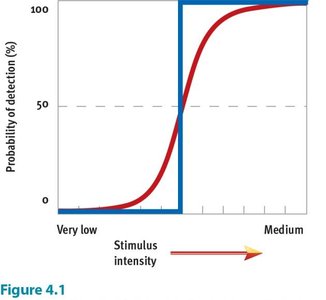
Signal Detection Theory
Signal detection theory posits that stimulus detection is influenced by both sensory and decision-making processes, which are affected by factors such as expectation, motivation, and attention.
Outcomes include: hit, miss, false alarm, and correct rejection.
Subliminal Perception and Sensory Adaptation
Subliminal perception refers to the registration of sensory input without conscious awareness. Sensory adaptation is the gradual decline in sensitivity to a constant stimulus, allowing organisms to focus on changes in their environment.
The Auditory System
Physical Properties of Sound
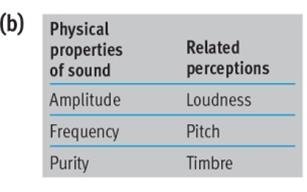
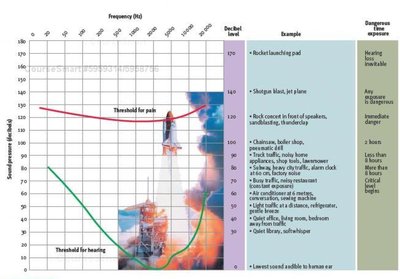
Sound is produced by vibrations that travel through a medium, such as air. The main physical properties of sound are amplitude, frequency, and purity, each corresponding to a psychological perception.
Amplitude (dB): Perceived as loudness.
Frequency (Hz): Perceived as pitch.
Purity: Perceived as timbre.
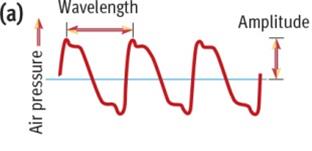
Frequency and Wavelength
Frequency is measured in hertz (Hz) and determines the pitch of a sound. Wavelength is the distance between peaks in a sound wave and also influences pitch.

Amplitude and Purity
Amplitude is measured in decibels (dB) and determines loudness. Purity refers to the complexity of the sound wave, affecting timbre.

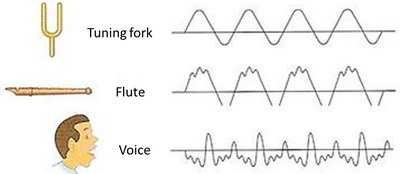
Hearing Capacities
Humans can hear frequencies from 20 Hz to 20,000 Hz. Sensitivity varies across species and frequencies.
Species | Lower Frequency (Hz) | Upper Frequency (Hz) |
|---|---|---|
Humans | 20 | 20,000 |
Dogs | 50 | 45,000 |
Cats | 45 | 85,000 |
Bats | 20 | 120,000 |
Dolphins | 0.25 | 200,000 |
Elephants | 5 | 10,000 |
Anatomy of the Ear
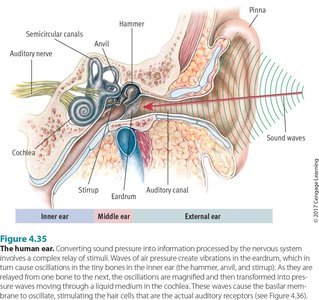
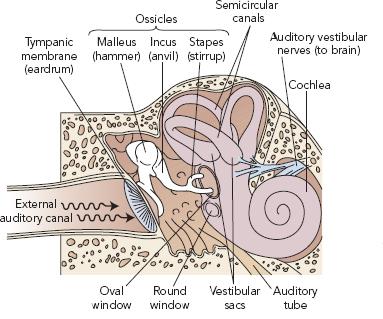
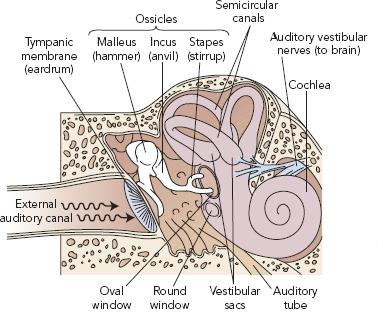
The ear is divided into three main parts: the external ear (pinna), middle ear (ossicles), and inner ear (cochlea). Each part plays a role in conducting and transducing sound waves into neural signals.
Pathway of Sound and Basilar Membrane
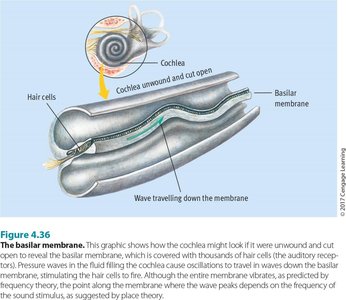
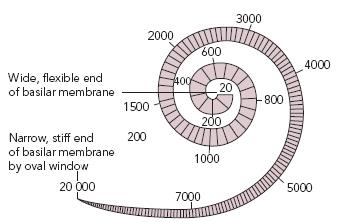
Sound waves vibrate the ossicles, which transmit vibrations to the cochlea. Movement of the basilar membrane stimulates hair cells, converting physical energy into neural impulses.
Theories of Hearing
Pitch perception is explained by two main theories:
Place Theory: Different frequencies stimulate different places along the basilar membrane.
Frequency Theory: Pitch is determined by the rate of vibration of the entire basilar membrane.
Auditory Localization and Deafness
Auditory localization relies on differences in sound intensity and timing between the ears. Deafness can be conductive (middle ear) or sensorineural (inner ear), with noise-induced hearing loss being common.
The Olfactory and Gustatory Systems
Smell (Olfaction)
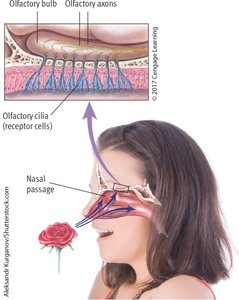
Olfactory receptors (cilia) in the nasal cavity detect airborne chemicals (odorants). The olfactory pathway bypasses the thalamus and projects directly to the olfactory bulb in the brain.
Taste (Gustation)
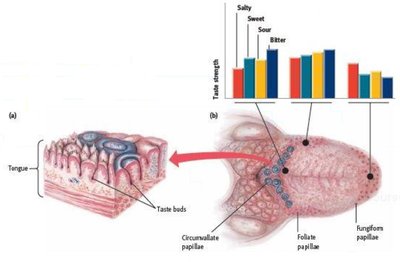
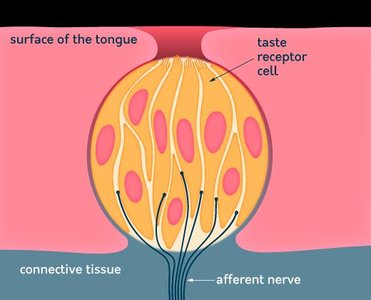
Taste is detected by receptor cells in taste buds, which are sensitive to five basic tastes: sweet, salty, sour, bitter, and umami. Each taste bud contains 50-100 taste-sensitive cells.
Integration of Taste and Smell
Flavor perception is a combination of taste, smell, and tactile sensations. Signals from taste and smell converge in the orbitofrontal cortex.
The Sense of Touch
Skin Sensory Systems
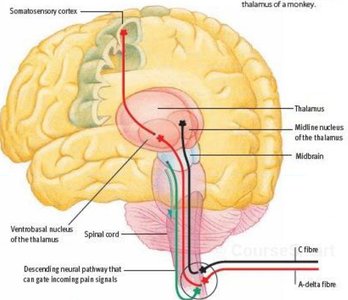
The skin detects tactile qualities, temperature, and pain through specialized receptors. Sensory information travels via the spinal cord to the brainstem, thalamus, and somatosensory cortex.
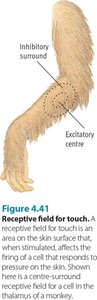
Pressure: Detected by specific cells with excitatory centers and inhibitory surrounds, allowing for localization of touch.
Temperature and Pain: Detected by free nerve endings; pain is transmitted via fast (localized) and slow (diffuse) pathways.
Pain Perception
Pain perception is influenced by psychological factors such as expectation and mood. The gate-control theory suggests that pain signals can be modulated in the spinal cord. Endorphins act as natural painkillers.
Kinesthetic and Vestibular Senses
Kinesthetic System
The kinesthetic system monitors the position and movement of body parts through receptors in muscles and joints.
Vestibular System
The vestibular system, located in the inner ear, detects gravity and head movement, helping maintain balance and spatial orientation. The semicircular canals are key structures in this system.
The Visual System
Properties of Light
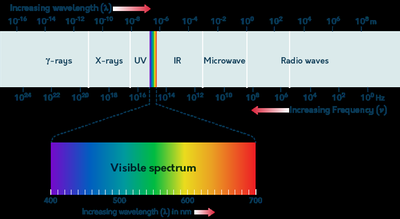
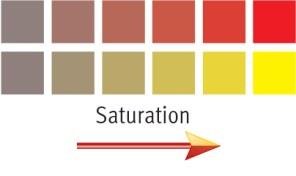
Light is electromagnetic radiation with properties of amplitude (brightness), wavelength (color), and purity (saturation).
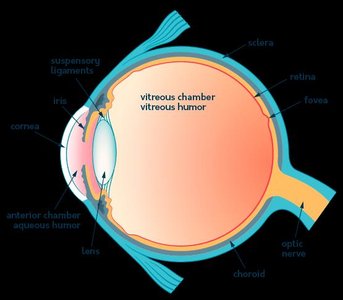
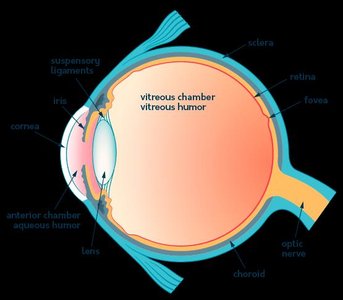
Anatomy of the Eye
Light enters the eye through the cornea and lens, which focus images onto the retina. The lens changes shape (accommodation) to focus on objects at different distances.
Retina and Photoreceptors
The retina contains rods (for low light and movement) and cones (for color and detail). The fovea is the center of the retina with only cones, while the optic disk is the blind spot where the optic nerve exits the eye.
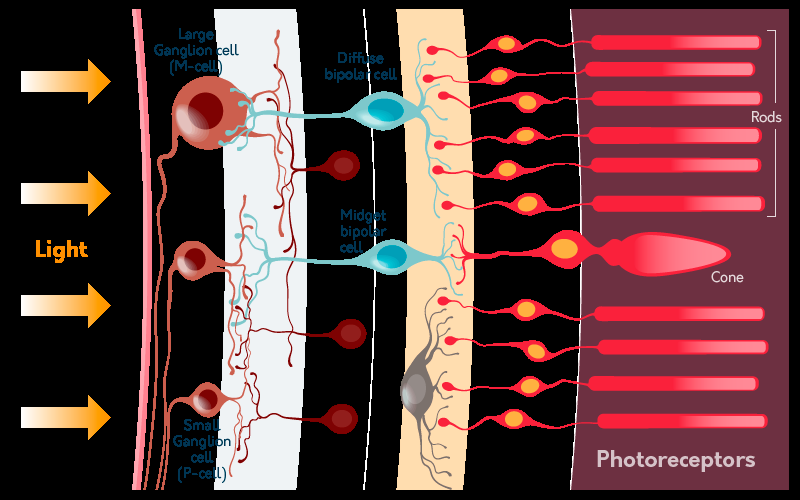
Visual Pathways and Processing
Visual information travels from the retina to the lateral geniculate nucleus (LGN) and then to the visual cortex. Feature detectors in the cortex respond to specific visual elements such as lines and edges.
Focusing and Visual Disorders
The cornea and lens focus light onto the retina. Myopia (nearsightedness) and hyperopia (farsightedness) are common focusing problems caused by the shape of the eye or lens.
Color Vision Theories
Color vision is explained by the trichromatic theory (three types of cones for red, green, blue) and the opponent-process theory (cones responsive to pairs of colors: red-green, blue-yellow, black-white). Most color blindness is due to missing or malfunctioning cones.
Depth Perception
Depth perception relies on monocular cues (e.g., occlusion, relative size) and binocular cues (retinal disparity, convergence) to judge distance and three-dimensional structure.
Perceptual Organization
Gestalt principles describe how we organize visual information into meaningful patterns, including figure-ground, proximity, similarity, closure, good continuation, and common fate.
Perceptual Constancies
Perceptual constancies allow us to perceive objects as stable despite changes in sensory input, such as size, shape, brightness, and color constancy.
