 Back
BackSensation and Perception: Foundations of Visual Processing
Study Guide - Smart Notes
 Tailored notes based on your materials, expanded with key definitions, examples, and context.
Sensation and Perception
Definitions and Information Processing
Sensation and perception are fundamental processes in psychology that allow us to interpret and interact with the world. Sensation refers to the absorption of raw energy (such as light or sound waves) through sensory organs, while perception involves selecting, organizing, and interpreting these signals to construct a theory of reality.
Sensation: The process of absorbing environmental energy through sensory organs.
Transduction: Conversion of environmental energy into neural signals.
Perception: The brain's attempt to make sense of sensory patterns, constructing objects and their properties within the mind.
Key Point: Perception does not directly reflect physical reality; objects and their properties exist in the brain, not in the external world.
Example: The color "red" of an apple is a percept constructed by the brain, not an inherent property of the apple itself.

Bottom-Up and Top-Down Processing
Perceptual processing can occur through two main mechanisms: bottom-up and top-down processing. Bottom-up processing builds perceptions from sensory input, while top-down processing uses prior knowledge, expectations, or memories to interpret stimuli.
Bottom-Up Processing: Perceptions are assembled systematically from analyses of the stimulus, progressing from simple to complex representations.
Top-Down Processing: Perceptions are constructed from pre-existing knowledge or expectations, less directly tied to the stimulus.
Example: Recognizing an apple is a bottom-up process; recognizing a Dalmatian in a fragmented image is a top-down process.
Visual Processing: From Light to Neural Patterns
Visual perception begins with the reflection of light from objects, which enters the eye and is focused onto the retina. The retina contains photoreceptors that transduce light energy into neural signals, which are then processed by the brain to create visual patterns.
Photoreceptors: Light-sensitive neurons in the retina responsible for transducing light energy.
Ganglion Cells: Receive signals from photoreceptors; their axons form the optic nerve.
Primary Visual Cortex: Transforms neural signals into visual patterns using specialized cells.

Feature Detection: Simple, Complex, and End-Stopped Cells
The primary visual cortex contains cells that act as feature detectors, each responding to specific aspects of visual stimuli.
Simple Cells: Respond best to oriented bars, coding for different orientations.
Complex Cells: Respond to bars of a particular orientation moving in a specific direction.
End-Stopped Cells: Respond to bar length and width, as well as orientation and direction of motion.
Key Point: These cells work together to provide low-level analysis crucial for object recognition.



Recognition-by-Components Theory
According to Biederman's Recognition-by-Components Theory, object recognition results from matching visual patterns to three-dimensional features called geons.
Geons: Volumetric features such as cylinders, rectangular solids, cones, and pyramids used to represent objects.
Componential Recovery: Recognition is good when geons are recoverable; poor when geons are missing or obscured.
Example: A plane represented by 9 geons is recognized quickly; a plane with only 3 geons is recognized slowly.




Size Constancy and Visual Illusions
Size constancy is the perceptual phenomenon where objects are perceived as having constant size despite changes in distance or retinal image size. This principle also explains certain visual illusions.
Size Constancy: Perception compensates for distance, so two quarters held at different distances appear the same size.
Visual Illusions: Contextual cues can make objects appear larger or smaller than they are.



Top-Down Cues and Object Recognition
Scene context and prior knowledge provide top-down cues that aid in recognizing visually degraded objects. The same pattern can be interpreted differently depending on context.
Contextual Influence: The identity of an object can change based on the surrounding scene.
Key Point: Removing context can make patterns unrecognizable.
Light-from-Above Heuristic
Perception is influenced by assumptions about the environment, such as the belief that light comes from above. This affects how patterns are recognized, such as distinguishing indentations from mounds.
Heuristic: Assumption of light direction influences perception of shapes and shadows.
Example: Shaded discs are perceived as either protruding or indented based on light direction.



Theory of Unconscious Inference and Likelihood Principle
Helmholtz's Theory of Unconscious Inference posits that perceptions are influenced by unconscious assumptions about the environment. The Likelihood Principle states that we perceive the world in the way that is most likely based on past experiences.
Unconscious Inference: Perceptions are shaped by implicit knowledge and assumptions.
Likelihood Principle: The brain interprets sensory information in the most probable way given prior experience.
Gestalt Psychology: Perceptual Organization
Gestalt psychology emphasizes that perception is not merely the sum of sensations, but also the result of perceptual organization. Several principles guide how we group and interpret sensory information.
Pragnanz: Patterns are perceived in their simplest form.
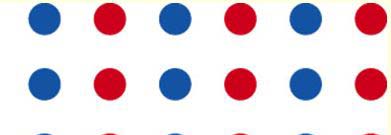
Similarity: Similar items are grouped together.
Good Continuation: Points connected by straight lines or smooth curves are grouped.
Meaning: Items are grouped to form meaningful or familiar patterns.



Perception and Action
Perception guides our actions, and actions in turn influence perception. For example, visual perception informs motor actions such as grasping objects, and moving around an object helps represent its shape.
Perception Guides Action: Visual information is used to direct motor behavior.
Action Informs Perception: Movement and eye actions change perceptual input.
What vs Where Pathways
There are two largely independent cortical pathways in the brain: the "what" pathway (ventral stream) for object recognition, and the "where" pathway (dorsal stream) for object position.
What Pathway: Runs from the occipital lobe to the temporal lobe; responsible for object identification.
Where Pathway: Runs from the occipital lobe to the parietal lobe; responsible for spatial location.
Evidence: Lesions in the temporal lobe disrupt object discrimination, while lesions in the parietal lobe disrupt location discrimination, demonstrating a double dissociation.
Pathway | Function | Lesion Effect |
|---|---|---|
Ventral (What) | Object Recognition | Impaired object discrimination |
Dorsal (Where) | Spatial Location | Impaired location discrimination |
Summary: Sensation and perception involve complex processes of information processing, feature detection, object recognition, and perceptual organization, all of which are essential for understanding how we interpret and interact with the world.
