 Back
Back6. Sensation and Perception: Foundations of Visual Experience
Study Guide - Smart Notes
 Tailored notes based on your materials, expanded with key definitions, examples, and context.
Sensation and Perception
Introduction to Sensation and Perception
Sensation and perception are fundamental processes in psychology that allow organisms to interpret and interact with their environment. Sensation refers to the detection of physical energy by sensory receptors, while perception involves the organization and interpretation of these sensory signals to form a coherent representation of the world.
Stimulus: Any pattern of physical energy (e.g., light, sound, pressure) that can be detected by sensory receptors.
Sensation: The activity of a sensory receptor in response to a stimulus.
Perception: The psychological organization and interpretation of component sensations into meaningful experiences.
The Role of the Sensory System
The sensory system is responsible for converting external energy into neural signals—a process known as sensory transduction. Our perception of reality is limited by the capabilities of our sensory systems.
Sensory Transduction: The process of converting one form of energy (e.g., light, sound) into another (neural signals).
Our internal world is constrained by what our sensory systems can detect (e.g., humans see only a small portion of the electromagnetic spectrum).
The Anatomy of the Eye and Vision
Structure and Function of the Eye
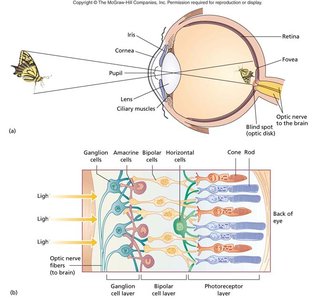
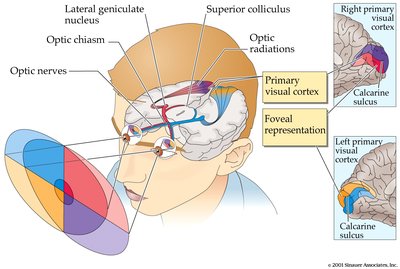
The human eye contains approximately 125 million photoreceptors on the retina, which is a two-dimensional surface at the back of the eye. Light from the environment is focused onto the retina, where it is converted into neural signals.
Cornea and Lens: Focus incoming light onto the retina.
Pupil: Regulates the amount of light entering the eye.
Retina: Contains rods and cones (photoreceptors) that transduce light into neural signals.
Optic Nerve: Transmits visual information from the retina to the brain.
Color Vision
Trichromatic Theory of Color Vision
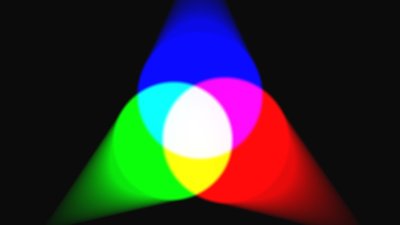
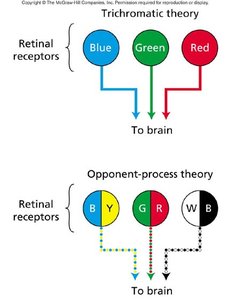
The trichromatic theory, proposed by von Helmholtz, suggests that color vision is based on the activity of three types of cones in the retina, each sensitive to different wavelengths (red, green, blue).
Red, Green, Blue Cones: Each type responds maximally to a specific range of wavelengths.
Color perception arises from the relative activation of these three cone types.
Opponent-Process Theory of Color Vision
Hering's opponent-process theory proposes that color vision is controlled by opposing neural processes: blue-yellow, green-red, and white-black. This theory explains phenomena such as afterimages and color contrast effects.
Opponent Pairs: Blue vs. Yellow, Green vs. Red, White vs. Black.
Activation of one member of the pair inhibits the other, leading to the perception of specific colors.
From Stimulus to Perception
The Construction of Perception
Perception is not a direct reflection of the external world; rather, it is a constructive process that integrates sensory input with prior knowledge and context. The brain must create a stable and accurate representation of reality from incomplete and sometimes ambiguous sensory information.
Bottom-Up Processing: Perception driven by sensory input.
Top-Down Processing: Perception influenced by expectations, context, and prior knowledge.
Perception is an active process of hypothesis testing and inference.
Top-Down Effects on Perception: Palmer's Experiment
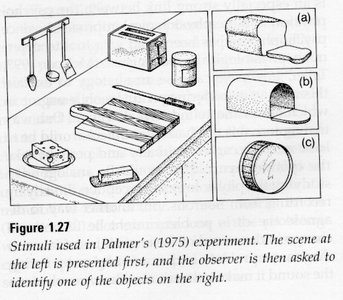
Steven Palmer's (1975) experiment demonstrated that perception is influenced by the context in which an object appears. Participants were more accurate at identifying objects when the context was consistent with the object.
Task: View a scene (Object 1), then identify a briefly flashed object (Object 2).
Manipulation: The relationship between the scene and the object was either consistent or inconsistent.
Result: Consistent context increased correct identification, illustrating top-down processing.
Selective Attention and Perceptual Limitations
Selective and Inattentional Blindness
Selective attention allows us to focus on relevant stimuli while ignoring others, but it also leads to phenomena such as change blindness and inattentional blindness, where unattended information fails to reach conscious awareness.
Change Blindness: Failure to notice changes in the environment when attention is directed elsewhere.
Inattentional Blindness: Failure to perceive an unexpected stimulus in plain sight due to focused attention on another task.
Depth Perception
Constructing 3D from 2D: Binocular and Monocular Cues
The retina provides a two-dimensional image, yet we perceive the world in three dimensions. The brain uses various cues to infer depth and distance.
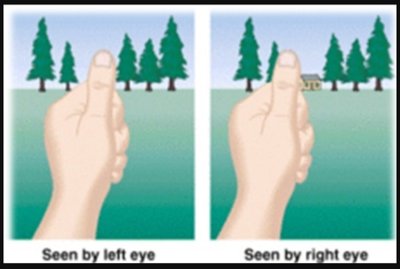
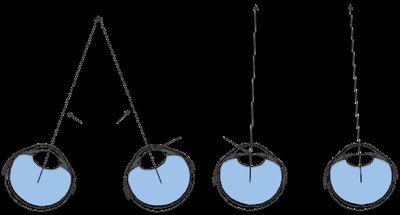
Binocular Cues: Require input from both eyes.
Binocular Disparity: The difference in images between the two eyes; less disparity indicates greater distance.
Convergence: The degree to which the eyes turn inward to focus on an object; more convergence indicates closer objects.
Monocular Cues: Available to each eye separately, such as occlusion (interposition), relative size, and texture gradients.
Summary: The Construction of Perception
The goal of perception is to create a stable and accurate representation of reality from incomplete sensory input. This process is not a simple one-to-one mapping but involves unconscious inference and the integration of sensory data with prior knowledge and context.
Perception is a function of both the environment and the knowledge base of the organism.
It is an active, constructive process limited by selective attention and the capabilities of the sensory system.




Additional info: The notes above expand on the original lecture outline by providing definitions, examples, and explanations of key theories and experiments in sensation and perception. The included images directly support the explanations of visual anatomy, color vision, top-down processing, and depth perception.
