 Back
BackSensation and Perception: Principles, Processes, and Applications
Study Guide - Smart Notes
 Tailored notes based on your materials, expanded with key definitions, examples, and context.
Chapter 4: Sensation and Perception
Basic Principles
Sensation and perception are fundamental processes that allow organisms to receive, organize, and interpret information from the environment. Sensation refers to the process of receiving stimulus energies from the external environment, while perception is the process of organizing and interpreting this sensory information to give it meaning.
Sensation: Detection of physical energy (stimulus) by sense organs, which then send information to the brain.
Perception: The brain's process of organizing and interpreting sensory information, allowing us to recognize meaningful objects and events.
Unified Information Processing System
Bottom-Up Processing: Initiated by sensory input; perception is driven by the properties of the stimulus itself.
Top-Down Processing: Initiated by cognitive processing; perception is influenced by expectations, prior knowledge, and experiences.
Sensory Receptors
Sensory receptors are specialized cells that detect and transmit sensory information to the brain via distinct neural pathways. Each sense has its own type of receptor.
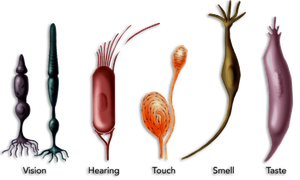
Photoreception (Vision): Detection of light.
Mechanoreception (Touch): Detection of pressure, vibration, and movement.
Chemoreception (Smell and Taste): Detection of chemical stimuli.
Special Sensory Phenomena
Synesthesia: A condition in which one sense induces an experience in another sense (e.g., seeing colors when hearing music).
Phantom Limb Pain: Sensation of pain in a limb that has been amputated, due to brain activity in sensory pathways.
Sensory Thresholds
Absolute Threshold
The absolute threshold is the minimum amount of energy that an organism can detect 50% of the time. It varies by sense and individual.
Vision: Candle flame at 30 miles on a dark, clear night.
Hearing: Ticking clock at 20 feet under quiet conditions.
Smell: One drop of perfume diffused through three rooms.
Taste: Teaspoon of sugar in two gallons of water.
Touch: Wing of a fly falling on your neck from 1 cm.
Noise
Noise refers to irrelevant and competing stimuli that can interfere with the detection of a target stimulus.
Difference Thresholds and Weber’s Law
The difference threshold (or just noticeable difference, JND) is the smallest difference in stimulation required to discriminate one stimulus from another 50% of the time. According to Weber’s Law, to be perceived as different, two stimuli must differ by a constant minimum percentage, not a constant amount.
Subliminal Perception
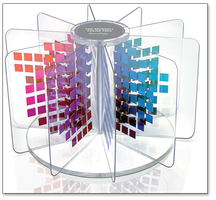
Subliminal perception occurs when information is processed by sensory systems but does not reach conscious awareness. Research shows that subliminal messages can influence attitudes and behavior under certain conditions.
Signal Detection Theory
This theory explains how we detect signals amid noise. Detection depends on both the intensity of the stimulus and the psychological state of the individual (e.g., expectations, experiences, motivation).
Information Acquisition: Gathering relevant sensory data.
Criterion: The basis or motive for making a judgment about the presence of a stimulus.
Attention and Perception
Selective Attention
Attention is the process of focusing awareness on a narrowed aspect of the environment. Selective attention allows us to concentrate on specific stimuli while ignoring others.
Cocktail Party Effect: The ability to focus on one voice among many in a crowded room.
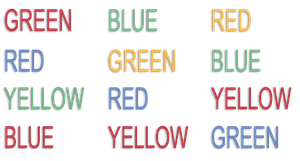
Stroop Effect: Difficulty in naming the color of ink used to print words when the word itself is the name of a different color, demonstrating interference in attention.

Emotion-Induced Blindness: Failure to notice a stimulus because emotional stimuli capture attention.
Inattentional Blindness: Failure to see visible objects when attention is directed elsewhere.

Perceptual Set
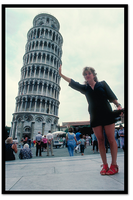
A perceptual set is a predisposition or readiness to perceive something in a particular way, influenced by expectations and prior experiences.
Sensory Adaptation
Sensory adaptation is the change in responsiveness of the sensory system based on the level of surrounding stimulation (e.g., eyes adjusting to darkness).

Properties of Light and Sound
Light
Wavelength: Distance between peaks; perceived as hue (color).
Amplitude: Height of the wave; perceived as brightness.
Purity: Mixture of wavelengths; perceived as saturation.
Sound
Wavelength: Determines frequency; perceived as pitch.
Amplitude: Height of the wave; perceived as loudness.
Mixture of Wavelengths: Perceived as timbre or tone saturation.
Structure and Function of the Eye
Major Structures
Cornea: Transparent outer covering; focuses light.
Pupil: Opening in the iris that regulates light entry.
Lens: Focuses light onto the retina.
Retina: Contains photoreceptor cells (rods and cones).
Fovea: Central area of the retina with high cone density; crucial for sharp vision.
Optic Nerve: Transmits visual information to the brain; creates a blind spot where it exits the eye.
Photoreceptor Cells
Rods: Sensitive to dim light, not color; about 120 million in the human eye.
Cones: Responsible for color vision and detail; about 6 million in the human eye.
Visual Processing
Pathway of Visual Information
Visual signals travel from the retina through the optic nerve, cross at the optic chiasm, and are relayed via the thalamus to the visual cortex in the occipital lobe.
Feature Detectors and Parallel Processing
Feature Detectors: Specialized cells in the visual cortex that respond to specific features such as shape, angle, or movement.
Parallel Processing: The brain's ability to process several aspects of a problem simultaneously.
Binding: Integration of information from different neural pathways into a unified perception.
Color Vision
Theories of Color Vision
Trichromatic Theory: Three types of cones (red, green, blue) combine to produce all colors. Color blindness results from the absence or malfunction of one or more cone types.
Opponent Process Theory: Color perception is controlled by the activity of two opponent systems: a blue-yellow mechanism and a red-green mechanism. Explains afterimages and complementary color pairs.
Visual Perception
Gestalt Principles
Gestalt psychology emphasizes that the whole of perception is more than the sum of its parts. Key principles include:
Figure-Ground Relationship: Differentiating an object (figure) from its background (ground).
Closure: Tendency to fill in gaps to perceive complete objects.
Proximity: Objects close together are perceived as a group.
Similarity: Objects that are similar are grouped together.
Depth Perception
Binocular Cues: Use of both eyes to perceive depth (e.g., retinal disparity, convergence).
Monocular Cues: Depth cues available to each eye alone (e.g., familiar size, overlap, shading, linear perspective, texture gradients).
Motion and Constancy
Motion Perception: Specialized detectors in the brain process movement; apparent movement can be perceived even when none exists.
Perceptual Constancies: Recognition that objects remain constant in size, shape, and color despite changes in sensory input.
Hearing and the Auditory System
Structure of the Ear
Outer Ear: Pinna and auditory canal collect sound waves.
Middle Ear: Eardrum and ossicles (hammer, anvil, stirrup) transmit vibrations.
Inner Ear: Cochlea (contains hair cells for transduction), semicircular canals (balance), and auditory nerve.
Theories of Hearing
Place Theory: Different areas of the cochlea respond to different frequencies (explains high-frequency perception).
Frequency Theory: Frequency of nerve impulses matches frequency of sound (explains low-frequency perception); volley principle extends this for higher frequencies.
Auditory Processing
Sound information travels from the cochlea to the auditory nerve, brain stem, and temporal lobe.
Sound localization depends on intensity, timing, and the sound shadow.
Other Senses
Skin Senses
Touch: Receptors send signals through the spinal cord to the somatosensory cortex.
Temperature: Thermoreceptors detect warm and cold; simultaneous stimulation can be perceived as hot.
Pain: Detected by mechanical, heat, and chemical receptors; perception can be influenced by endorphins and psychological factors.
Chemical Senses
Taste: Detected by receptors on the tongue (papillae); five basic tastes include sweet, sour, bitter, salty, and umami.
Smell: Detected by the olfactory epithelium; signals sent to the temporal lobe and limbic system.
Kinesthetic and Vestibular Senses
Kinesthetic Sense: Provides information about movement, posture, and orientation via muscle fibers and joints.
Vestibular Sense: Detects balance and acceleration through the semicircular canals in the inner ear.
Health and Wellness
Protect vision and hearing through proper diet, regular medical examinations, and avoiding chronic exposure to loud noises or bright lights.
Engage with natural environments to support sensory health.
