 Back
BackSensation and Perception: Structured Study Notes for Psychology Students
Study Guide - Smart Notes
 Tailored notes based on your materials, expanded with key definitions, examples, and context.
Sensation and Perception
Introduction
Sensation and perception are fundamental processes in psychology that allow humans to detect and interpret stimuli from the environment. Sensation refers to the activation of sensory receptors, while perception involves organizing and interpreting these sensations into meaningful experiences.
Sensation: How It Enters the Central Nervous System
Basic Principles of Sensory Transduction
Sensation: Activation of receptors in sense organs (eyes, ears, nose, skin, taste buds).
Sensory receptors: Specialized neurons stimulated by different types of energy.
Transduction: The process of converting external stimuli into neural activity.
Sensory Thresholds
Just Noticeable Difference (JND): The smallest difference between two stimuli detectable 50% of the time (Ernst Weber).
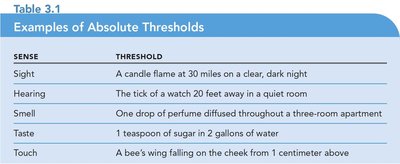
Absolute Threshold: The minimum amount of energy needed to detect a stimulus 50% of the time (Gustav Fechner).
SENSE | THRESHOLD |
|---|---|
Sight | A candle flame at 30 miles on a clear, dark night |
Hearing | The tick of a watch 20 feet away in a quiet room |
Smell | One drop of perfume diffused throughout a three-room apartment |
Taste | 1 teaspoon of sugar in 2 gallons of water |
Touch | A bee’s wing falling on the cheek from 1 centimeter above |
Subliminal Sensation and Perception
Subliminal stimuli: Below the level of conscious awareness; can activate sensory receptors but not conscious perception.
Subliminal perception: The influence of subliminal stimuli on the unconscious mind and behavior.
Habituation and Sensory Adaptation
Habituation: The brain stops attending to constant, unchanging information.
Sensory adaptation: Sensory receptor cells become less responsive to unchanging stimuli.
Microsaccades: Tiny eye movements that prevent sensory adaptation to visual stimuli.
Perceptual Properties of Light
Light and Its Properties
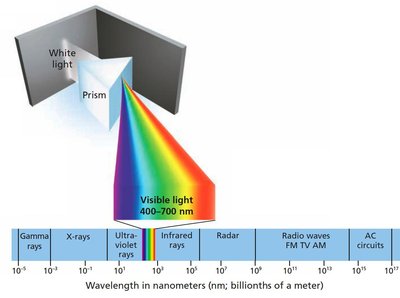
Brightness: Determined by the amplitude of the light wave.
Color (Hue): Determined by the wavelength; longer wavelengths are red, shorter are blue.
Saturation: Purity of the color; mixing in black or gray reduces saturation.
Structure and Function of the Eye
Anatomy of the Eye
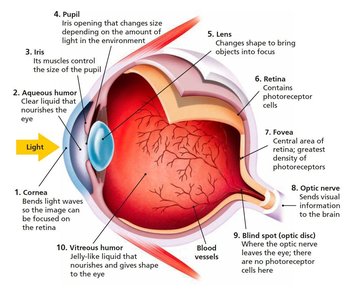
Cornea: Clear membrane that focuses most incoming light.
Aqueous humor: Clear fluid nourishing the eye.
Pupil: Opening for light entry.
Iris: Colored muscle controlling pupil size.
Lens: Changes shape to focus light.
Visual accommodation: Lens thickness changes for near/far objects.
Vitreous humor: Jelly-like fluid giving eye shape.
Vision Disorders
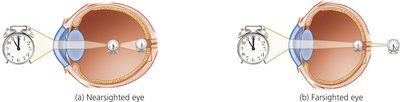
Nearsightedness (Myopia): Focal point falls short of the retina.
Farsightedness (Hyperopia): Focal point is behind the retina.
Retina, Rods, and Cones
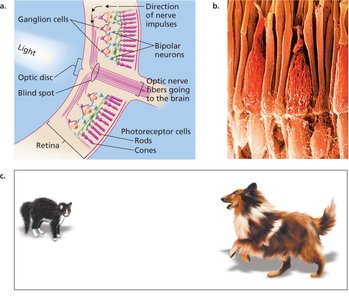
Retina: Contains ganglion cells, bipolar cells, and photoreceptors (rods and cones).
Rods: Sensitive to low light, noncolor vision.
Cones: Responsible for color vision and sharpness.
Blind spot: Area where optic nerve exits; no photoreceptors.
Optic Nerve and Visual Pathways
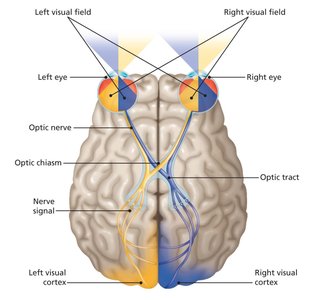
Light information crosses at the optic chiasm and is processed in the visual cortex.
How the Eye Works: Adaptation
Dark adaptation: Recovery of sensitivity in darkness.
Light adaptation: Recovery of sensitivity in bright light.
Color Vision
Theories of Color Vision
Trichromatic theory: Three types of cones (red, blue, green).
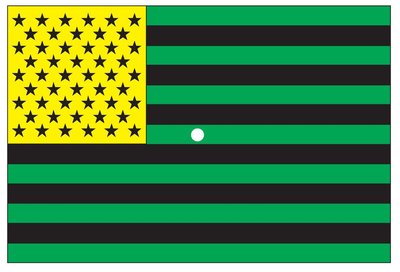
Opponent-process theory: Four primary colors in pairs (red-green, blue-yellow); explains afterimages.
Color Blindness
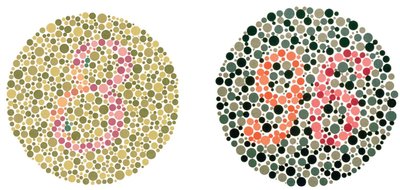
Monochrome colorblindness: No functioning cones.
Red-green colorblindness: Red or green cones not working.
Sex-linked inheritance: Gene for color-deficient vision is recessive.
Sound and Hearing
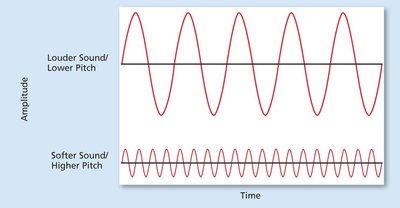
Properties of Sound
Wavelength: Frequency or pitch.
Amplitude: Volume.
Purity: Timbre.
Hertz (Hz): Measurement of frequency.
Structure of the Ear
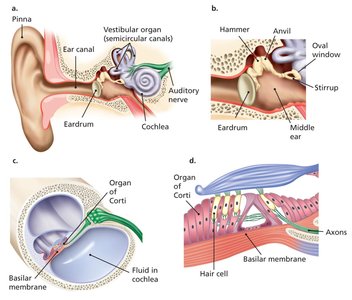
Pinna: Funnels sound waves.
Auditory canal: Tunnel to eardrum.
Eardrum: Vibrates and transmits sound to middle ear bones (hammer, anvil, stirrup).
Cochlea: Fluid-filled, contains organ of Corti (receptor cells for hearing).
Auditory nerve: Sends neural messages to the brain.
Theories of Pitch
Place theory: Different pitches stimulate different locations on the organ of Corti.
Frequency theory: Pitch is related to the speed of vibrations in the basilar membrane.
Volley principle: Frequencies cause hair cells to fire in a volley pattern.
Types of Hearing Impairments
Conduction hearing impairment: Damage to eardrum or middle ear bones.
Nerve hearing impairment: Damage to inner ear or auditory pathways.
Surgery to Help Restore Hearing
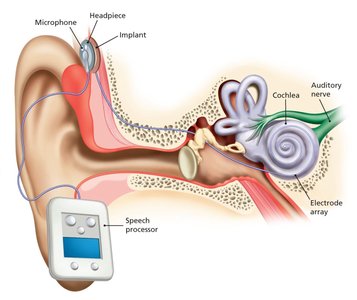
Cochlear implant: Microphone and processor convert sound to electrical impulses sent to the brain.
Taste and Smell
Taste (Gustation)
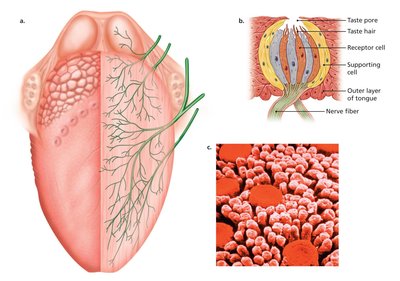
Taste buds: Receptor cells for taste.
Five basic tastes: Sweet, sour, salty, bitter, umami (brothy).
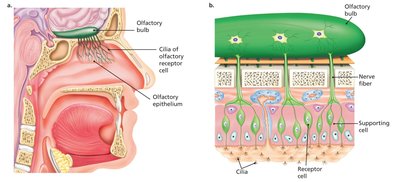
Smell (Olfaction)
Olfactory bulbs: Receive information from olfactory receptor cells.
Humans have at least 1,000 olfactory receptors.
Somesthetic Senses: Touch, Pain, Motion, and Balance
Skin Senses
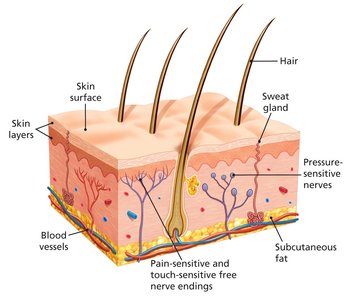
Touch, pressure, temperature, pain: Detected by sensory receptors in the skin.
Gate-control theory: Pain signals must pass through a 'gate' in the spinal cord.
Pain disorders: Congenital analgesia, CIPA.
Kinesthetic and Vestibular Senses
Kinesthetic sense: Location of body parts relative to each other.
Vestibular senses: Movement, balance, and body position.
Sensory conflict theory: Explains motion sickness due to conflicting information from eyes and vestibular senses.
Perception and Perceptual Constancies
Perception
Perception: Organizing and interpreting sensations into meaningful experiences.
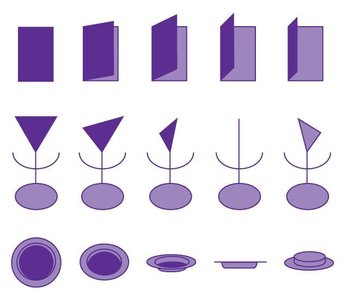
Size constancy: Perceiving objects as the same size regardless of distance.
Shape constancy: Perceiving objects as the same shape even when their image changes on the retina.
Brightness constancy: Perceiving brightness as constant despite changing light conditions.
Attention and Perception
Cocktail party effect: Ability to focus on a specific stimulus while filtering out others.
Gestalt Principles of Perception
Gestalt Principles
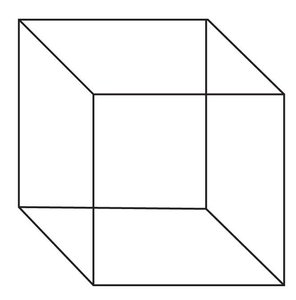
Figure-ground: Perceiving objects as existing on a background.
Reversible figures: Figure and ground can be reversed.
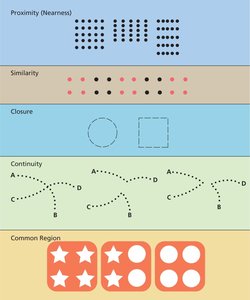
Proximity: Objects close together are grouped.
Similarity: Similar objects are grouped.
Closure: Completing incomplete figures.
Continuity: Perceiving continuous patterns.
Contiguity: Events close in time are perceived as related.

Depth Perception
Monocular Cues
Linear perspective: Parallel lines appear to converge.
Relative size: Smaller objects are perceived as farther away.
Overlap: Objects blocking others are perceived as closer.
Aerial perspective: Haziness indicates greater distance.
Texture gradient: Textures become finer with distance.
Motion parallax: Close objects move faster than distant ones.
Accommodation: Lens thickness changes for near/far objects.




Binocular Cues
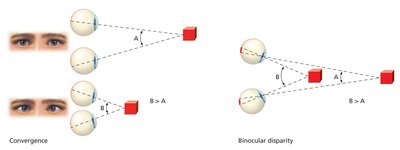
Convergence: Eyes rotate to focus on close objects.
Binocular disparity: Difference in images between eyes; greater for close objects.
Perceptual Illusions and Influences
Visual Illusions
Hermann grid: Illusion due to primary visual cortex response.
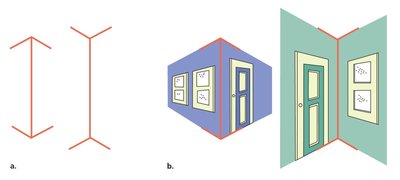
Müller-Lyer illusion: Line length appears different due to corners.
Moon illusion: Moon appears larger on the horizon.
Illusions of motion: Autokinetic effect, stroboscopic motion, phi phenomenon, rotating snakes, The Enigma.


Factors Influencing Perception
Perceptual set (expectancy): Previous experiences influence perception.
Top-down processing: Using prior knowledge to interpret stimuli.
Bottom-up processing: Building perception from sensory input.
Culture and experience: Affect susceptibility to illusions.
Parapsychology
Parapsychological Phenomena
ESP: Telepathy, clairvoyance, precognition.
Scientific evidence for ESP remains inconclusive.
Additional info: These notes expand on brief points with academic context, definitions, and relevant examples to ensure completeness and clarity for psychology students.
