 Back
BackSensation and Perception: Visual Stimuli and Color Vision
Study Guide - Smart Notes
 Tailored notes based on your materials, expanded with key definitions, examples, and context.
Visual Stimuli
Properties of Light and Perception
The stimulus for vision is light, specifically electromagnetic radiation within the visible spectrum (380 to 700 nm). The physical properties of light waves—wavelength, amplitude, and complexity—correspond to different perceived qualities in human vision.
Wavelength: Determines hue (color). Shorter wavelengths correspond to blue/violet, longer to red.
Amplitude: Determines brightness. Higher amplitude means brighter light.
Complexity: Refers to the number of different wavelengths present, affecting saturation (purity of color).
Hue is the color we perceive, brightness is the intensity, and saturation is the vividness or purity of the color.
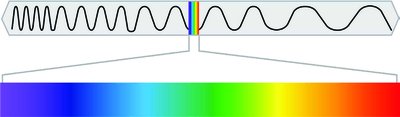
Example: The visible light spectrum ranges from violet (short wavelength) to red (long wavelength).
Anatomy of the Eye
Structure and Function
The eye is a complex organ designed to focus light and convert it into neural signals. Key structures include:
Cornea: Protective layer that bends light as it enters the eye.
Lens: Changes shape (accommodation) to focus images on the retina.
Pupil: Opening that lets light in, controlled by the iris.
Iris: Colored structure surrounding the pupil, regulates light entry.
Retina: Neural tissue lining the back of the eyeball; contains photosensitive cells (rods and cones).
Accommodation is the ability of the lens to change shape to focus on objects at different distances. This process involves contraction and relaxation of muscles around the lens.
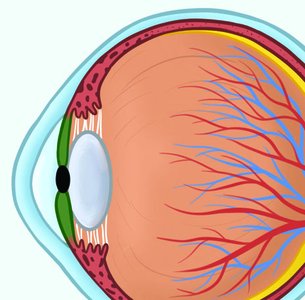
Pathway of Light: Light enters the eye through the cornea, passes through the pupil and lens, and is focused onto the retina, where it is converted into neural signals.
Photosensitive Cells
Rods and Cones
The retina contains two main types of photosensitive cells:
Rods: Rod-shaped cells that respond to low light. Located on the periphery of the retina, numerous, and responsible for night vision and detecting movement.
Cones: Cone-shaped cells that respond to bright light and color. Located in the fovea (center of the retina), fewer in number, and responsible for high visual acuity and color vision. There are three types of cones, each sensitive to different wavelengths.
Fovea: The center of the retina, rich in cones, provides sharp vision.
Blind Spot: The area where the optic nerve leaves the eye; contains no rods or cones.
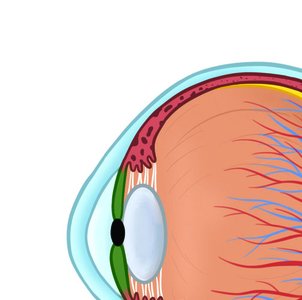
Example: Looking at a colorful painting uses cones; walking at night relies on rods.
Color Vision
Trichromatic Theory
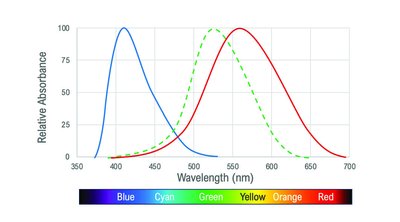
The trichromatic theory explains the first stage of color perception, occurring in the retina. It posits that there are three types of cones, each sensitive to a different range of wavelengths (short, medium, and long).
Short-wavelength cones: Sensitive to blue.
Medium-wavelength cones: Sensitive to green.
Long-wavelength cones: Sensitive to red.
Color perception arises from the combined activation of these cones.
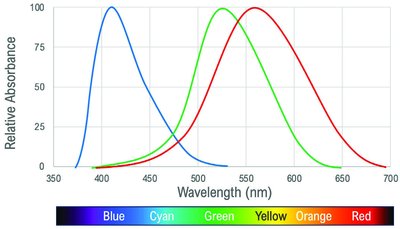
Example: Mixing signals from different cones allows us to perceive a wide range of colors.
Opponent Process Theory
The opponent process theory describes the second stage of color perception, occurring in opponent process cells in the nervous system. It explains phenomena that trichromatic theory cannot, such as afterimages.
Colors are processed in pairs: Red/Green, Blue/Yellow, Black/White.
Opponent process cells are excited by one color and inhibited by its pair.
Afterimage: Staring at a color for a long time causes the opposite color to appear when looking away.
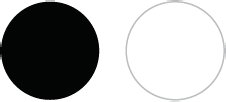
Example: After staring at a red image, a green afterimage appears.
Colorblindness
Colorblindness occurs when one or more types of cones are non-functional. The most common type is deuteranopia, where the green-sensitive cone is absent or non-functional.
Individuals with deuteranopia see blue and red well, but have difficulty distinguishing green.
The spectrum of visible colors is altered, as shown in the response curves.
Example: Deuteranopia results in poor discrimination between green and red hues.
Summary Table: Properties of Light and Perception
Wave Property | Perceived Property | Example |
|---|---|---|
Wavelength | Hue (Color) | Blue vs. Red |
Amplitude | Brightness | Dim vs. Bright |
Complexity | Saturation | Pure vs. Mixed Color |
Key Equations
Wavelength and frequency are related by the speed of light:
Where is the speed of light, is wavelength, and is frequency.
Additional info: Academic context was added to clarify the relationship between physical properties of light and visual perception, and to explain the mechanisms of color vision and colorblindness.
