 Back
BackSexual Orientation: Definitions, Prevalence, Origins, and Social Context
Study Guide - Smart Notes
 Tailored notes based on your materials, expanded with key definitions, examples, and context.
Sexual Orientation
Defining Sexual Orientation
Sexual orientation refers to a person's enduring pattern of emotional, romantic, and/or sexual attractions to men, women, or both sexes. It is a multidimensional construct that includes sexual/emotional attraction, sexual behavior, and sexual identity.
Sexual/emotional attraction: The source of desire, interest, and attraction toward others.
Sexual behavior: The source of sexual contact, fantasy, and arousal.
Sexual identity: One's sense of self as it relates to sexual orientation.
Common categories include:
Heterosexual: Preference for opposite-sex partners.
Homosexual: Preference for same-sex partners.
Bisexual: Equal preference for same-sex and opposite-sex partners.
The Kinsey Scale
The Kinsey Scale conceptualizes sexual orientation as a continuum, ranging from exclusively heterosexual (0) to exclusively homosexual (6), with various degrees of bisexuality in between. This model recognizes that sexual orientation is not simply binary but exists along a spectrum.
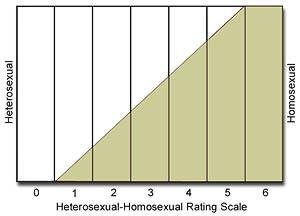
Additional info: The Kinsey Scale was developed by Alfred Kinsey and colleagues in the mid-20th century to better capture the diversity of human sexual experiences.
Prevalence of Sexual Orientations
Surveys in the United States indicate that:
1-4% of men and 1-3% of women report as homosexual.
Up to 2% of men and 1-6% of women report as bisexual (with more women than men).
Some heterosexual individuals report same-sex sexual experiences.
Bisexuality definitions vary, affecting survey results.
Stigma and differing definitions can influence self-reporting and prevalence estimates.
Sexual Fluidity
Sexual fluidity refers to changes in sexual orientation over time, particularly in women. Pathways to heterosexuality are generally more direct, while pathways to homosexuality and bisexuality are more diverse, especially for women. Bisexual orientations are more likely to change over time compared to heterosexual and homosexual orientations.
Bisexual individuals show arousal to both same-sex and opposite-sex erotic images, supporting the validity of bisexuality as a distinct orientation.
Asexuality
Asexuality is characterized by a lifelong lack of sexual attraction to others. Asexual individuals do not respond erotically to sexual stimuli and do not seek overt physical contact for sexual purposes.
Sexual Orientation, Gender Identity, and Gender Roles
Distinctions and Stereotypes
Sexual orientation is distinct from gender identity and gender roles:
Homosexuality and bisexuality are not the result of gender dysphoria.
Most homosexual individuals have a gender identity consistent with their anatomical sex.
Gender roles are often stereotyped as inconsistent with sex for homosexual individuals, but most do not show inconsistent roles.
Gender nonconformity in childhood is moderately associated with homosexual orientations in adulthood.
Origins of Sexual Orientation
Early Environment and Social Factors
Psychoanalytic theories suggested problematic parenting, but research does not support this.
Learning theories proposed reinforcement of homosexual behavior, but evidence does not support this; many homosexual individuals have had positive opposite-sex relationships.
Cultural context influences the ability to accept and express certain orientations.
Biological Explanations
Genetics: Higher concordance of homosexuality in identical twins compared to fraternal twins suggests a genetic component. Specific gene regions have been linked to sexual orientation.
Brain anatomy: Structural differences exist between heterosexual and homosexual individuals, indicating genetic influences on brain development.
Birth order/prenatal environment: Homosexual men are more likely to have older brothers, possibly due to maternal immune responses to Y chromosome antigens.
Hormones/prenatal environment: Animal studies show prenatal hormone exposure can influence adult sexual behavior. Adult hormone levels do not differ between homosexual and heterosexual men.
Social Context and Attitudes
Western and Cross-Cultural Attitudes
Ancient Greek societies normalized same-sex relationships; Christian doctrine later stigmatized homosexuality.
Homosexuality was classified as a mental illness in the DSM until 1973.
Laws against homosexual behavior existed in the US until 2003; military restrictions were lifted in 2011.
Religious affiliation strongly predicts cultural attitudes toward homosexuality.
Sexual Prejudice and Its Effects
Sexual prejudice: Negative attitudes toward homosexuals, their behaviors, and communities.
Homophobia: Irrational fear or aversion to homosexuality; often used to describe sexual prejudice.
Hate crimes: 16% are due to sexual identity; federal laws now protect against such crimes.
Sexual prejudice is associated with higher rates of depression, anxiety, stress, and suicide among homosexual individuals, especially adolescents.
More common among men, religious individuals, and those with less education.
Sexual Identity Development: Coming Out
Stages of Sexual Identity Development
Attraction and Realization: Awareness of orientation, which may occur in childhood, adolescence, or later.
Sociosexual Contacts: Seeking acceptance within the homosexual community.
Disclosure: Typically telling friends before family; family responses are often less supportive.
Openness and Incorporation: No longer hiding orientation, though disclosure may still be selective.
Homosexual Relationships and Family
Relationship Quality and Legal Status
Finding partners can be challenging, especially in rural areas or for those not out.
Relationship satisfaction is comparable to heterosexual couples; roles are not typically divided into "husband" and "wife."
Gay marriage became legal in the US in 2015 and federally protected in 2022, reducing stressors and increasing legal protections.
Children raised by same-sex parents show no differences in adjustment, gender, or sexual orientation compared to those raised by heterosexual parents.
Media Portrayals of Homosexuality
Media representations of homosexuality have become more common and less stereotyped. Homosexual characters are increasingly portrayed as mainstream, with their orientation being only one aspect of their identity.
Changing Sexual Orientation
Conversion Therapy and Support
Conversion therapy (sexual orientation change efforts, SOCE) is now recognized as ineffective and harmful.
Most professional organizations oppose such therapies, and many states ban them for minors.
Therapy for LGBTQ individuals often focuses on coping with prejudice, coming out, and self-acceptance, not changing orientation.
