 Back
BackSleep and Circadian Rhythms: Foundations of Consciousness
Study Guide - Smart Notes
 Tailored notes based on your materials, expanded with key definitions, examples, and context.
Sleep and Circadian Rhythms
Introduction to Sleep and Consciousness
Sleep is a fundamental biological process essential for physical and mental health. It is regulated by internal biological clocks and is characterized by distinct stages, each with unique physiological and neurological features. Understanding sleep and its regulation is crucial for the study of consciousness in psychology.
Circadian Rhythms
Definition and Biological Basis
Circadian rhythms are natural, internal processes that regulate the sleep-wake cycle and repeat roughly every 24 hours. These rhythms are influenced by external cues such as light and temperature, as well as internal cues like hormone levels.
Suprachiasmatic Nucleus (SCN): A structure in the hypothalamus that acts as the master clock, controlling circadian rhythms. It receives input from the eyes about light levels.
Pineal Gland: Receives signals from the SCN and releases the hormone melatonin, which promotes sleepiness.
Melatonin: A hormone that helps regulate sleep by signaling the body that it is time to rest.
External cues: Light is the primary external cue, but hormone levels, temperature, and eating patterns also play a role.
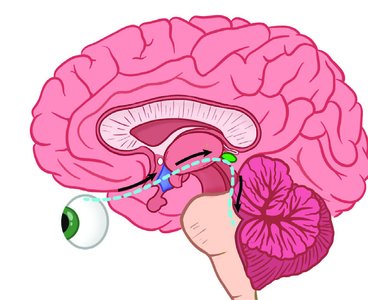
Dysregulation: Circadian rhythms can become misaligned due to factors such as jet lag or shift work, leading to sleep disturbances and impaired functioning.
Practice and Application
The SCN receives neural impulses from the eyes.
The pineal gland is responsible for releasing melatonin.
Circadian rhythm describes the 24-hour sleep-wake cycle, not monthly or other cycles.
The Sleep Cycle
Overview of Sleep Stages
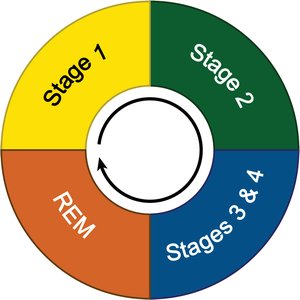
Sleep is divided into two general phases: NREM (Non-Rapid Eye Movement) and REM (Rapid Eye Movement) sleep. Each cycle through these stages lasts approximately 90–120 minutes, and individuals typically experience 4–6 cycles per night.
NREM Sleep: Subdivided into four stages, ranging from light to deep sleep. Characterized by decreased heart rate and respiration.
REM Sleep: Marked by rapid eye movements, vivid dreams, increased heart rate, and muscle paralysis.
Brainwaves and EEG
Brain activity during sleep is measured using an electroencephalogram (EEG), which records electrical activity in the brain. Different sleep stages are associated with distinct EEG patterns, characterized by frequency (cycles per second) and amplitude (height of waves).
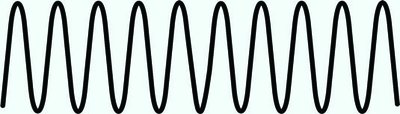
Frequency: Number of wave cycles per second. Indicates the speed of brain activity.
Amplitude: Height of the waves. Indicates the strength of brain activity.

Stages of Sleep
Descriptions and EEG Features
Stage | Description | EEG Features |
|---|---|---|
Awake | Fully conscious | Beta waves; high frequency, low amplitude |
Stage 1 | Light sleep | Theta waves; lower frequency than beta |
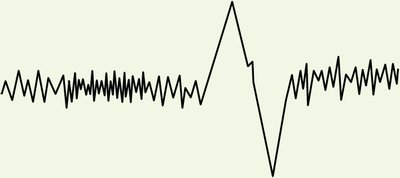
Stage 2 | Moderately deep sleep | Sleep spindles (very high frequency), K complexes (very high amplitude) |
Stages 3 & 4 | Deep sleep | Delta waves; lowest frequency, highest amplitude |
REM | Dreaming, partial paralysis, increased heart rate | EEG resembles awake state (beta waves) |

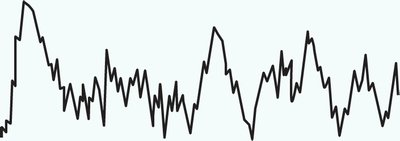
Key EEG Features
Beta waves: High frequency, low amplitude (awake/REM)
Theta waves: Lower frequency, light sleep (Stage 1)
Sleep spindles: Bursts of very high frequency (Stage 2)
K complexes: Bursts of very high amplitude (Stage 2)
Delta waves: Lowest frequency, highest amplitude (Stages 3 & 4)
Sleep Patterns Across the Night
Typical Progression and Changes
As the night progresses, the amount of time spent in each sleep stage changes. Deep sleep (Stages 3 & 4) is more prominent earlier in the night, while REM periods become longer toward morning. Individuals only re-enter Stage 1 if they wake up.
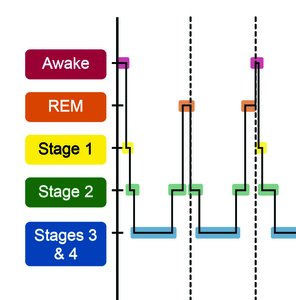
After leaving Stages 3 & 4, the next stage is typically Stage 2 or REM.
After waking up, individuals re-enter Stage 1.
After REM sleep, the cycle returns to Stage 1 or 2.
Summary Table: Sleep Stages and Features
Stage | Key Features | EEG Pattern |
|---|---|---|
Awake | Conscious, alert | Beta waves |
Stage 1 | Light sleep, transition | Theta waves |
Stage 2 | Moderate sleep, spindles, K complexes | Spindles, K complexes |
Stages 3 & 4 | Deep sleep, restorative | Delta waves |
REM | Dreaming, muscle paralysis | Beta-like waves |
Key Takeaways
Circadian rhythms regulate the timing of sleep and wakefulness.
Sleep consists of multiple stages, each with distinct EEG patterns and physiological features.
REM sleep is associated with vivid dreams and brain activity similar to wakefulness.
Deep sleep (Stages 3 & 4) is most prominent early in the night, while REM periods lengthen as the night progresses.
