 Back
BackSocial Cognitive Theory: Observational Learning and Modeling
Study Guide - Smart Notes
 Tailored notes based on your materials, expanded with key definitions, examples, and context.
Social Cognitive Theory
Introduction to Social Cognitive Theory
Social Cognitive Theory, developed by Albert Bandura, extends traditional behaviorist views by emphasizing the importance of mental processes and observational learning. Unlike strict behaviorism, which focuses solely on observable behaviors and direct reinforcement, Social Cognitive Theory recognizes that individuals can learn new behaviors by observing others, even in the absence of direct reinforcement.
Behaviorism: The Foundation
Traditional Behaviorist View
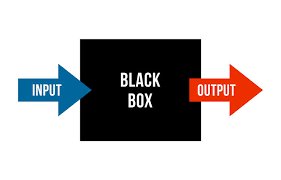
Stimulus-Response Model: Behaviorists believe that learning occurs when a specific stimulus leads to a specific response.
Learning through Direct Experience: Emphasis is placed on learning from one's own actions and the consequences that follow.
Focus on Observable Behavior: Only behaviors that can be seen and measured are considered relevant for study.
Reinforcement: Behaviors are shaped and maintained by reinforcement (rewards or punishments).
However, behaviorism does not adequately explain learning that occurs without direct reinforcement, delayed imitation, or the influence of mental processes.
General Principles of Social Cognitive Theory
Observational Learning
Social Cognitive Theory posits that much of human learning occurs by observing others. This process is called observational learning or modeling.
Learning vs. Performance: Individuals can acquire new behaviors without immediately performing them. Learning may not always result in observable changes in behavior.
Role of Consequences: Observing the consequences of others' actions influences whether we choose to perform the learned behavior ourselves.

Bandura's Bobo Doll Studies
Research Design and Key Findings
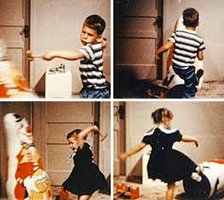
Bandura's famous Bobo Doll experiments demonstrated the power of observational learning. Children watched adults interact with a Bobo doll in either aggressive or non-aggressive ways, then were observed in a play setting.
Imitation of Aggression: Children who observed aggressive models were more likely to imitate specific aggressive behaviors.
Effect of Reinforcement: Whether or not the model was reinforced or punished affected the children's likelihood of performing the behavior, but not their ability to learn it.
Live and Filmed Models: Both live and filmed demonstrations were effective in promoting imitation.
Theoretical Impact
Challenged the behaviorist notion that learning requires direct reinforcement.
Provided the foundation for Social Cognitive Theory.
Applications: Understanding media violence effects, developing behavior therapy techniques, informing parenting strategies, and designing educational interventions.
Effect of Observed Consequences on Imitative Behavior
Follow-up Study: Observing Consequences
Bandura's follow-up studies examined how observing the consequences of a model's behavior affects imitation:
Model Rewarded: High imitation rate when children saw the model praised.
Model Punished: Lower imitation rate when the model was punished.
No Consequences: Moderate imitation rate when no consequence was shown.
Observation, Imitation, and Modeling
Keys to Learning via Social Cognitive Theory
Observation: Paying attention to behaviors modeled by others in the environment.
Imitation: Reproducing some of the observed behaviors, either exactly or approximately.
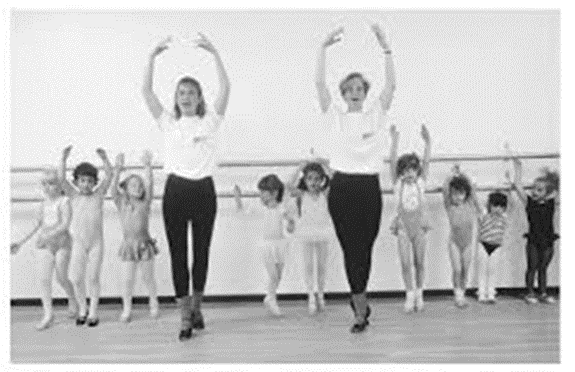
Modeling: Repeatedly performing selected behaviors, often those that are reinforced or seen as beneficial.
Four Ways Modeling Increases Behavior
Types of Reinforcement in Modeling
Direct Reinforcement: The model directly reinforces the observer for imitating (e.g., teacher praises student for copying a strategy).
Third-Party Reinforcement: Someone else reinforces the observer (e.g., parent praises child for using polite language).
Natural Consequences: The behavior itself leads to reinforcement (e.g., using a study technique results in a better grade).
Vicarious Reinforcement: The observer sees the model being reinforced, which increases the likelihood of imitation (e.g., seeing a peer praised for raising their hand).


What Behaviors Are Learned via Modeling?
Types of Behaviors Acquired
New Behaviors: Completely novel actions not previously in the observer's repertoire (e.g., learning to play an instrument by watching).
Facilitation or Inhibition: Changes in the frequency of existing behaviors (e.g., seeing a friend smoke may increase one's own smoking).
Response Facilitation: Increases in the frequency of similar or related behaviors already known (e.g., seeing someone help others prompts more helping behaviors).
Models Most Likely to Be Modeled
Characteristics of Effective Models
Competence: Models who demonstrate skill or expertise are more likely to be imitated.
Prestige and Power: Models with status or authority are influential.
Similarity: Models who share characteristics with the observer increase identification and imitation.
Relevance: The modeled behavior must be useful or applicable to the observer's situation.
Conditions Necessary for Learning via Modeling
Four Key Processes
Attention: The observer must focus on the model's behavior.
Retention: The observer must remember what was observed.
Motor Reproduction: The observer must have the physical ability to reproduce the behavior.
Motivation: The observer must have a reason or incentive to perform the behavior.
Contemporary Social Cognitive Theory
Cognitive Emphasis and Self-Efficacy
Name Change: The theory's name was changed from 'social learning' to 'social cognitive' to highlight the role of cognitive processes.
Learning Without Performance: Individuals can learn behaviors without performing them immediately; performance depends on motivation and opportunity.
Self-Efficacy: Central to the theory is the concept of self-efficacy—one's belief in their ability to succeed in specific situations.

Self-Efficacy
Definition and Sources
Self-efficacy refers to an individual's belief in their capacity to execute behaviors necessary to produce specific performance attainments. It is situation-specific and can be developed through four main sources:
Mastery Experiences: Successes build a robust belief in one's efficacy.
Vicarious Experiences: Observing others succeed can strengthen beliefs in one's own abilities.
Social (Verbal) Persuasion: Encouragement from others can enhance self-efficacy.
Emotional and Physiological Feedback: Positive mood and reduced stress can boost self-efficacy.
