 Back
BackSocial Influence: Conformity, Obedience, and Bystander Intervention
Study Guide - Smart Notes
 Tailored notes based on your materials, expanded with key definitions, examples, and context.
Social Influence: Conformity and Obedience
Introduction to Social Influence
Social influence refers to the ways in which individuals change their behavior to meet the demands of a social environment. Two major forms of social influence are conformity and obedience. These processes are essential for understanding how group dynamics shape individual actions and societal norms.
Conformity
Definition and Importance of Norms
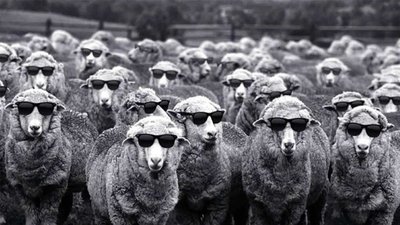
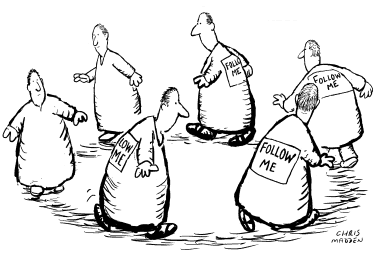
Conformity is the act of matching attitudes, beliefs, and behaviors to group norms. Norms are shared expectations for how people should think, feel, and behave. They are necessary for the smooth functioning of society, but conformity can have both positive and negative consequences.
Examples: Toe tapping in a crowd, laughing at a sitcom's laugh track.
Norm Formation: Sherif (1936) Autokinetic Effect Study
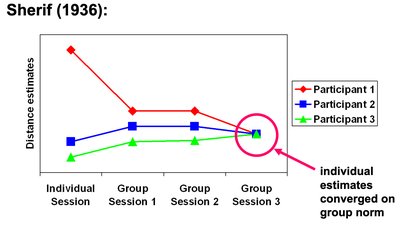
Sherif's classic study demonstrated how group norms develop in ambiguous situations. Using the autokinetic effect (a stationary point of light in a dark room appears to move), participants first made judgments alone, then in groups. Over time, their estimates converged, showing the formation of a group norm.
Key Findings: Individual estimates converged to a group norm, and this consensus persisted even when participants were later tested alone.
Implication: Indicates private acceptance of group norms, not just public compliance.
Types of Social Influence
Informational Influence: Conforming because we believe others have accurate information, especially in ambiguous situations. Leads to changes in both outward behavior and private beliefs.
Normative Influence: Conforming to be liked or accepted by the group, even if we privately disagree. Driven by the desire to fit in and avoid standing out.

Conformity When the Answer is Clear: Asch (1955) Line Judgment Studies
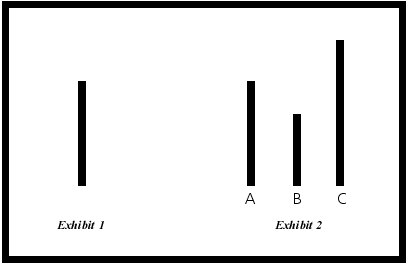
Solomon Asch's experiments tested conformity in unambiguous situations. Participants were asked to match the length of a line to one of three comparison lines. Confederates in the group intentionally gave wrong answers to see if the participant would conform.
Results: Many participants conformed to the group's incorrect answer at least once, even when the correct answer was obvious.
Implication: Demonstrates the power of normative social influence.
Factors Influencing Conformity Rates
Culture: Higher conformity in collectivist cultures compared to individualist cultures.
Group Size: Conformity increases with group size up to about 3-4 people, then levels off.
Unanimity: The presence of even one dissenter greatly reduces conformity, regardless of whether the dissenter agrees with the participant.

Bystander Intervention
The Kitty Genovese Case
The murder of Kitty Genovese in 1964, reportedly witnessed by many bystanders who did not intervene, sparked research into the bystander effect—the phenomenon where individuals are less likely to help in an emergency when others are present.

Latané & Darley (1968): Smoke-Filled Room Study
Latané and Darley investigated the bystander effect by observing how quickly participants reported smoke filling a room. Participants were either alone or in groups.
Results: Individuals alone were much more likely to report the smoke quickly than those in groups.
Explanation: The presence of others leads to diffusion of responsibility and pluralistic ignorance (mistakenly believing others do not perceive the situation as an emergency).


Meta-Analysis and Boundary Conditions
Fischer et al. (2011) conducted a meta-analysis of 105 studies, confirming the bystander effect is real but small. The effect decreases when the situation is clearly dangerous, the perpetrator is present, or the costs of intervention are low. Dangerous emergencies are recognized faster and cause more arousal, which can increase helping behavior.
Obedience
Milgram's Obedience Studies
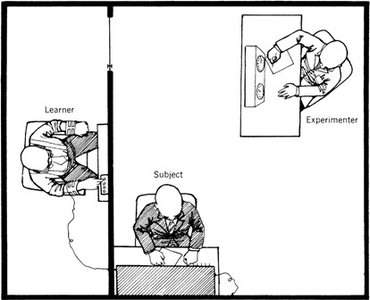
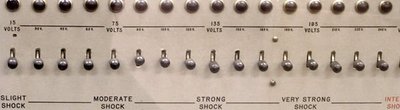
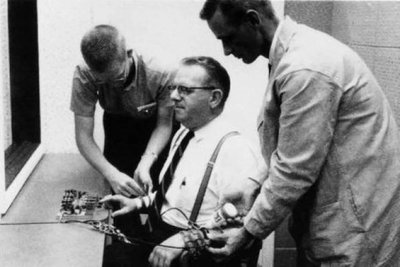
Stanley Milgram's experiments explored how far people would go in obeying authority, even when it meant harming another person. Participants were instructed to administer increasingly severe electric shocks to a 'learner' for incorrect answers, under the direction of an authority figure.
Key Findings: A significant proportion of participants were willing to administer the highest level of shock, demonstrating the power of authority in eliciting obedience.
Replications: The results have been replicated across cultures and decades, with little change in obedience rates over time.
Processes Underlying Obedience
Diffusion of Responsibility: Participants felt less personally responsible when the authority figure took responsibility for the outcome.
Lack of Alternative Models: Without examples of disobedience, participants were more likely to obey.
Conformity: The presence of others who obeyed or rebelled influenced participants' own obedience.
Remoteness of the Victim: Obedience increased when the victim was less visible or further removed (see textbook for details).
Closeness of Authority: Obedience increased when the authority figure was physically present (see textbook for details).
Additional info: This guide covers core concepts from social psychology, including classic studies and theoretical frameworks relevant to conformity, obedience, and bystander intervention. For further reading, consult your textbook chapters on Social Psychology and Research Methods.
