 Back
BackSocial Influence: Conformity, Obedience, and Compliance
Study Guide - Smart Notes
 Tailored notes based on your materials, expanded with key definitions, examples, and context.
Social Influence
Overview of Social Influence
Social influence refers to the ways in which individuals are affected by the presence, comments, or actions of others. This influence can alter behaviors, opinions, attitudes, beliefs, or feelings, and may be beneficial, neutral, or harmful. Social influence is a foundational concept in social psychology, encompassing phenomena such as conformity, obedience, and compliance.
Observational learning: Learning by observing the behaviors of others, highlighting the interplay of nature and nurture.
Social influence can uplift or encourage, but also cause distress or negative outcomes.
Types of Social Influence
Conformity, Obedience, and Compliance
There are three primary types of social influence:
Conformity: Changing behavior or beliefs in response to real or imagined group pressure. This does not require an explicit request or an authority figure. Example: Adopting fashion trends.
Obedience: Submitting to the demands of an authority figure in an unequal power relationship. Example: Following orders from a police officer.
Compliance: Responding favorably to an explicit request, regardless of the requester’s status. Example: Agreeing to do a favor for a friend.
Conformity
Definition and Mechanisms
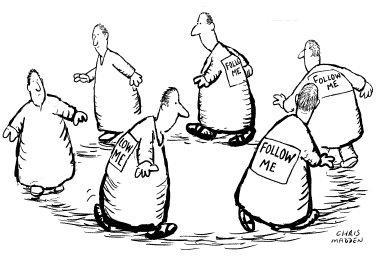
Conformity involves yielding to real or imagined social pressures. It can be implicit (unaware) or explicit (aware), and does not require a direct request or authority figure.
People conform to fit in, avoid social consequences, or because they believe the group is correct.
Factors Leading to Conformity
Normative Influence: Conforming to gain approval or avoid disapproval, even if one does not privately agree. Example: Laughing at a joke to fit in.
Informational Influence: Conforming because one believes the group is knowledgeable, especially in ambiguous situations. Example: Looking to others for guidance when unsure.

Social Referencing
From infancy, individuals look to others (especially caregivers) for cues about how to react to new situations. This is known as social referencing.

Automatic Mimicry
People often unconsciously imitate the behaviors of others, a phenomenon known as automatic mimicry. This can build social rapport and foster positive interactions.
Stronger in individuals with a high drive to affiliate.
Being mimicked increases prosocial behavior.
Sherif’s Conformity Experiment
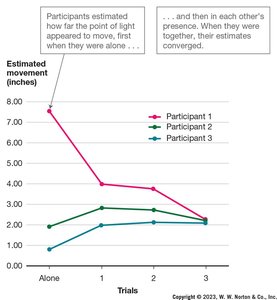
Muzafer Sherif’s autokinetic illusion study demonstrated informational social influence. In ambiguous situations, people’s judgments converge when they discuss with others, showing how group norms develop.
The Asch Line Judgment Studies
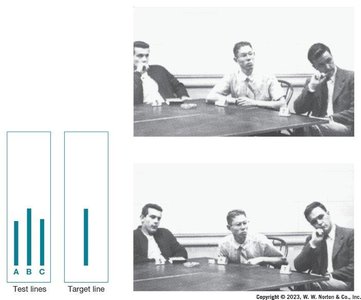
Solomon Asch’s experiments tested conformity in unambiguous situations. Participants were asked to match line lengths in the presence of confederates who intentionally gave wrong answers. Despite knowing the correct answer, many conformed to the group’s incorrect response.
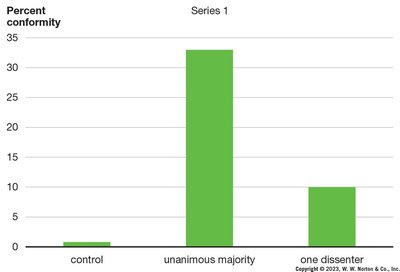
75% conformed at least once; overall conformity rate was 33%.
Demonstrates the power of normative social influence.

Factors Affecting Conformity
Group Size: Conformity increases with group size, but levels off after a certain point.
Group Unanimity: A single dissenter greatly reduces conformity.
Anonymity: Reduces normative influence and conformity.
Expertise and Status: Experts and high-status individuals exert more influence.
Culture: Interdependent cultures show higher conformity rates.
Tight vs. Loose Cultures: Tight cultures have strict norms and less tolerance for deviance.

Obedience
Definition and Milgram’s Experiments
Obedience involves following direct orders from an authority figure. Stanley Milgram’s classic experiments demonstrated the extent to which ordinary people would inflict harm on others when instructed by an authority.
Participants believed they were administering shocks to a learner for incorrect answers.
62.5% delivered the maximum shock, despite apparent distress of the learner.
Obedience decreased when another "teacher" defied the experimenter or when the authority figure was less present.

Factors Influencing Obedience
Authority: Obedience is highest when the authority figure is perceived as legitimate and present.
Proximity: Physical or psychological distance from the victim increases obedience.
Normative and Informational Influence: Desire to avoid disapproval and uncertainty about the situation increase obedience.
Self-Justification: Incremental commitment makes it difficult to stop once started.
Compliance
Definition and Techniques
Compliance refers to agreeing to explicit requests from others. Several techniques are used to increase compliance:
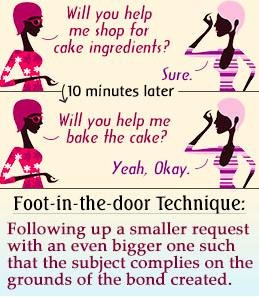
Foot-in-the-Door: Gaining compliance with a small request increases the likelihood of agreement with a larger request later.
Low-Ball: Securing agreement with a request and then increasing the size of the request by revealing hidden costs.
Bait-and-Switch: Luring individuals with an attractive offer that is unavailable, then offering a less attractive alternative.
Labeling: Assigning a positive label to someone to encourage behavior consistent with that label.
Legitimization-of-Paltry-Favors: Making even a small contribution seem meaningful to increase compliance.
Door-in-the-Face Technique
This technique involves making a large request that is expected to be refused, followed by a smaller, more reasonable request. The norm of reciprocity makes people more likely to comply with the second request.
Role of Mood in Compliance
Positive Mood: Increases compliance as people want to maintain their good mood.
Negative Mood (Guilt): People may comply to relieve negative feelings or guilt (negative state relief hypothesis).
Summary Table: Types of Social Influence
Type | Definition | Example | Key Mechanism |
|---|---|---|---|
Conformity | Changing behavior/beliefs due to group pressure | Adopting fashion trends | Normative/Informational Influence |
Obedience | Following orders from authority | Milgram’s shock experiment | Authority, Legitimacy |
Compliance | Agreeing to explicit requests | Donating to charity after being asked | Reciprocity, Self-Image |
