 Back
Social Psychology: Structured Study Notes for Introduction to Psychology
Study Guide - Smart Notes
 Tailored notes based on your materials, expanded with key definitions, examples, and context.
Social Psychology
What is Social Psychology?
Social psychology is the scientific study of how individuals think, feel, and behave in social contexts. It examines the influence of social situations on individual and group behavior, covering a wide range of interactions from confrontation to cooperation.
Intrapersonal topics: Emotions, attitudes, the self, and social cognition.
Interpersonal topics: Helping behavior, aggression, prejudice, attraction, close relationships, and group processes.

Situational & Dispositional Influences on Behavior
Social psychologists analyze how both environmental (situational) and internal (dispositional) factors shape behavior.
Situationism: Behavior is determined by immediate surroundings.
Dispositionism: Behavior is determined by internal traits and temperament.
Modern approaches consider both situational and dispositional influences.
Fundamental Attribution Error
The fundamental attribution error is the tendency to overemphasize internal factors when explaining others' behavior, while underestimating situational influences.
Example: In the Quizmaster Study, participants wrongly attributed the questioner's knowledge to intelligence rather than situational advantage.

Cultural Differences in Attribution
Individualistic cultures (e.g., U.S.) are more prone to fundamental attribution error, while collectivistic cultures (e.g., some Asian cultures) emphasize situational and relational factors.
Collectivistic activities foster group engagement and broader perspectives.

Actor-Observer Bias
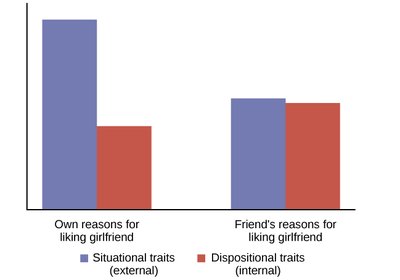
Actor-observer bias is the tendency to attribute others' actions to internal causes, but our own actions to situational causes.
We have more information about our own circumstances, leading to situational explanations for ourselves.
Example: People cite situational reasons for their own preferences, but dispositional reasons for others.
Self-Serving Bias
Self-serving bias is the tendency to attribute positive outcomes to internal factors and negative outcomes to external factors, protecting self-esteem.
Attribution: Belief about the cause of a result.
Three dimensions: locus of control (internal/external), stability (changeable/unchangeable), controllability (controllable/uncontrollable).
Example: Attributing team success to talent and effort, but losses to external factors.

Just-World Hypothesis
The just-world hypothesis is the belief that people get what they deserve, leading to victim-blaming and ignoring situational causes.
Provides a sense of predictability and control.
Example: Blaming people in poverty for their circumstances.

Social Roles
Social roles are patterns of behavior expected in specific settings or groups, defined by cultural knowledge and varying across situations.
Example: Being a student, friend, or family member.

Social Norms & Scripts
Social norms are group expectations for appropriate behavior, while scripts are knowledge about the sequence of events in specific settings.
Norms guide behavior, conversation, and dress.
Scripts vary between cultures and help navigate social situations.

Stanford Prison Experiment
The Stanford Prison Experiment demonstrated the power of social roles, norms, and scripts. Participants assigned as guards or prisoners quickly adopted behaviors consistent with their roles, leading to distress and abuse.
Social norms required guards to be authoritarian and prisoners to be submissive.
Scripts influenced degrading behaviors.
Parallels real-world abuse in prisons.

Attitude
An attitude is an evaluation of a person, idea, or object, influenced by internal and external factors. It has three components:
Affective: Feelings
Behavioral: Effect on behavior
Cognitive: Belief and knowledge
Cognitive Dissonance
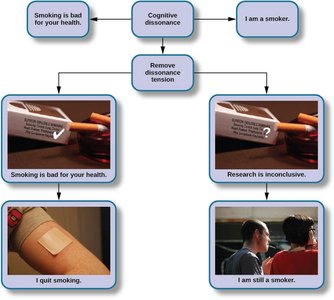
Cognitive dissonance is the psychological discomfort from holding inconsistent attitudes, behaviors, or cognitions. People reduce dissonance by changing behavior, rationalizing beliefs, or adding new cognitions.
Example: Smoking despite believing it's unhealthy.
Only conflicting cognitions threatening self-image cause dissonance.
Effect of Initiation
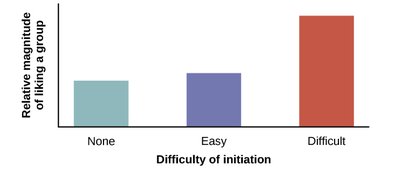
Justification of effort increases liking for a group after difficult initiation. Aronson and Mills' experiment showed that students who underwent difficult initiation liked the group more.
Effortful initiation leads to greater group attachment.
Persuasion
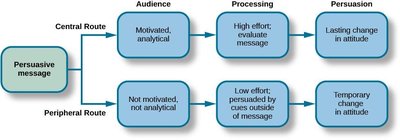
Persuasion is the process of changing attitudes through communication. It occurs in everyday life, not just advertising.
Central route: Logic-driven, uses data and facts, leads to lasting attitude change.
Peripheral route: Indirect, uses cues like emotion or celebrity, leads to temporary change.

Foot-in-the-Door Technique
The foot-in-the-door technique involves getting someone to agree to a small request, then escalating to a larger request. People desire consistency in their actions.
Example: Wearing a campaign button, then agreeing to display campaign signs.


Conformity
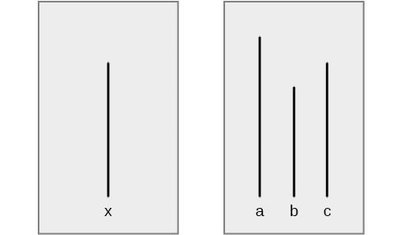
Conformity is changing behavior to align with group norms, even if one disagrees. Asch's experiment showed that group pressure can influence individual judgment.
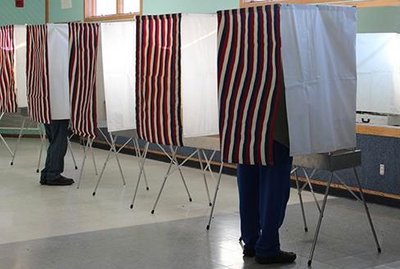
Factors increasing conformity: size of majority, presence of dissenter, public vs. private responses.
Motivation to Conform
People conform for two main reasons:
Normative social influence: To fit in and be accepted.
Informational social influence: To obtain correct information from the group.
Obedience
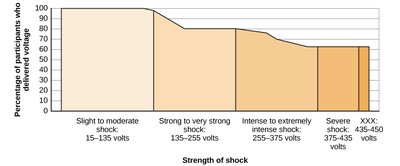
Obedience is changing behavior to comply with authority. Milgram's experiment revealed high levels of obedience, even when actions conflicted with personal conscience.
Participants administered shocks up to 450 volts to learners under authority's instruction.
65% continued to the maximum voltage.
Groupthink & Group Polarization
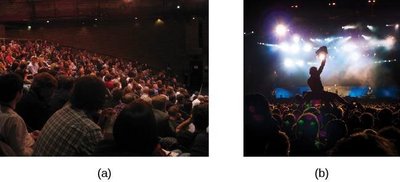
Groupthink is the tendency for group members to align opinions with perceived consensus, often leading to poor decisions. Group polarization strengthens group attitudes after discussion.
Groups may make more extreme decisions than individuals.
Social Facilitation & Social Loafing
Social facilitation occurs when individuals perform better with an audience, especially on easy tasks. Social loafing is reduced effort when working in a group, especially on easy tasks.
On difficult tasks, group members may feel more motivated.
Prejudice & Discrimination
Prejudice is a negative attitude toward individuals based on group membership. Discrimination is negative action based on prejudice. Stereotypes are specific beliefs about groups.
Prejudice and discrimination are learned and reinforced by social norms.
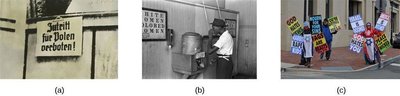
Types of Prejudice & Discrimination
Racism: Based on race; explicit (conscious) and implicit (unconscious) attitudes.
Ageism: Based on age, often against older adults.
Homophobia: Based on sexual orientation.
Sexism: Based on sex; includes gender role expectations and societal inequalities.
Self-Fulfilling Prophecy & Confirmation Bias
Self-fulfilling prophecy is when expectations influence behavior to make them true. Confirmation bias is seeking information that supports stereotypes and ignoring contradictory evidence.
Example: Teacher expectations affect student performance.
In-Groups & Out-Groups
In-groups are groups we identify with; out-groups are seen as different. In-group bias leads to prejudice and discrimination against out-groups. Reconciliation requires empathy and acknowledgment of suffering.
Scapegoating: Blaming out-groups for in-group frustrations.
Aggression
Aggression is behavior intended to cause harm. Hostile aggression is driven by anger; instrumental aggression is goal-oriented. Frustration-aggression theory links blocked goals to aggression.
Evolutionary theory: Aggression serves dominance and protection functions.
Bullying
Bullying is repeated negative treatment, including physical, verbal, and psychological harm. Boys tend to use direct aggression; girls use indirect forms. Cyberbullying is more common among girls.
Victims may experience anxiety, depression, and academic difficulties.
Bystander Effect
The bystander effect is the tendency for individuals not to help in emergencies when others are present, due to diffusion of responsibility.
Example: Kitty Genovese case.
Prosocial Behavior and Altruism
Prosocial behavior is voluntary action to help others. Altruism is selfless helping, even when costs outweigh benefits. Empathy motivates helping behavior.
Helping may be self-serving or genuinely altruistic.
Forming Relationships
Relationships are influenced by proximity, similarity, reciprocity, and self-disclosure. Homophily is the tendency to form networks with similar people.
Intimate connections are built through sharing personal information.
Attraction
Attraction is influenced by physical and social traits. The matching hypothesis suggests people choose partners of similar attractiveness and desirability.
Universally attractive features differ for men and women.
Sternberg’s Triangular Theory of Love
Sternberg's theory describes seven types of love based on intimacy, passion, and commitment. Consummate love includes all three components.
Intimacy: Sharing details and emotions.
Passion: Physical attraction.
Commitment: Standing by the person.
Social Exchange Theory
Social exchange theory posits that people weigh the costs and benefits of relationships, maintaining those where benefits outweigh costs.
Relationships are evaluated like economic transactions.
Additional info: These notes are based on Chapter 12: Social Psychology from an Introduction to Psychology textbook, covering key concepts, theories, and classic experiments relevant to college-level psychology students.
