 Back
BackSocial Psychology: Study Guide on Social Influence, Group Behavior, and Prejudice
Study Guide - Smart Notes
 Tailored notes based on your materials, expanded with key definitions, examples, and context.
Social Psychology
Introduction to Social Psychology
Social psychology is the scientific study of how people influence each other's behavior, beliefs, and attitudes. As humans are a highly social species, understanding social influences is critical for explaining why we behave the way we do in group settings.
Social influences include obedience, conformity, group behavior, and persuasion.
Most social influence processes are adaptive, but can be maladaptive if followed blindly.
Critical evaluation of social influences is necessary for healthy group dynamics.
Obedience
Milgram's Obedience Study
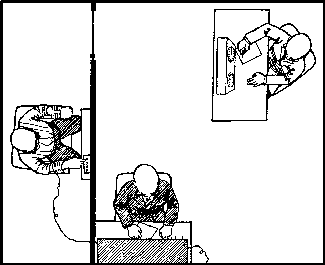
Obedience refers to following direct commands from an authority figure. Milgram's classic experiment investigated the conditions under which people are likely to obey commands, even when those commands conflict with personal conscience.
Design: Participants ("teachers") were instructed by an authority figure to administer electric shocks to a "learner" (a confederate) for incorrect answers.
Findings: Many participants obeyed the authority figure, administering increasingly severe shocks.
Implications: The experiment demonstrated the powerful effect of authority on obedience.
Attribution and the Fundamental Attribution Error
Understanding Attribution
Attribution is the process of assigning causes to behavior. The fundamental attribution error occurs when people overestimate dispositional influences (personality, traits) and underestimate situational influences (external circumstances) when judging others' behavior.
We tend to attribute our own actions to situational factors, but others' actions to their disposition.
This bias can lead to misunderstandings and unfair judgments.
Conformity & Group Behavior
Conformity and Social Norms
Conformity is the act of changing behavior or attitudes to match group norms, whether real or imagined. Group structure and dynamics often influence individual actions more than personal reasons.
Descriptive norms: What most people do in a given situation.
Asch's Conformity Studies: About one third of participants agreed with obvious mistruths to go along with the group.




Groupthink
Symptoms and Effects of Groupthink
Groupthink is a phenomenon where group members strive for harmony and consensus, often suppressing dissent and critical thinking. This can lead to poor decision-making and irrational outcomes.
Symptoms: Illusion of invulnerability, unanimity, unquestioned morality, conformity pressure, stereotyping out-groups, self-censorship, and mindguards.
Example: "We can't possibly fail!" or "Don't rock the boat!"
Deindividuation
Loss of Self-Awareness in Groups
Deindividuation is the tendency to engage in atypical behavior when one's identity is concealed or minimized in group settings. Factors such as anonymity, lack of responsibility, and arousal contribute to this effect.
Examples: Concerts, rallies, protests, riots.
Loss of self-restraint and increased vulnerability to social influence.
Bystander Effect and Altruism
Bystander Nonintervention
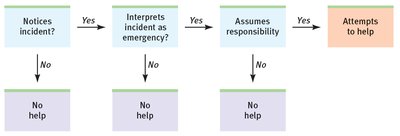
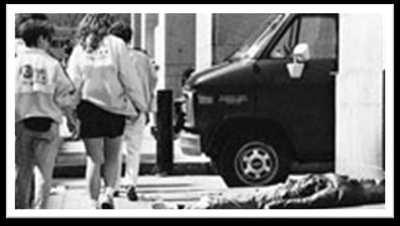
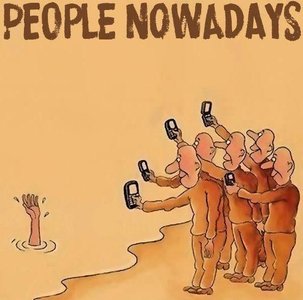
The bystander effect describes the phenomenon where individuals are less likely to help in emergencies when others are present. This is due to diffusion of responsibility, pluralistic ignorance, and following the behavior of others.
Diffusion of responsibility: Feeling less personal responsibility when others are present.
Pluralistic ignorance: Assuming others do not perceive the situation as an emergency.
Example: The case of Kitty Genovese, where many witnesses failed to intervene.

Persuasion Techniques
Routes to Persuasion
Persuasion involves changing attitudes or behaviors through communication. The dual process model identifies two main routes:
Central route: Focuses on informational content and facts.
Peripheral route: Focuses on surface aspects, such as emotion and external cues (e.g., celebrity endorsements).


Persuasion Techniques
Attractiveness/fame: More likely to persuade if the communicator is attractive or famous.
Credibility: Trustworthy sources are more persuasive.
Similarity: People are persuaded by those similar to themselves.
Implicit egotism effect: Gravitation toward people, places, or things that resemble the self.


Common Persuasion Techniques
"But you are free" technique: Gives the impression of choice.
Low-ball technique: Starts with a low price, then adds desirable options.
Foot-in-the-door technique: Starts with a small request, then moves to a larger one.
Door-in-the-face technique: Starts with a big request, then backs off to a smaller one.


Prejudice and Discrimination
Stereotypes, Prejudice, and Discrimination
Stereotypes are generalized beliefs about the characteristics of members of a group. While they can help process information quickly, they often lead to harmful prejudices and discrimination.
Prejudice: Drawing negative conclusions about others before evaluating evidence.
Ultimate attribution error: Attributing negative behavior of a group to their disposition, and positive behavior to luck or rare exceptions.
Adaptive conservatism: Evolutionary predisposition to distrust unfamiliar or different individuals.
In-group bias: Favoring those within one's own group.
Out-group homogeneity: Viewing people outside one's group as similar to each other.
Discrimination: Treating members of out-groups differently from in-groups.

Reducing Prejudice and Discrimination
Understanding the roots of prejudice and making positive choices that reflect acceptance and tolerance can help reduce discrimination.
Critical evaluation of stereotypes and biases.
Promoting intergroup contact and empathy.
Classic Studies: The Stanford Prison Study
Social Situation and Behavior
The Stanford Prison Study by Zimbardo and Haney demonstrated the powerful effect of social situations on behavior. Male university students were randomly assigned to be prisoners or guards, and the roles led to distress, helplessness, apathy, rebellion, and punitive behavior.
Implication: Social roles and environments can strongly influence individual actions.
Summary
Social psychology explores how our behaviors are influenced by others, including obedience, conformity, groupthink, bystander effect, persuasion, and prejudice. Understanding these concepts is essential for critically evaluating social influences and promoting positive group dynamics.
