 Back
BackStereotypes, Prejudice, and Discrimination: Social Psychology Study Notes
Study Guide - Smart Notes
 Tailored notes based on your materials, expanded with key definitions, examples, and context.
Stereotypes, Prejudice, and Discrimination
Introduction: Definitions
This section introduces the foundational concepts of stereotypes, prejudice, and discrimination, which are central to understanding social psychology and intergroup relations.
Stereotypes: Cognitive beliefs or associations about the characteristics of members of a social group. Stereotypes involve attributing group-based traits to individuals, often inaccurately.
Prejudice: Negative affective or emotional responses toward individuals based on their group membership. Prejudice reflects feelings rather than thoughts or actions.
Discrimination: Negative behaviors directed toward individuals because of their group membership. Discrimination is the behavioral manifestation of prejudice and stereotypes.
Stereotyping: The process of applying beliefs about a group to individual members of that group.
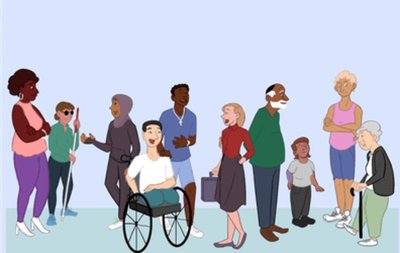
Why Do We Stereotype Others?
Stereotyping is a complex process influenced by cognitive, social, and motivational factors. Understanding why stereotypes form helps explain their persistence and impact.
Social Learning: Stereotypes are learned and reinforced through socialization, media, and cultural norms.
Cognitive Efficiency: Humans are cognitive misers, seeking shortcuts to process information quickly. Stereotypes simplify complex social information.
Motivational Factors: Stereotyping can serve to maintain self-esteem, justify group dominance, or rationalize competition for resources.
Scapegoating: Blaming out-groups for one's own misfortunes is a common motivational basis for stereotyping.
Adaptive Conservatism: From an evolutionary perspective, favoring in-groups and mistrusting out-groups may have had survival benefits.
In-group vs. Out-group: Experiences and culture teach individuals to distinguish between in-group (us) and out-group (them) members.
Devine’s (1989) Model of Stereotyping and Prejudice/Discrimination
Devine’s model distinguishes between automatic and controlled processes in stereotyping and prejudice.
Automatic Stereotype Activation: Stereotypes can be activated unconsciously and rapidly upon encountering a group member.
Controlled Processes: Whether stereotypes lead to prejudice or discrimination depends on conscious, controlled processes that can override automatic responses.
Motivation to Control Prejudice: Individuals and contexts vary in motivation and ability to suppress prejudiced responses.
Measuring Stereotypes and Prejudice
Researchers use both explicit and implicit measures to assess stereotypes and prejudice.
Explicit Bias: Directly measured through self-report questionnaires (e.g., Modern Racism Scale).
Implicit Bias: Assessed through indirect measures such as reaction time tasks. The Implicit Association Test (IAT) is a widely used tool to measure unconscious associations between groups and attributes.
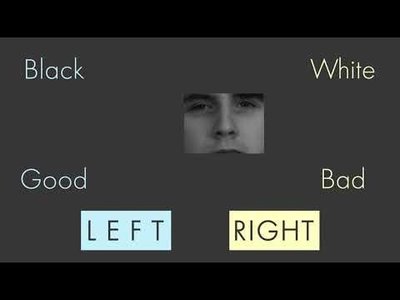
What Do We Know About the IAT?
The IAT has been used to study implicit attitudes toward race, age, sex, weight, sexuality, disability, and religion.
On average, White Americans show a moderate pro-White bias; Black Americans show more variable results (some pro-Black, neutral, or pro-White).
Correlation between explicit and implicit bias is modest (e.g., r ≈ 0.24; Hoffman et al., 2005).
The IAT’s predictive validity for real-world behavior is limited; explicit measures often better predict behavior.
Discrimination: Empirical Evidence
Correll, Park, Judd, and Wittenbrink (2002): The Shooter Bias Study
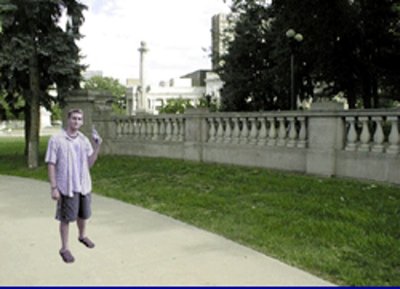
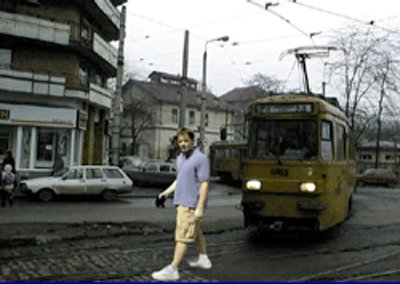
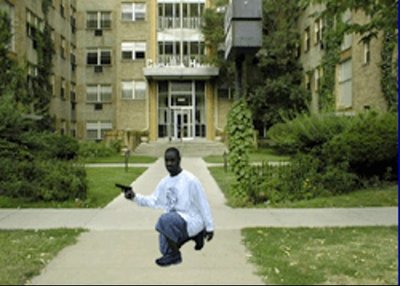
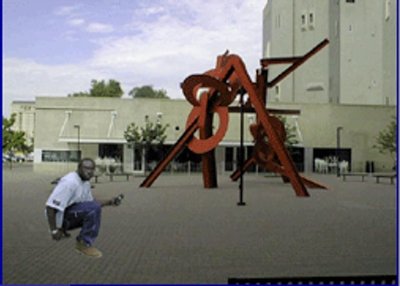
This study examined racial bias in decisions to shoot armed or unarmed targets in a video game simulation.
Participants (college students) were shown images of Black and White men holding either guns or harmless objects (e.g., can, camera, cell phone).
The task was to "shoot" if the person had a gun and not shoot otherwise.
Results showed participants were quicker to not shoot unarmed White targets and quicker to shoot armed Black targets.
Shooting Error Results
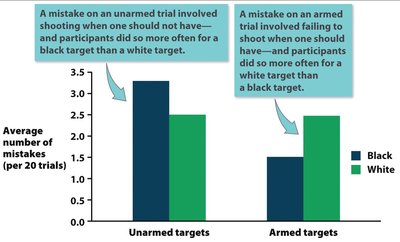
The study also measured errors in shooting decisions:
Unarmed Targets: Participants were more likely to mistakenly shoot unarmed Black targets than unarmed White targets.
Armed Targets: Participants were more likely to mistakenly not shoot armed White targets than armed Black targets.
Conclusions and Implications
Decisions to shoot armed targets were faster and more accurate for Black targets; decisions not to shoot were faster and more accurate for White targets.
Police officers show similar automatic biases but, due to training, may be better able to control their responses and reduce errors.
Hopeful Thoughts and Interventions
New Perspectives on the IAT
Recent research questions whether the IAT measures personal prejudice or awareness of cultural stereotypes. The IAT’s reliability and validity as a predictor of real-world behavior are debated.
IAT scores are only modestly stable over time.
Explicit measures often better predict real-world outcomes than implicit bias measures.
Encouragingly, explicit prejudice has decreased over time in the U.S., and implicit pro-White bias has declined among White Americans from 2009 to 2016.
Interventions: Reducing Prejudice and Discrimination
Several strategies have been identified to reduce prejudice and discrimination (FitzGerald et al., 2019):
Engaging with others’ perspectives and experiences of marginalization.
Identifying with out-groups through perspective-taking and cooperative tasks.
Exposure to counter-stereotypical exemplars.
Intentional strategies to override or suppress biases.
Appeals to egalitarian values such as cooperation and tolerance.
Long-term, sustained interventions are necessary for meaningful change.

Attributions in Social Psychology
Causal Attribution
Attribution theory explains how people infer the causes of behavior, either their own or others’.
External (Situational) Attribution: Attributing behavior to external circumstances or the situation. The person acts differently in different situations.
Internal (Dispositional) Attribution: Attributing behavior to internal traits or dispositions. The person acts similarly across situations.
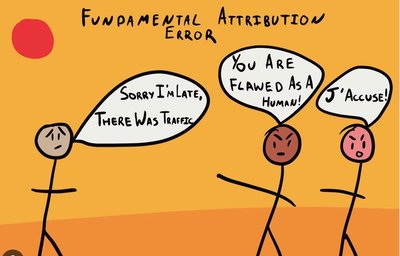
Fundamental Attribution Error
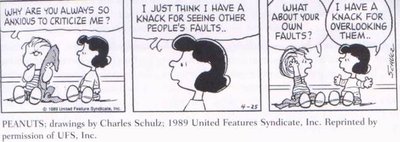
The fundamental attribution error is the tendency to overemphasize dispositional factors and underestimate situational factors when explaining others’ behavior, while considering situational factors more for one’s own behavior.
For example, if someone else is late, we may assume they are irresponsible (internal), but if we are late, we blame traffic (external).
Additional info: These notes synthesize key concepts from social psychology relevant to stereotypes, prejudice, discrimination, and attribution, providing definitions, empirical findings, and intervention strategies for exam preparation.
