 Back
BackStereotyping, Prejudice, and Discrimination: Intergroup Bias in Social Psychology
Study Guide - Smart Notes
 Tailored notes based on your materials, expanded with key definitions, examples, and context.
Chapter 10: Stereotyping, Prejudice, and Discrimination
Characterizing Intergroup Bias
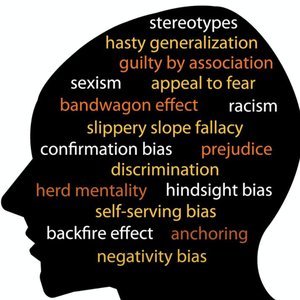
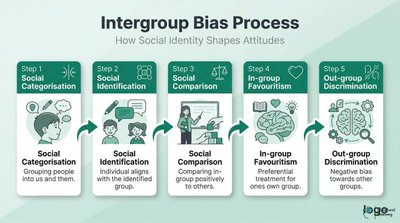
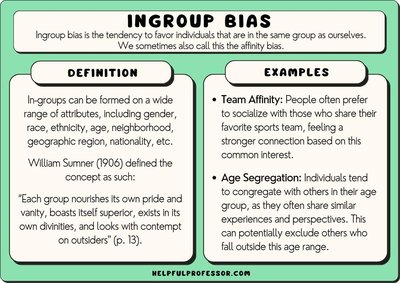
Intergroup bias refers to the tendency for individuals to favor their own group (in-group) over others (out-group), which can manifest as stereotyping, prejudice, and discrimination. These biases are central to social psychology and impact social interactions, group dynamics, and societal structures.
Stereotypes: Widely held beliefs about the characteristics of members of a group.
Prejudice: Hostile or negative attitudes toward people based solely on their group membership.
Discrimination: Unjustified negative or harmful actions toward individuals based on their group membership.
In-group bias: Favoring those in one's own group over those in other groups.
The ABC Model of Intergroup Relationships
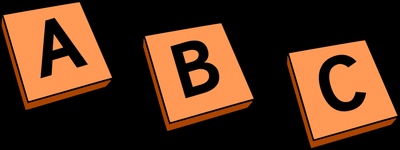
The ABC model breaks down intergroup bias into three components: Affect (prejudice), Behavior (discrimination), and Cognition (stereotypes). This model helps clarify the psychological processes underlying bias.
Affect (Prejudice): Emotional response or feelings toward a group.
Behavior (Discrimination): Actions taken against a group.
Cognition (Stereotypes): Thoughts and beliefs about a group.
Explicit vs. Implicit Bias
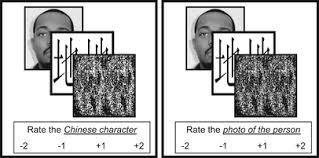
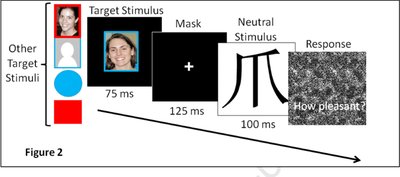
Bias can be explicit (conscious and deliberate) or implicit (unconscious and automatic). Tools like the Implicit Association Test (IAT) and priming techniques are used to measure implicit bias, which often operates below conscious awareness.
Explicit Bias: Conscious attitudes and beliefs.
Implicit Bias: Unconscious attitudes, often revealed through automatic responses.
Measurement: IAT, priming, behavioral measures (e.g., resume studies).
The Economic Perspective
Realistic Conflict Theory
Realistic Conflict Theory posits that competition for limited resources leads to increased prejudice and discrimination between groups. This theory is supported by studies such as the Robber's Cave Experiment, which demonstrated that intergroup conflict can be reduced by creating common goals requiring cooperation.
Mutual Interdependence: Groups must depend on each other to achieve shared goals.
Robber's Cave Experiment: Demonstrated that cooperation reduces intergroup tension.
The Motivational Perspective
Social Identity Theory
Social Identity Theory explains that individuals derive self-esteem from their group memberships. In-group favoritism and out-group discrimination can occur even without competition for resources, as people seek to enhance their self-worth through group affiliation.
Need for Self-Esteem: Group membership boosts self-esteem.
Minimal Groups Paradigm: Even arbitrary group assignments lead to in-group favoritism.
Basking in Reflected Glory: Individuals associate themselves with successful groups to enhance self-esteem.
The Cognitive Perspective
Stereotyping and Categorization
Stereotyping is a cognitive process that simplifies the complex social world by categorizing people into groups. This process can lead to overgeneralizations and biases, such as the outgroup homogeneity effect and illusory correlations.
Outgroup Homogeneity Effect: Tendency to view outgroup members as more similar to each other than ingroup members.
Heuristics: Mental shortcuts that can lead to biased thinking.
Illusory Correlation: Perceiving a relationship between outgroup and negative behavior where none exists.
Cognitive Resource Depletion: Reliance on stereotypes increases when cognitive resources are low.
Reducing Stereotypes, Prejudice, and Discrimination
Evidence-Based Strategies
Effective interventions for reducing prejudice include cognitive retraining, perspective-taking, the contact hypothesis, individuation, and the jigsaw classroom. These strategies aim to change structural and cognitive factors that sustain bias.
Cognitive Retraining: Replacing automatic biased reactions with individualized processing.
Perspective-Taking: Increasing empathy by imagining the world through another's eyes.
Contact Hypothesis: Bringing groups together under conditions of equal status, common goals, cooperation, and social support.
Jigsaw Classroom: Cooperative learning environments that reduce prejudice and raise self-esteem.
Diversity Ideologies: Multiculturalism and color-blindness approaches to prejudice reduction.
Social Dominance Theory
Hierarchies and Prejudice
Social Dominance Theory argues that societal hierarchies justify status differences through dehumanization and beliefs in meritocracy or a just world. Individuals high in social dominance orientation, right-wing authoritarianism, or religious fundamentalism are more likely to hold negative attitudes toward out-groups.
Strict Meritocracy Ideology: Belief that people deserve their social position based on merit.
Just World Hypothesis: Belief that the world is fair and people get what they deserve.
Summary Table: Types of Intergroup Bias
Type | Definition | Example |
|---|---|---|
Stereotype | Generalized belief about a group | "All elderly people are forgetful" |
Prejudice | Negative attitude toward a group | Disliking someone because of their religion |
Discrimination | Negative behavior toward a group | Refusing to hire someone based on ethnicity |
In-group Bias | Favoring one's own group | Preferring to socialize with people from your hometown |
Key Terms and Concepts
Implicit Association Test (IAT): Measures unconscious bias by assessing reaction times to associations.
Priming: Exposure to a stimulus influences response to a later stimulus.
Contact Hypothesis: Intergroup contact reduces prejudice under optimal conditions.
Jigsaw Classroom: Cooperative learning method to reduce prejudice.
Social Identity Theory: Self-esteem is linked to group membership.
Realistic Conflict Theory: Competition for resources increases intergroup bias.
Formulas and Equations
While social psychology rarely uses mathematical formulas, the Implicit Association Test (IAT) relies on reaction time differences:
IAT Score Formula:
This formula quantifies the strength of implicit bias by comparing reaction times for congruent and incongruent pairings.
Conclusion
Stereotyping, prejudice, and discrimination are complex phenomena rooted in affective, behavioral, and cognitive processes. Understanding the economic, motivational, and cognitive perspectives provides insight into the causes and potential solutions for intergroup bias. Evidence-based interventions, such as cognitive retraining, perspective-taking, and cooperative learning, offer promising strategies for reducing prejudice and promoting social harmony.
