 Back
Back11. The Biological Basis of Behavior: Neural Specialization, Connectivity, and Plasticity
Study Guide - Smart Notes
 Tailored notes based on your materials, expanded with key definitions, examples, and context.
The Biological Basis of Behavior
Introduction
The study of the biological basis of behavior explores how the brain's structure and function underlie all human actions, thoughts, and emotions. This field bridges the gap between molecular and cellular processes and complex behaviors, emphasizing the role of specialized brain regions and their interactions.
Key Principle: All human behavior is rooted in the basic processes of the brain, from molecules and cells to neural networks.
Comparison: Just as different organs in the body serve unique functions, so do different brain regions.
Three Big Principles of Brain Function
Neural Specialization
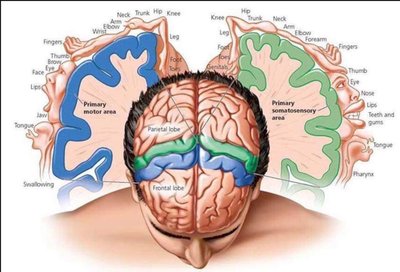
Neural specialization refers to the idea that distinct areas of the brain are dedicated to specific functions. This organization allows for efficient processing of sensory, motor, and cognitive information.
Primary Motor Cortex: Controls voluntary movements of specific body parts.
Primary Somatosensory Cortex: Processes sensory information from the body.
Example – Prosopagnosia: A neurological condition characterized by the inability to recognize faces, despite intact vision and intelligence.
Mechanism: Often linked to damage or dysfunction in the right fusiform gyrus, a region specialized for face perception and visual expertise.
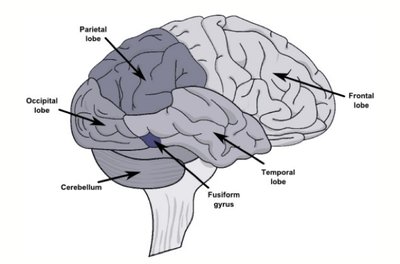
Definition: Prosopagnosia comes from the Greek words for 'face' (prosōpon) and 'ignorance' (agnōsia).
Neural Connectivity
Neural connectivity describes how specialized brain regions are interconnected, forming networks that enable complex behaviors and cognitive functions. Disruptions in these connections can lead to unique neurological syndromes.
Example – Capgras Syndrome: A disorder in which a person believes that a familiar individual has been replaced by an impostor.
Mechanism: Involves the right fusiform gyrus (face recognition), the amygdala (emotion processing), and the right ventral frontal cortex (belief evaluation).
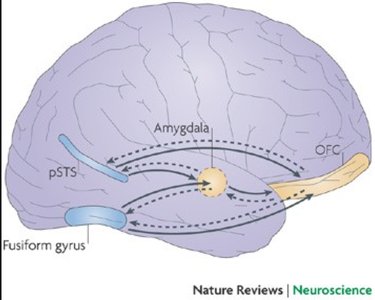
Key Brain Regions:
Fusiform Gyrus: Specialized for face and object recognition.
Amygdala: Part of the limbic system, involved in emotional responses such as fear and excitement.
Ventral Frontal Cortex: Involved in evaluating beliefs and reality testing.
Neural Plasticity
Neural plasticity is the brain's remarkable ability to reorganize itself by forming new neural connections throughout life. This property underlies all learning and adaptation to new experiences.
Definition: The capacity of the nervous system to change its structure and function in response to experience or injury.
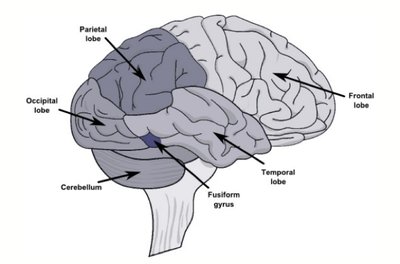
Example – Bird Experts: Research shows that the fusiform gyrus, typically specialized for face recognition, can also become highly active when experts view objects within their domain of expertise (e.g., birds for bird experts).
Mechanism: Social experience and repeated exposure drive plastic changes in the fusiform area, expanding its specialization beyond faces.
Application: This demonstrates that the brain's specialization is not fixed but can be shaped by learning and expertise.
Summary Table: Key Brain Regions and Functions
Brain Region | Primary Function | Example Disorder |
|---|---|---|
Fusiform Gyrus | Face and object recognition | Prosopagnosia |
Amygdala | Emotion processing (fear, arousal) | Capgras Syndrome (involved) |
Ventral Frontal Cortex | Belief evaluation, reality testing | Capgras Syndrome (involved) |
Primary Motor Cortex | Voluntary movement | Motor deficits |
Primary Somatosensory Cortex | Sensory processing | Somatosensory deficits |
Conclusion
The biological mechanisms underlying human behavior involve a complex, interconnected network of specialized brain regions. These regions are wired together through neural connectivity and are capable of remarkable adaptation due to neural plasticity. Understanding these principles is fundamental to the field of biological psychology.
