 Back
BackThe Endocrine System: Structure, Function, and Hormonal Regulation
Study Guide - Smart Notes
 Tailored notes based on your materials, expanded with key definitions, examples, and context.
The Endocrine System
Overview of Body Control Systems
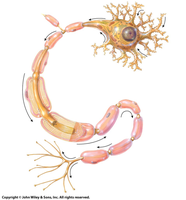
The human body maintains internal balance and regulates physiological processes through two main control systems: the nervous system and the endocrine system. Each system uses distinct mechanisms to influence tissues and organs.
Nervous System: Controls tissues via rapid nerve impulses transmitted by neurons. Effects are quick and short-lived.
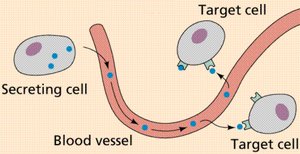
Endocrine System: Controls tissues via hormones released into the blood and tissue fluids. Effects are slower but longer-lasting.
General Properties and Functions of Hormones
Hormones are chemical messengers secreted by endocrine glands. They act on specific target tissues, affecting metabolism and regulating various physiological functions.
Key Functions: Regulation of extracellular fluid (ECF), metabolism, biological clock, muscle contraction, glandular secretion, growth and development, reproduction, and some immune functions.
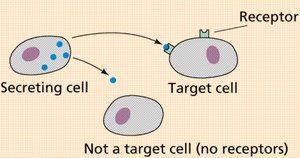
Target Specificity: Only cells with appropriate receptors respond to a given hormone.
Exocrine vs. Endocrine Glands
Exocrine Glands: Secrete substances to a body surface, often via ducts (e.g., sweat glands).
Endocrine Glands: Secrete hormones directly into the blood or body fluids (e.g., pituitary, thyroid).
Major Endocrine Glands and Their Hormones
Pituitary Gland (Hypophysis)
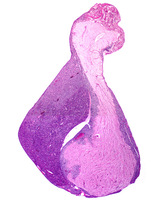
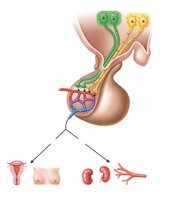
The pituitary gland is a central endocrine organ with two distinct lobes, connected to the hypothalamus by the infundibulum.
Anterior Lobe: Secretes tropic hormones that regulate other endocrine glands.
Posterior Lobe: Secretes neurohormones produced by the hypothalamus.
Anterior Pituitary Hormones
Follicle Stimulating Hormone (FSH): Stimulates growth of ovarian follicles and estrogen release in females; sperm production in males.
Luteinizing Hormone (LH): Triggers ovulation and estrogen/progesterone release in females; testosterone release in males.
Thyroid Stimulating Hormone (TSH): Stimulates thyroid hormone release.
Adrenocorticotropic Hormone (ACTH): Stimulates steroid hormone release from adrenal cortex.
Growth Hormone (GH): Stimulates growth in most body cells; not a tropic hormone.
Prolactin: Stimulates breast development and milk production; not a tropic hormone.
Posterior Pituitary Hormones
Antidiuretic Hormone (ADH, Vasopressin): Promotes water conservation in kidneys and vasoconstriction in blood vessels.
Oxytocin: Stimulates uterine contractions and milk ejection.
Thyroid Gland
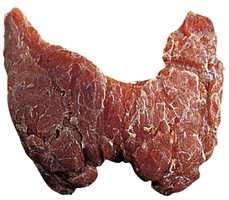
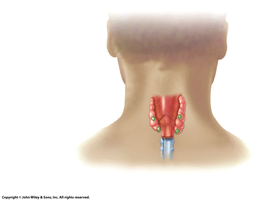
Located anterior to the trachea, the thyroid gland produces thyroid hormones (e.g., thyroxine) and calcitonin.
Thyroxine: Increases basal metabolic rate, body temperature, CNS activity, muscular action, and protein synthesis.
Calcitonin: Lowers blood calcium by acting on bone and kidneys.
Parathyroid Gland
Embedded within the thyroid gland, the parathyroid glands produce parathyroid hormone (PTH).
Parathyroid Hormone (PTH): Raises blood calcium by acting on bone and kidneys.
Pancreas
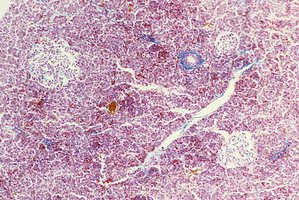
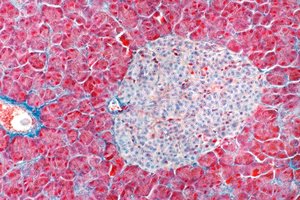
The pancreas is a mixed gland with both exocrine (digestive enzyme production) and endocrine (hormone production) functions.
Pancreatic Islets: Secrete hormones (insulin and glucagon).
Acini: Secrete pancreatic juice.
Beta Cells: Produce insulin, which lowers blood sugar.
Alpha Cells: Produce glucagon, which raises blood sugar.
Adrenal Glands
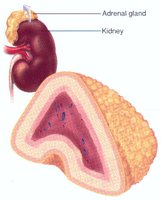
Located at the superior pole of the kidneys, the adrenal glands consist of two functionally distinct regions:
Adrenal Cortex: Produces steroid hormones (glucocorticoids, mineralocorticoids, sex hormones).
Adrenal Medulla: Produces catecholamines (epinephrine and norepinephrine).
Adrenal Cortex Hormones
Glucocorticoids (e.g., cortisol): Increase blood glucose, have anti-inflammatory effects, suppress immune system.
Mineralocorticoids (e.g., aldosterone): Conserve sodium and increase potassium loss in kidneys.
Sex Hormones: Small amounts contribute to secondary sex characteristics.
Adrenal Medulla Hormones
Catecholamines: Adrenaline (epinephrine) and noradrenaline (norepinephrine) mimic sympathetic nervous system effects.
Ovaries and Testes
Ovaries: Produce estrogen and progesterone, regulate ovarian cycle and female secondary sex characteristics.
Testes: Produce testosterone, regulate sperm production and male secondary sex characteristics.
Summary Table: Major Endocrine Glands and Their Hormones
Gland | Main Hormones | Primary Targets | Main Effects |
|---|---|---|---|
Pituitary (anterior) | FSH, LH, TSH, ACTH, GH, Prolactin | Ovary, Testes, Thyroid, Adrenal Cortex, Most cells, Breast | Growth, reproduction, metabolism, milk production |
Pituitary (posterior) | ADH, Oxytocin | Kidney, Blood vessels, Uterus, Breast | Water conservation, uterine contraction, milk ejection |
Thyroid | Thyroxine, Calcitonin | Most cells, Bone, Kidney | Metabolism, calcium regulation |
Parathyroid | PTH | Bone, Kidney | Increase blood calcium |
Pancreas | Insulin, Glucagon | Liver, Cell membranes | Blood sugar regulation |
Adrenal Cortex | Cortisol, Aldosterone, Sex hormones | Most cells, Kidneys | Glucose regulation, sodium/potassium balance, sex characteristics |
Adrenal Medulla | Epinephrine, Norepinephrine | Various tissues | Sympathetic responses |
Ovaries | Estrogen, Progesterone | Ovary, Uterus, Body cells | Ovarian cycle, female characteristics |
Testes | Testosterone | Testes, Body cells | Sperm production, male characteristics |
Key Concepts and Applications
Hormonal Regulation: Hormones are essential for maintaining homeostasis and coordinating complex physiological processes.
Clinical Relevance: Disorders of endocrine glands can lead to significant health issues, such as diabetes (pancreas), hypothyroidism (thyroid), and Addison's disease (adrenal cortex).
Formulas and Equations
Blood Glucose Regulation:
Calcium Regulation:
Additional info:
Some images and histological details were inferred to clarify gland structure and function.
Hormone effects and clinical relevance were expanded for academic completeness.
