 Back
BackTreatment of Psychological Disorders: Approaches, Methods, and Effectiveness
Study Guide - Smart Notes
 Tailored notes based on your materials, expanded with key definitions, examples, and context.
Treatment of Psychological Disorders
Learning Objectives
This section introduces the main goals for understanding the treatment of psychological disorders. Students should be able to analyze the history and effectiveness of various treatments, compare approaches, and evaluate group and individual therapies.
Analyze the history of biological treatments for mental illness
Compare historical approaches to psychotherapy
Differentiate therapies associated with the three waves of cognitive-behavior therapy
Characterize humanistic therapies
Evaluate the impact of psychotherapy treatments
Describe psychotherapy in group settings
Overview of Treatments
Different psychological disorders require different treatment approaches. The main paradigms in psychology offer distinct methods and goals for therapy.
Biological Treatments: Focus on altering biological processes to relieve symptoms.
Psychodynamic Treatments: Aim to gain insight into unconscious motivations and defenses.
Cognitive-Behavioral Treatments: Seek to teach adaptive behaviors and cognitions.
Humanistic Treatments: Emphasize increasing emotional awareness and self-acceptance.
Topic | Goal of Treatment | Primary Method | Role of Therapist | Length of Treatment |
|---|---|---|---|---|
Biological | Alter biology to relieve symptoms | Diagnosis, medication | Active, directive, diagnostician | Brief, with occasional follow-up |
Psychodynamic | Gain insight into defenses/unconscious motivations | Interpretation of defenses | Passive, nondirective, interpreter | Usually long term; some short-term |
Cognitive-Behavioral | Learn adaptive behaviors/cognitions | Instruction, guided learning, homework | Active, directive, teacher | Short term, with booster sessions |
Humanistic | Increase emotional awareness | Empathy, support, exploring emotions | Passive, warm, supporter | Varies; not typically structured |
Biological Treatments
Biological treatments aim to alleviate symptoms by targeting the underlying biological causes of mental illness. These methods have evolved over time, from early experimental procedures to modern pharmacological interventions.
Psychopharmacology: The use of medications (psychotropic drugs) to treat psychological disturbances. These substances affect psychological states and are commonly used for disorders such as depression, anxiety, and schizophrenia.
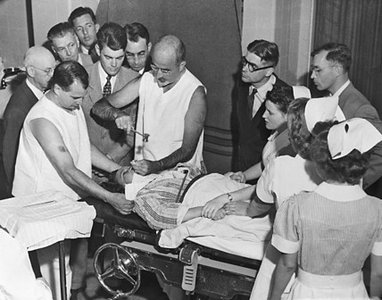
Electroconvulsive Therapy (ECT): Developed in 1938, ECT involves inducing seizures by passing electricity through the brain. It is used primarily for severe depression when other treatments fail.
Psychosurgery: Surgical destruction of specific brain regions, historically used for severe mental disorders. Developed in 1935, it is now rarely performed due to ethical concerns and risks.
Psychodynamic Psychotherapies
Psychodynamic therapies are rooted in Freudian psychoanalysis and focus on uncovering unconscious motivations and conflicts. These therapies require significant time and self-exploration, and their effectiveness is debated.
Freudian Psychoanalysis: Involves techniques such as free association and dream analysis to explore unconscious processes.
Decline of Psychoanalysis: Due to high cost, time commitment, and limited research on effectiveness, traditional psychoanalysis is less common today.
Psychodynamic Psychotherapy: Modern approaches involve more active therapist engagement and shorter treatment periods. Examples include short-term psychodynamic therapy and interpersonal therapy (IPT).
Cognitive-Behavioral Therapy (CBT)
Cognitive-behavioral therapy integrates principles from behaviorism and cognitive psychology to address maladaptive thoughts and behaviors. It is evidence-based and widely used for various disorders.
Origins: Early CBT was influenced by classical conditioning (Pavlov) and operant conditioning (Skinner).
Systematic Desensitization: Developed by John Wolpe, this technique eliminates phobias by gradually exposing clients to feared stimuli while teaching relaxation.
Exposure Therapies: Require clients to confront their fears directly to reduce anxiety.

Aversion Therapy: Uses classical conditioning to create unpleasant responses to undesirable behaviors.
Contingency Management: Involves reinforcing desired behaviors and discouraging unwanted ones.
Social Skills Training: Teaches clients new, rewarding behaviors for everyday life.
Cognitive Techniques: Includes attribution retraining and combating cognitive distortions.
Beck's Cognitive Therapy: Developed for depression, focuses on identifying and changing negative thought patterns.
Rational-Emotive Therapy: Albert Ellis's approach targets irrational beliefs as the cause of emotional disorders.
Third-Wave CBT: Includes dialectical behavior therapy and acceptance and commitment therapy, emphasizing mindfulness and acceptance.
Humanistic Therapies
Humanistic therapies focus on personal growth, self-acceptance, and emotional awareness. The therapist provides empathy and support, fostering a strong therapeutic alliance.
Client-Centered Therapy: Developed by Carl Rogers, this approach encourages therapist self-disclosure and unconditional positive regard for clients.
Therapeutic Alliance: The bond between therapist and client is central to effective treatment.
Research on Psychotherapy
Research evaluates the effectiveness and potential harms of psychotherapy. Meta-analyses show that benefits often diminish after treatment ends, and some therapies may cause harm.
Placebo Effect: Improvement may occur due to expectations rather than the treatment itself.
Efficacy vs. Effectiveness: Efficacy refers to success in controlled settings; effectiveness is success in real-world conditions.
Cultural Considerations: Treatment must be adapted to the cultural background of clients.
Name | Brief Description | Potential Harm |
|---|---|---|
Critical incident stress debriefing | Processing trauma soon after experience | Increased risk for PTSD symptoms |
Scared straight | Inmates scare youth about criminality | Increased conduct problems |
Facilitated communication | Facilitator helps impaired individual type | False accusations of child abuse |
Rebirthing therapy | Wrapped tightly in sheets to be "reborn" | Physical injury, death |
Recovered memories | Encouragement to recover trauma memories | Creation of false memories |
Boot camps | Delinquent youth sent to military-style camp | Increased conduct problems |
DARE programs | Children educated about drug dangers | Increased substance use |
Couple, Family, and Group Therapy
These therapies address interpersonal relationships and group dynamics, supplementing individual treatment and promoting mental health in social contexts.
Couple Therapy: Involves intimate partners in therapy to address relationship issues.
Family Therapy: Includes multiple family members to improve communication, resolve conflicts, and change relationships and roles. Family systems therapy is a common approach.
Group Therapy: Treats several people facing similar issues. Groups can be small or large and focus on shared experiences.
Prevention: Social institutions, schools, and workplaces play a role in mental health. Research aims to identify specific treatments for specific disorders.
Summary Table: Therapy Types and Goals
Therapy Type | Main Goal | Key Methods |
|---|---|---|
Biological | Symptom alleviation | Medication, ECT, psychosurgery |
Psychodynamic | Insight into unconscious | Interpretation, self-exploration |
Cognitive-Behavioral | Adaptive behaviors/cognitions | Exposure, skills training, cognitive restructuring |
Humanistic | Emotional awareness | Empathy, support, alliance |
Group/Family | Interpersonal improvement | Communication, conflict resolution |
Additional info: Modern treatment research emphasizes evidence-based practice, cultural sensitivity, and the identification of active ingredients in therapy for specific disorders.
