 Back
BackWhen and How to Use Each Hypothesis Test
 09:56
09:56

Terms in this set (16)
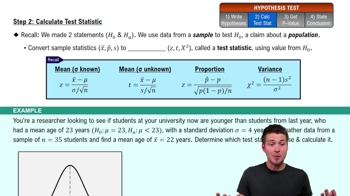
Use a Z-test when the population variance is known and the sample size is large (usually n > 30).
Use a one-sample t-test to compare the sample mean to a known value when the population variance is unknown and the sample size is small.
Use a two-sample t-test to compare the means of two independent groups when population variances are unknown.
Use a paired t-test to compare means from the same group at different times or under different conditions.
Use a one-tailed test when the research hypothesis predicts a direction of the effect.
Use a two-tailed test when the research hypothesis does not predict the direction of the effect.
The null hypothesis (H0) states no effect or difference; the alternative hypothesis (H1) states the expected effect or difference.
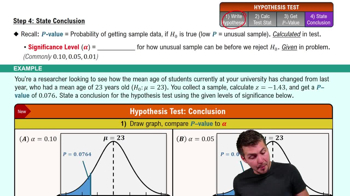
Choose alpha (commonly 0.05) as the threshold probability to reject the null hypothesis.
If the p-value is less than alpha, reject the null hypothesis; otherwise, fail to reject it.
Use a z-test for proportions to compare sample proportions to a population proportion or between two groups.
Use nonparametric tests when data do not meet normality assumptions or are ordinal.
Use a correlation test to assess the strength and direction of a linear relationship between two continuous variables.
Use a regression test to determine if predictor variables significantly explain variation in the response variable.
Check assumptions like normality, independence, and equal variances before choosing and performing a hypothesis test.
Degrees of freedom depend on sample size and affect the critical values in t-distribution tables.
Use independent tests for separate groups and paired tests for related or matched samples.