heroHeading
Build a future-ready workforce
heroDescription
We help you see how AI is reshaping work, so you can plan with confidence.
primaryLinkLabel
Talk to a specialist
primaryLinkUrl
primaryOpenInNewTab
true
secondaryOpenInNewTab
false
background
Image
backgroundAsset

imageIsDecorative
false
videoDesktopFallbackImageIsDecorative
false
tabletFallbackImageIsDecorative
false
mobileFallbackImageIsDecorative
false
overlayStyles
overlay-gradient,theme-neutral-surface-primary-dark
Why workforce planning breaks down
You want to anticipate change, not just react to it.
theme-neutral-surface-white
small-icons-pictogram
AI is here to stay
AI now reshapes roles, tasks, and skills continuously. The work is changing faster than traditional planning models can keep up with.
true
Static data falls short
Most planning still relies on outdated assumptions and disconnected data. You are left with low visibility into the skills you will need next.

Decisions come too late
When skills constraints surface late, reskilling misses the mark and transformation stalls. A technology shift quickly becomes a talent risk.

A smarter way to plan
Pearson gives you a skills-based, forward-looking view, so you can spot gaps early and align talent strategy to business outcomes.

Five ways to plan with clarity
false
Four connected capabilities, plus expert Professional Services, all built on the Pearson Ontology for one consistent view of work.
theme-white-surface-neutral
Center
Job Architecture Foundation
A common language for work
Standardize job titles, roles, and tasks to the Pearson Ontology, so you gain one consistent, enterprise-wide picture of how work gets done.
Explore the foundation
true
true
Skills Extraction
See talent clearly
Turn resumes, job ads, and job descriptions into skills-aligned data, mapped to the Pearson Ontology, so fragmented information becomes a structured view.
See how it works
true
true
Talent Datasets
Pinpoint skill gaps
Track trending, emerging, and declining skills, labor-market shifts, language requirements, and career pathways, all built from real labor-market signals.
Browse the datasets
true
true
Impact Modeling
Model the impact of technology
Quantify how AI and emerging technologies change work at the task and role level, up to 15 years ahead, so you can redesign roles before disruption hits.
Model your future
true
true
Professional Services
Turn insight into action
Pearson experts apply your skills data and modeling through custom engagements, analytics, and advisory support, so insight becomes a workforce plan you can act on.
Talk to our experts
true
true
How you access the intelligence
Pearson’s Talent Planning portfolio is delivered through APIs that can integrate with your HR and Talent Management systems.
theme-white-surface-neutral
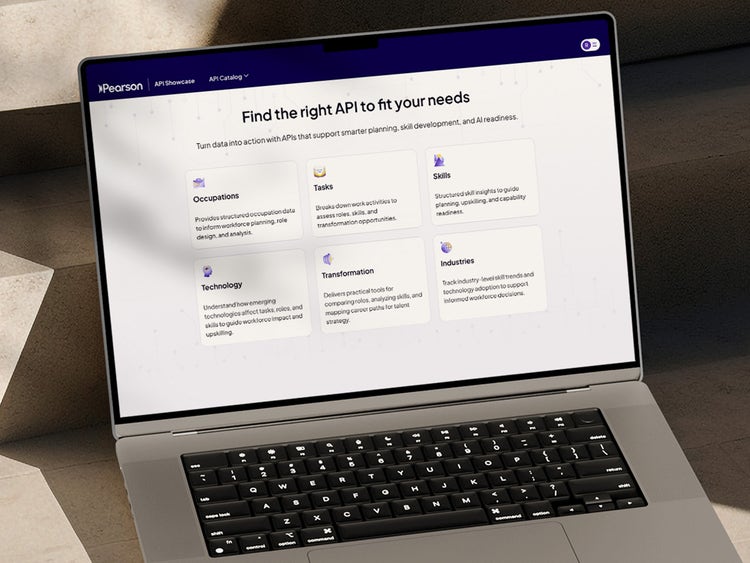
Data into your stack
Every capability is delivered through APIs, so the data flows directly into your HR, talent, analytics, and planning systems. You work with decision-grade data inside the tools your teams already use, rather than logging in to one more application.
false
text-and-image
true
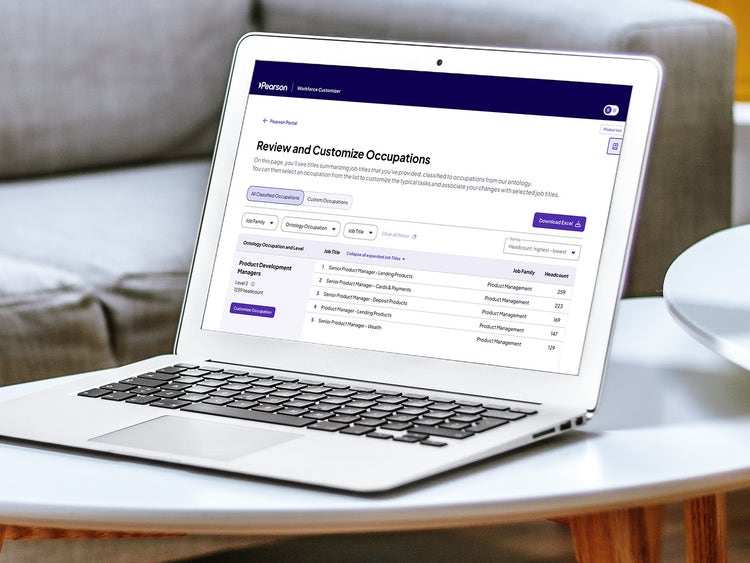
Pearson UI tools
For role architecture work, Pearson user-interface tools (Workforce Classification, Workforce Customizer, and Workforce Snapshot) let your team standardize roles, tailor them by task and time, and view the result, all without writing a line of code. You shape your role architecture directly, then push it into analysis.
false
text-and-image
true
The scale behind your decisions
Your planning team draws on workforce data at a scale no single organization can build alone.
theme-white-surface-neutral
Statistic
1,400+
occupations mapped in the Pearson Ontology
Statistic
9,200+
skills tracked for demand, decline, and future relevance
Statistic
21,000+
tasks mapped in our workforce ontology
Statistic
20 million
job postings analyzed every month for real labor-market signals
Statistic
15 years
how far ahead Impact Modeling forecasts change at the role level
What leaders say
Enterprise leaders share how a data-driven view of the future changed the way they plan and invest.

right
Pearson gives us the essential, data-driven foundation to focus our workforce planning efforts and proactively build a future-proof workforce aligned with ATB's strategic goals.
Krystal Laferriere
Director, Strategic Workforce Planning, ATB Financial
Pearson demystifies the future of work. It takes the intangible, this idea that things are going to change, and converts it into numbers that represent our organization.
Angela Schneider
Director of People Analytics, Nestlé Purina
Pearson Talent Solutions helped us bring clarity to our roles quickly by anchoring them in a structured skills taxonomy. This has transformed how we talk about growth in role and careers—our people now have a clear view of what's expected and how to grow.
Ali Bebo
Chief Human Resources Officer, Pearson
What enterprise leaders ask about Talent Planning
Answers to the questions we hear most from leaders evaluating how to plan a workforce against AI and automation.
none
true
none
How does Pearson model the impact of AI and automation on our roles?
text
Impact Modeling quantifies how AI and emerging technologies change work at the task and role level. It identifies capability gaps, workforce implications, and role-redesign opportunities, forecasting change up to 15 years ahead, so you can act before disruption occurs.
What is the Pearson Ontology, and why does standardization matter?
text
The Pearson Ontology is a connected model of occupations, skills, tasks, and technologies. Foundational Ontology standardizes your roles and tasks to it, so analytics, datasets, and modeling all work from one consistent enterprise-wide view rather than inconsistent legacy frameworks.
How are the capabilities delivered into our systems?
text
Every capability is delivered as data, not a single dashboard. You consume it through APIs, dataset extracts, and an API Showcase, with Pearson user-interface tools for role architecture, so the intelligence flows into the HR, analytics, and planning systems you already run.
How is this different from a workforce-planning dashboard?
text
Talent Planning is a continuously updated workforce data layer, not a static dashboard to interpret. The data refreshes from real labor-market signals and the Pearson Ontology keeps it consistent, so you get decision-grade intelligence inside your own tools.
Do we have to buy everything at once, or can we start with one capability?
text
You can start with the capability that answers your most pressing question and add others over time. Because all four are built on the same Pearson Ontology, the capabilities stay connected as you grow, and Pearson experts can help you sequence the rollout.
Which capabilities are available now, and which are coming?
text
Foundational Ontology, Skills Extraction, Talent Datasets, and Impact Modeling are available today. Within Talent Datasets, Career Skills is targeted for late H2 2026, and the Content Classifier and Extended Content Classifier within Foundational Ontology are rolling out across 2026. Talk to a specialist for the current status.
Start the conversation
Ready to plan with confidence
Talk to a Pearson specialist about your workforce plan
You don't have to navigate workforce transformation alone. Tell us the workforce question you are trying to answer, and a Pearson enterprise specialist will show you which capability fits and how the data reaches your systems. When you want hands-on help, our experts apply your skills data and modeling through custom Professional Services engagements.
image

content-left
content-alignment-center
layout-full-bleed