Back

Bronsted-Lowry Acids and Bases definitions

Control buttons has been changed to "navigation" mode.
1/12
  • Arrhenius Model

    Describes acids as substances increasing H+ in solution and bases as substances increasing OH− in solution.
  • Bronsted-Lowry Model

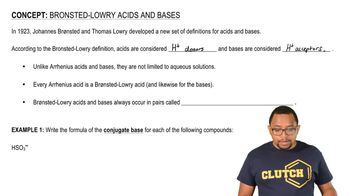
    Defines acids as proton donors and bases as proton acceptors, applicable in any solvent, not just water.
  • Proton Donor

    A species that releases a hydrogen ion (H+ or H3O+) during a chemical reaction.
  • Proton Acceptor

    A species that gains a hydrogen ion (H+) from another substance in a reaction.
  • Aqueous Solution

    A medium where water acts as the solvent for dissolved substances.
  • Hydronium Ion

    The H3O+ ion formed when a hydrogen ion associates with a water molecule.
  • Conjugate Acid-Base Pair

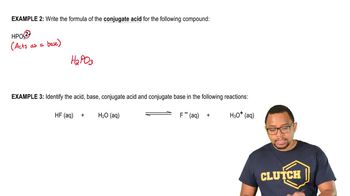
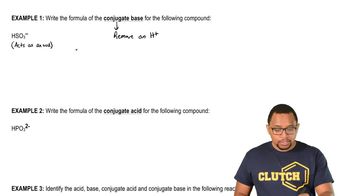
    Two species related by the gain or loss of a single proton in an acid-base reaction.
  • HCl

    A classic example of a strong acid that donates a proton to water, forming H3O+.
  • NaOH

    A strong base that provides OH− ions and can accept a proton from an acid.
  • OH− Ion

    A negatively charged ion capable of accepting a proton, characteristic of bases.
  • Acid-Base Reaction

    A process involving the transfer of a proton from one species to another.
  • General Chemistry

    The foundational study area covering basic concepts like acid-base definitions and reactions.