Back

Confidence Intervals definitions

Control buttons has been changed to "navigation" mode.
1/14
  • Confidence Interval

    An estimated range, based on sample data, within which a parameter is expected to lie at a specified confidence level.
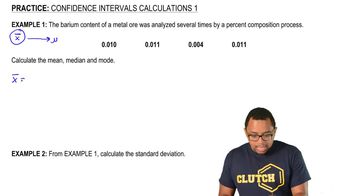
  • Mean

    The arithmetic average of a set of measurements, serving as the central value in statistical calculations.
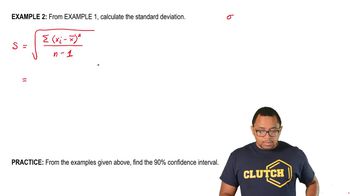
  • Standard Deviation

    A measure of the spread or variability of a set of data points around their average value.
  • Student's t

    A statistical value from the t-distribution used to account for sample size when estimating intervals.
  • Degrees of Freedom

    The number of independent values in a calculation, found by subtracting one from the total number of measurements.
  • Confidence Level

    The probability, expressed as a percentage, that a parameter lies within the calculated interval.
  • Parameter

    A numerical value that describes a characteristic of a population, such as its mean.
  • Sample

    A subset of data collected from a population, used to estimate population characteristics.
  • t-Value

    A multiplier from the t-distribution table, determined by degrees of freedom and confidence level.
  • Measurement Uncertainty

    The inherent doubt or variability present in any experimental data collection process.
  • Population

    The entire group from which a sample is drawn and about which conclusions are made.
  • Interval Estimate

    A range calculated from sample data that is likely to contain a population parameter.
  • Statistical Table

    A reference chart providing values, such as t-values, needed for statistical calculations.
  • Range

    The span between the lowest and highest values in a set, or the width of an interval estimate.