 Back
Statistical Methods and Error Analysis in Analytical Chemistry
Study Guide - Smart Notes
 Tailored notes based on your materials, expanded with key definitions, examples, and context.
Basics of Analytical Chemistry
The Analytical Process
The analytical process in chemistry involves formulating hypotheses, selecting appropriate sample types, and applying quantitative measures and methods to obtain reliable results. Chemometrics is the application of mathematical and statistical methods to chemical data, enhancing the interpretation and accuracy of analytical results.
Hypothesis: A proposed explanation made on the basis of limited evidence, serving as a starting point for further investigation.
Types of Samples: Individual, bulk, subsamples, and pseudosamples are used depending on the analytical goal.
Measures and Methods: Quantitative analysis relies on precise measurement techniques and statistical evaluation.
Basics of Statistics in Analytical Chemistry
Gaussian (Normal) Distribution
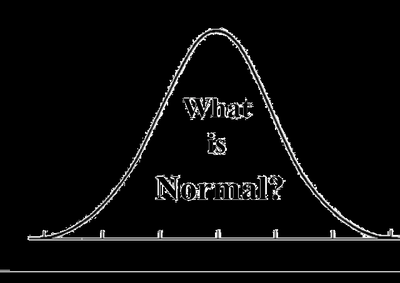
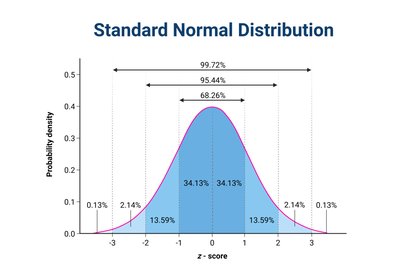
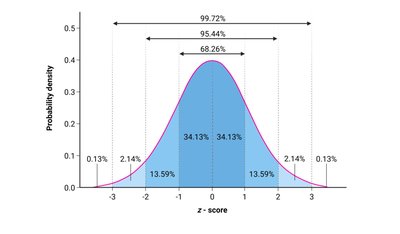
The Gaussian distribution, also known as the normal distribution, is fundamental in analytical chemistry for describing the spread of data around the mean. It is characterized by the mean (μ) and standard deviation (σ), and is used to assess the probability of measurement values.
Mean (μ): The average value of a population.
Standard Deviation (σ): Measures the spread of data around the mean.
Normality: Most analytical data are assumed to follow a normal distribution, which is essential for many statistical tests.

Measures of Central Tendency and Spread
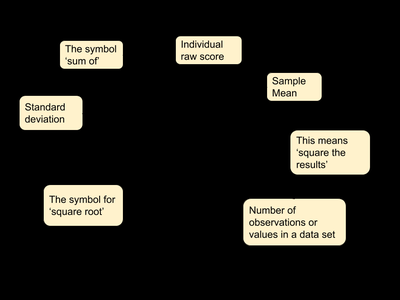
Statistical measures such as mean, standard deviation, and variance are used to summarize and interpret analytical data. The mean is the arithmetic average, while the standard deviation quantifies the variability of the dataset.
Mean (Average):
Sample Standard Deviation (s):
Variance (s2): The square of the standard deviation.
% Relative Standard Deviation (%RSD):
Interquartile Range (IQR): Difference between the third and first quartiles, used to define outliers.

Standard Error
The standard error measures the accuracy of the sample mean by weighting the standard deviation by the number of replicates. It is useful for estimating the uncertainty in the mean value.
Standard Error:
Samples and Replicates
Replicates are repeated measurements or samples used to assess precision. The number of replicates (n) and degrees of freedom (n-1) are important for statistical calculations.
Technical Replicates: Multiple measurements of the same sample.
Experimental Replicates: Independent samples subjected to the same procedure.
Degrees of Freedom: for sample standard deviation.
Statistical Tools in Analytical Chemistry
Using Excel for Statistical Analysis
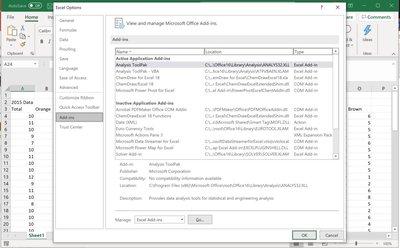
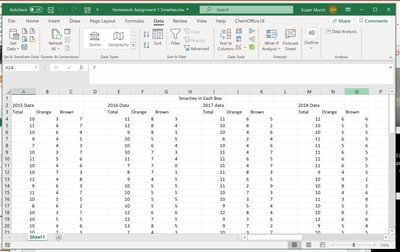
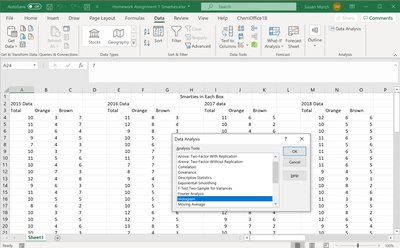
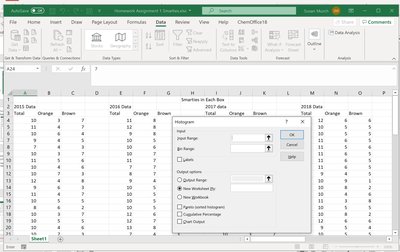
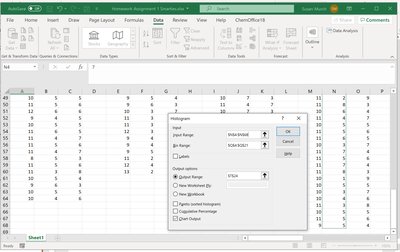
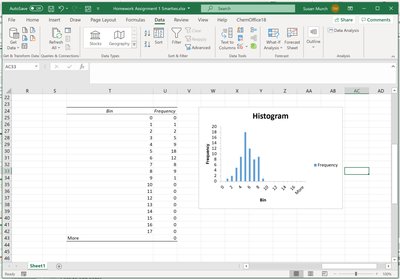
Excel provides tools for statistical analysis, including calculation of mean, standard deviation, and plotting histograms to test data normality. The Analysis ToolPak add-in expands Excel's capabilities for chemometric analysis.
Excel Functions: Use =stdev(data range) to calculate standard deviation.
Analysis ToolPak: Add-in for advanced statistical tools.
Histogram Plotting: Used to visualize data distribution and assess normality.





Types of Error in Analytical Chemistry
Classification of Errors
Errors in analytical chemistry are classified as gross, random, and systematic. Understanding these errors is essential for improving accuracy and precision in experiments.
Gross Error: Major mistakes such as instrument failure or lost samples, requiring experiment repetition.
Random Error: Small, unpredictable variations due to human or instrumental factors, affecting precision.
Systematic Error: Consistent bias caused by faulty instruments or incorrect procedures, affecting accuracy.
Human Error and SOP Violations
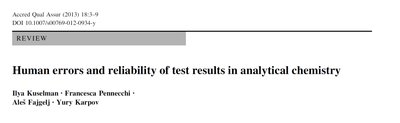
Human errors are inevitable in analytical chemistry. They may arise from lack of knowledge, misunderstanding of methods, or deliberate deviations from standard operating protocols (SOPs).
Human Error: Any action or omission that exceeds the tolerances of the analytical system.
SOP Violation: Deliberate deviation from established protocols, often to save time or improve results, but potentially causing harm.

Propagation of Errors and Uncertainty
Each instrument and tool introduces inherent error, contributing to overall uncertainty. The propagation of errors is calculated to estimate the total uncertainty in analytical measurements.
Uncertainty: The combined effect of all unavoidable errors in measurement.
Propagation Formula:
Type I and Type II Errors
In data interpretation, Type I error refers to incorrectly rejecting a true result, while Type II error refers to retaining a false result. Both types are important considerations in statistical hypothesis testing.
Type I Error: False positive—rejecting a true result.
Type II Error: False negative—accepting a false result.
Summary Table: Types of Errors in Analytical Chemistry
Error Type | Definition | Examples | Impact |
|---|---|---|---|
Gross Error | Major mistakes requiring experiment repetition | Instrument failure, lost sample | Experiment must be restarted |
Random Error | Small, unpredictable variations | Poor technique, human factors | Affects precision |
Systematic Error | Consistent bias in results | Instrument malfunction, procedural bias | Affects accuracy |
Type I Error | Rejecting a true result | Statistical false positive | Misinterpretation of data |
Type II Error | Accepting a false result | Statistical false negative | Misinterpretation of data |
Conclusion
Statistical methods and error analysis are foundational to analytical chemistry. Understanding distributions, measures of central tendency, and types of errors enables chemists to interpret data accurately and improve the reliability of their results.
