Back

Cancer quiz

Control buttons has been changed to "navigation" mode.
1/20
  • What is the difference between a benign tumor and a malignant tumor?

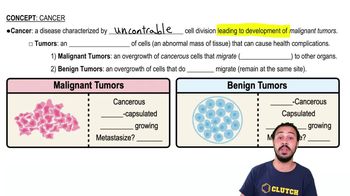
    A benign tumor is non-cancerous, grows slowly, is capsulated, and does not metastasize. A malignant tumor is cancerous, grows rapidly, is non-capsulated, and can metastasize to other organs.
  • How can a nurse best prevent tissue damage caused by an antineoplastic extravasation?

    A nurse can prevent tissue damage by ensuring proper intravenous access, monitoring the infusion site closely, and promptly addressing any signs of extravasation.
  • What is the primary difference between a benign tumor and a malignant tumor?

    The primary difference is that benign tumors do not metastasize and are less dangerous, while malignant tumors can metastasize and are more dangerous.
  • A nurse is caring for several clients on an oncology unit. Which client should the nurse see first?

    The nurse should prioritize seeing the client with signs of acute distress or complications, such as those experiencing severe pain, difficulty breathing, or signs of infection.
  • What is true about malignant tumors regarding their capsule?

    They are non-capsulated.
  • What is a characteristic of benign tumors that is not found in malignant tumors?

    They are capsulated
  • Wilms tumor is suspected in a 5-year-old child. Which action would be avoided?

    Palpating the abdomen should be avoided to prevent potential rupture of the tumor.
  • What is a false statement about the effects of tobacco use on cancer?

    Tobacco use only affects lung cancer
  • What is a characteristic of malignant tumors?

    Ability to metastasize
  • What are the main differences between benign and malignant tumors?

    Benign tumors are non-cancerous, grow slowly, are capsulated, and do not metastasize. Malignant tumors are cancerous, grow rapidly, are non-capsulated, and can metastasize.
  • What is a false statement about prostate cancer?

    It is always fatal
  • Which best explains why an MRI is useful for diagnosing cancer but ineffective in treating it?

    An MRI is a diagnostic tool that provides detailed images of tissues and organs, helping to identify tumors, but it does not have therapeutic capabilities to treat cancer.
  • What is a true statement about breast cancer?

    It can be life-threatening
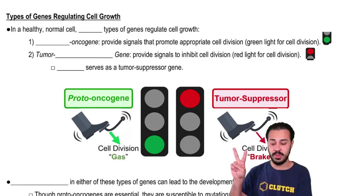
  • Which of the statements regarding tumor suppressors is true? a) They promote cell division b) They inhibit cell division c) They are always mutated in cancer d) They are not found in healthy cells

    b) They inhibit cell division
  • What is a true statement about lung cancer?

    It can metastasize
  • What is an incorrect characteristic of melanoma?

    It is always benign
  • Which syndrome is caused by a translocation?

    Chronic myelogenous leukemia
  • Which statement about diet's effect on cancer is false?

    a) Diet has no impact on cancer risk
  • Is ovarian cancer always detected early?

    c) It is always detected early
  • What is the difference between a benign tumor and one that is malignant?

    A benign tumor is non-cancerous, grows slowly, is capsulated, and does not metastasize. A malignant tumor is cancerous, grows rapidly, is non-capsulated, and can metastasize to other organs.