 Back
BackAdaptive Immune System and Humoral Immunity: ANP Study Guide
Study Guide - Smart Notes
 Tailored notes based on your materials, expanded with key definitions, examples, and context.
Adaptive Defenses
Overview of the Adaptive Immune System
The adaptive immune system is a highly specific defense mechanism that eliminates pathogens and abnormal cells. It amplifies the inflammatory response and activates complement proteins. Unlike innate immunity, adaptive immunity must be primed by exposure to a specific foreign substance, which takes time.
Specificity: Targets specific antigens.
Systemic: Not restricted to the initial site of infection.
Memory: Mounts stronger attacks upon subsequent exposures to the same antigen.
The adaptive system has two main branches:
Humoral (antibody-mediated) immunity
Cellular (cell-mediated) immunity
Humoral Immunity
Humoral immunity involves antibodies produced by lymphocytes that circulate in body fluids. These antibodies bind to target cells, temporarily inactivate them, and mark them for destruction by phagocytes or complement. Humoral immunity primarily targets extracellular pathogens.
Cellular Immunity
Cellular immunity is mediated by lymphocytes that act against target cells either directly (by killing infected cells) or indirectly (by releasing chemicals that enhance inflammation or activate other immune cells). Cellular immunity targets intracellular pathogens and abnormal cells.
Antigens
Definition and Characteristics
Antigens are substances that can mobilize adaptive defenses and provoke an immune response. They are the targets of all adaptive immune responses and are typically large, complex molecules not normally found in the body (nonself).
Can be complete antigens or haptens (incomplete antigens).
Contain antigenic determinants.
Can be self-antigens.
Complete Antigens and Haptens
Complete antigens have two important properties:
Immunogenicity: Ability to stimulate proliferation of specific lymphocytes.
Reactivity: Ability to react with activated lymphocytes and antibodies.
Examples include foreign proteins, polysaccharides, lipids, and nucleic acids. Haptens are small molecules that are not immunogenic by themselves but may become immunogenic when attached to body proteins, leading to harmful immune responses (e.g., poison ivy, animal dander).
Antigenic Determinants
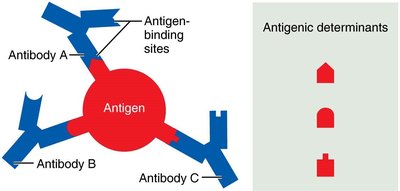
Antigenic determinants are specific parts of an antigen that antibodies or lymphocyte receptors bind to. Most antigens have multiple determinants, mobilizing several lymphocyte populations and forming different kinds of antibodies. Large, chemically simple molecules (like plastics) have little or no immunogenicity.
Self-Antigens: MHC Proteins
All cells are covered with proteins that are not antigenic to self but may be antigenic to others. MHC proteins (major histocompatibility complex) are glycoproteins unique to each individual, presenting self or foreign antigens to T lymphocytes.
Lymphocytes and Antigen-Presenting Cells
Types of Cells in Adaptive Immunity
The adaptive immune system involves three crucial cell types:
B lymphocytes (B cells): Mediate humoral immunity.
T lymphocytes (T cells): Mediate cellular immunity.
Antigen-presenting cells (APCs): Play auxiliary roles in immunity.
Lymphocyte Development, Maturation, and Activation
T and B lymphocytes share common developmental steps:
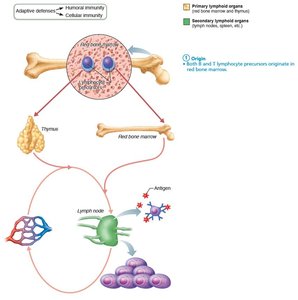
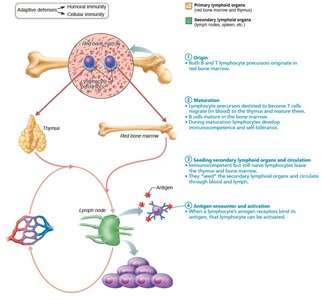
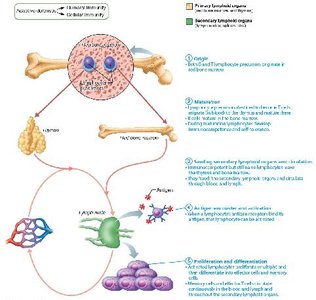
Origin: Both originate in red bone marrow.
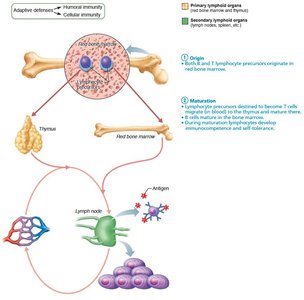
Maturation: Lymphocytes mature in primary lymphoid organs (B cells in bone marrow, T cells in thymus). They develop immunocompetence (ability to recognize one specific antigen) and self-tolerance (unresponsiveness to own antigens).
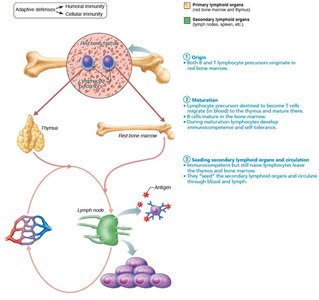
Seeding secondary lymphoid organs and circulation: Immunocompetent but naive lymphocytes colonize secondary lymphoid organs (lymph nodes, spleen) to increase the chance of encountering antigens.
Antigen encounter and activation: First encounter with antigen triggers clonal selection and differentiation into active cells.
Proliferation and differentiation: Activated lymphocytes proliferate to form clones. Most become effector cells; some become memory cells for rapid response upon re-exposure.
Lymphocyte Education in the Thymus
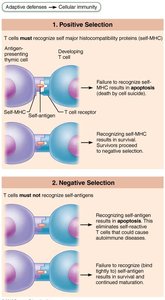
T cells undergo positive and negative selection in the thymus:
Positive selection: Selects T cells capable of recognizing self-MHC proteins.
Negative selection: Eliminates T cells that bind to self-antigens, ensuring self-tolerance.
Antigen-Presenting Cells (APCs)
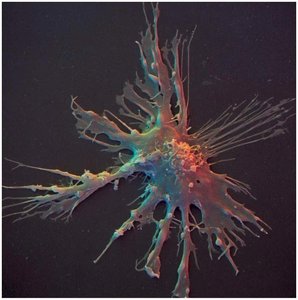
APCs engulf antigens and present fragments to T cells. Major types include:
Dendritic cells: Found in connective tissues and epidermis; most effective antigen presenters.
Macrophages: Widely distributed; activate T cells and trigger inflammation.
B lymphocytes: Present antigens to helper T cells for their own activation.
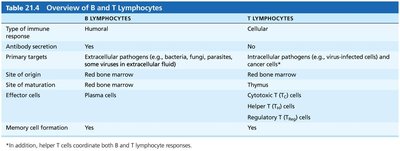
Overview of B and T Lymphocytes
B and T lymphocytes differ in their immune response, antibody secretion, targets, site of origin, maturation, effector cells, and memory cell formation.
B Lymphocytes | T Lymphocytes | |
|---|---|---|
Type of immune response | Humoral | Cellular |
Antibody secretion | Yes | No |
Primary targets | Extracellular pathogens | Intracellular pathogens |
Site of origin | Red bone marrow | Red bone marrow |
Site of maturation | Red bone marrow | Thymus |
Effector cells | Plasma cells | Cytotoxic T cells, Helper T cells, Regulatory T cells |
Memory cell formation | Yes | Yes |
Humoral Immune Response
Activation and Differentiation of B Cells
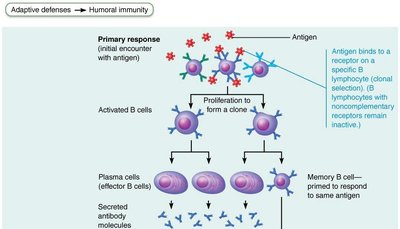
B cells are activated when antigens bind to their surface receptors, triggering clonal selection, proliferation, and differentiation into plasma cells (antibody-secreting effector cells) or memory cells.
Immunological Memory
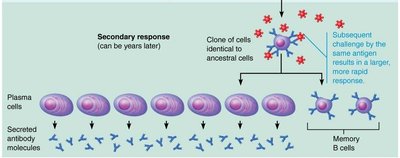
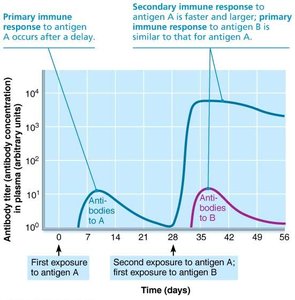
Primary immune response occurs upon first exposure to an antigen, with a lag period and peak antibody levels in about 10 days. Secondary response is faster, stronger, and longer-lasting due to memory cells.
Active and Passive Humoral Immunity
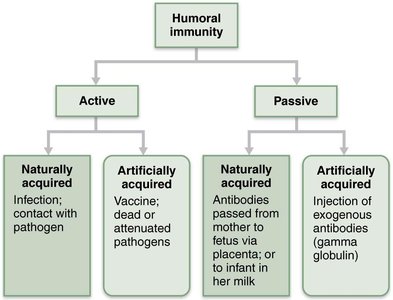
Active immunity results from B cell activation and antibody production, either naturally (infection) or artificially (vaccination). Passive immunity involves the introduction of ready-made antibodies, either naturally (maternal antibodies) or artificially (injection of serum).
Antibodies (Immunoglobulins)
Structure and Classes
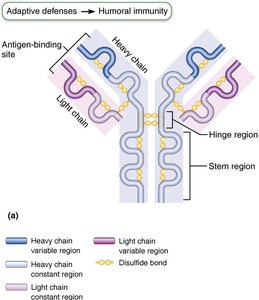
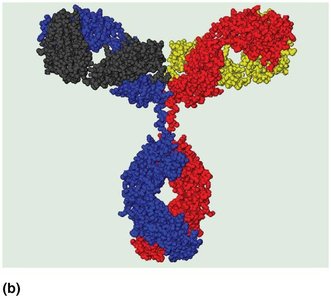
Antibodies are proteins secreted by plasma cells, capable of binding specifically to antigens. The basic structure is a T- or Y-shaped monomer with two heavy and two light chains, variable regions forming antigen-binding sites, and constant regions determining antibody class and function.
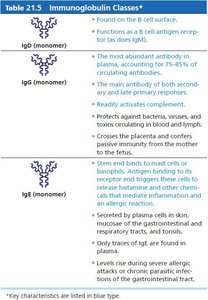
Antibody Classes
There are five major classes of immunoglobulins:
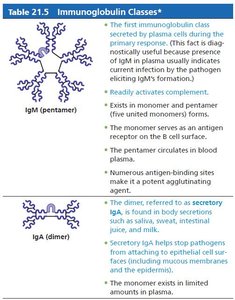
IgM: First antibody released, potent agglutinating agent, activates complement.
IgA: Found in mucus and secretions, prevents pathogen entry.
IgD: Functions as B cell receptor.
IgG: Most abundant, crosses placenta, secondary response.
IgE: Active in allergies and parasitic infections, triggers histamine release.
Class | Structure | Function |
|---|---|---|
IgM | Pentamer | First antibody, agglutination, complement activation |
IgA | Monomer/dimer | Secretions, prevents pathogen entry |
IgD | Monomer | B cell receptor |
IgG | Monomer | Most abundant, crosses placenta |
IgE | Monomer | Allergies, parasitic infections |
Antibody Targets and Functions
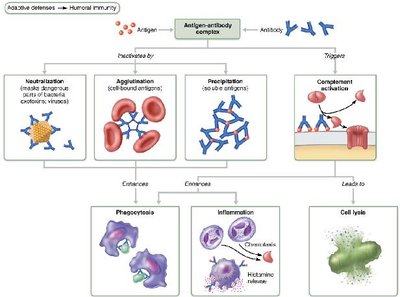
Antibodies inactivate and tag antigens for destruction, forming antigen-antibody complexes. Defensive mechanisms include:
Neutralization: Blocks dangerous parts of antigens.
Agglutination: Clumps cell-bound antigens.
Precipitation: Cross-links soluble antigens.
Complement fixation: Triggers cell lysis and inflammation.
Clinical Applications
Monoclonal antibodies are pure antibodies specific for a single antigenic determinant, produced by hybridomas. They are used in research, clinical testing, and cancer treatment.
Summary of Antibody Actions
Antigen-antibody complexes prepare antigens for destruction by innate defenses. Antibodies target extracellular pathogens and activate mechanisms that destroy viruses, sometimes even acting intracellularly if attached to a virus before cell entry.
Additional info: This guide covers the adaptive immune system, humoral and cellular immunity, antigen structure and function, lymphocyte development, and antibody classes and actions, directly relevant to ANP college course chapters on the immune system.
