Back
BackAdaptive Immunity: Humoral and Cellular Responses
Study Guide - Smart Notes
 Tailored notes based on your materials, expanded with key definitions, examples, and context.
Adaptive Immunity
Overview of Adaptive Immunity
Adaptive immunity is a highly specific defense mechanism that targets particular pathogens and provides long-lasting protection through memory. When the body is re-exposed to the same pathogen, it responds rapidly, often preventing noticeable illness.
Specificity: Immunity is directed against a particular pathogen.
Memory: Upon re-exposure, the immune response is faster and more effective.
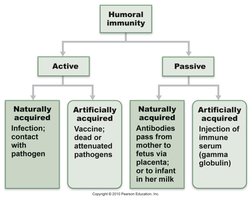
Humoral Immunity vs. Cellular Immunity
Types of Adaptive Immunity
Adaptive immunity is divided into humoral and cellular branches, each with distinct mechanisms and roles.
Humoral Immunity: Mediated by antibodies produced by B cells.
Cellular Immunity: Mediated by T cells that attack infected or abnormal cells.
Antigens and Epitopes
Antigen Structure and Recognition
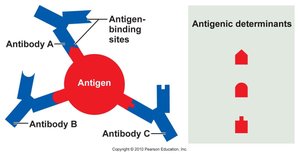
Antigens are substances that trigger an immune response by prompting the generation of antibodies. The complexity of the molecule influences its antigenicity, with proteins being more antigenic than lipids.
Epitope (Antigenic Determinant): The specific part of an antigen recognized by the immune system; antigens often have multiple epitopes.
B Lymphocytes (B Cells)
Development and Selection
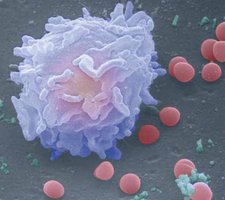
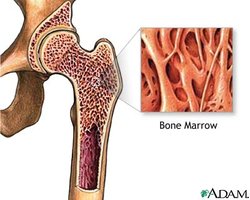
B cells develop in the red bone marrow and undergo selection to ensure they do not react to self-antigens. Those that do are destroyed, and the remaining B cells colonize lymph organs.
Development Site: Red bone marrow
Selection: Self-reactive B cells are eliminated
Colonization: B cells migrate to lymphatic organs
Antibody Structure
Immunoglobulin Structure
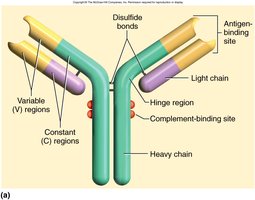
Antibodies, also known as immunoglobulins (Ig), are defensive proteins found in blood plasma and body secretions. They consist of four polypeptide chains: two heavy and two light chains.
Variable (V) Regions: Bind to specific antigens
Constant (C) Regions: Determine antibody class and function
Disulfide Bonds: Stabilize the structure
Antibody Classes
Types of Immunoglobulins
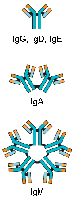
Antibody classes are defined by the structure of their constant regions. Each class has unique functions and distribution in the body.
IgG: Monomer; most abundant, crosses placenta, secondary immune response
IgD: Monomer; B cell membrane receptor
IgE: Monomer; on mast cells, triggers histamine release
IgA: Monomer in plasma, dimer in secretions; prevents adherence to epithelia
IgM: Pentamer; primary immune response
Humoral Immunity Responses
Primary and Secondary Responses
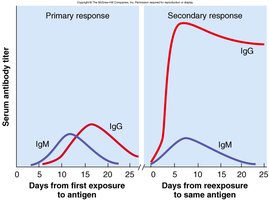
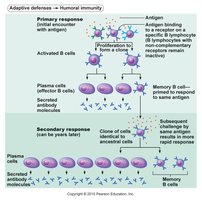
Humoral immunity involves the production of memory B cells upon first exposure to an antigen. On subsequent exposures, the response is faster and more robust, often preventing illness.
Primary Response: Initial exposure, slower antibody production
Secondary Response: Rapid and strong antibody production due to memory B cells
Cellular Immunity
T Cell Function and Classes
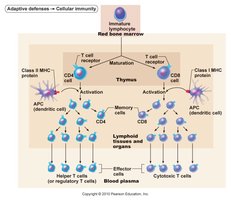
Cellular immunity is mediated by T cells, which attack foreign cells and diseased host cells. There are three main classes of T cells:
Cytotoxic T Cells (Tc, CD8): Directly attack infected or abnormal cells
Helper T Cells (Th, CD4): Promote Tc and B cell action, coordinate immune response
Memory T Cells (Tm): Provide immunity for future exposures
Life Cycle of T Cells
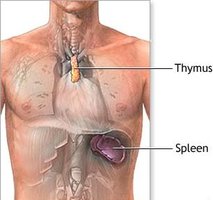
T cells originate from stem cells in the red bone marrow and mature in the thymus. Self-reactive T cells are destroyed, and mature T cells colonize lymphatic tissues and organs.
Origin: Red bone marrow
Maturation: Thymus
Colonization: Lymphatic tissues and organs
Antigen Processing and Presentation
Role of Antigen-Presenting Cells (APCs)
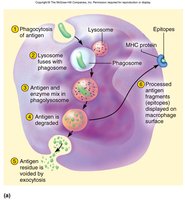
Antigen-presenting cells, such as B cells and macrophages, phagocytize antigens and present fragments on their surface in conjunction with major histocompatibility complex (MHC) proteins.
MHC I: Present on all nucleated cells, recognized by cytotoxic T cells
MHC II: Present on APCs, recognized by helper T cells
T Cell Activation
Recognition and Response
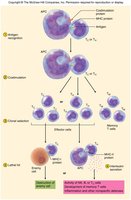
T cells recognize antigens presented by APCs, leading to proliferation of T cell clones and memory cells. Cytotoxic T cells directly attack pathogens, while helper T cells secrete interleukins to coordinate immune responses.
Recognition: Tc or Th cells bind to antigen-MHC complex
Proliferation: Clonal expansion and memory cell formation
Action: Tc cells attack, Th cells coordinate
Immune System Disorders
Hypersensitivity (Allergy)
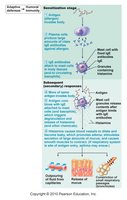
Hypersensitivity reactions, such as anaphylactic shock, are acute and severe allergic responses that can be life-threatening.
Anaphylactic Shock: Bronchiole constriction, dyspnea, vasodilation, shock, death; treated with epinephrine
Autoimmune Disease
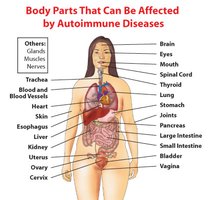
Autoimmune diseases occur when the immune system fails to recognize self-antigens, resulting in the production of autoantibodies and attack on the body's own tissues.
Examples: Type I diabetes mellitus, lupus, rheumatoid arthritis
Mechanisms: Cross-reactivity, structural changes in self-antigens
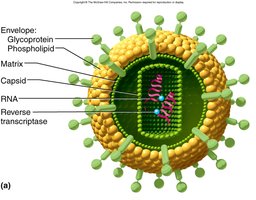
AIDS: Human Immunodeficiency Virus (HIV)
HIV primarily invades helper T cells (CD4), leading to a significant reduction in their numbers and increased susceptibility to infections. AIDS is characterized by a helper T cell count below 200 cells/μL.
Replication: Virus replicates only within host cells
Impact: Loss of immune function, susceptibility to opportunistic infections