 Back
Anatomy 35 – Chapter 19: The Endocrine System Study Guide
Study Guide - Smart Notes
 Tailored notes based on your materials, expanded with key definitions, examples, and context.
Endocrine System Overview
Introduction to the Endocrine System
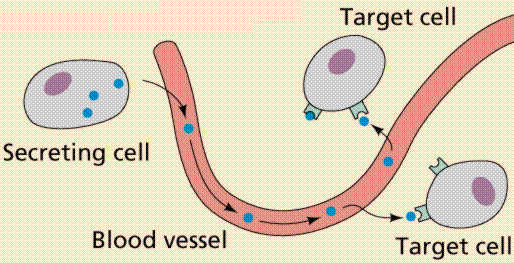
The endocrine system is a major regulatory system in the human body, responsible for maintaining homeostasis through the secretion of hormones. These hormones are released by endocrine glands and travel through the bloodstream to target cells, influencing various physiological processes. - Endocrine glands: Ductless glands that secrete hormones directly into the bloodstream. - Exocrine glands: Glands that release their products through ducts to the surface of organs or outside the body. 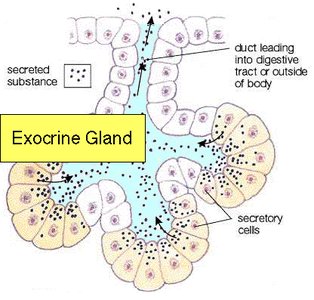 - Hormones: Chemical messengers that affect target cells with specific receptors. - Target cells: Cells that possess receptors for a particular hormone and respond to its signal.
Endocrine vs. Exocrine Glands
Endocrine glands differ from exocrine glands in their method of secretion and target. - Endocrine glands: Secrete hormones into the blood; affect distant target cells. - Exocrine glands: Secrete substances (e.g., enzymes, sweat) into ducts; affect local areas.
Properties of Hormones
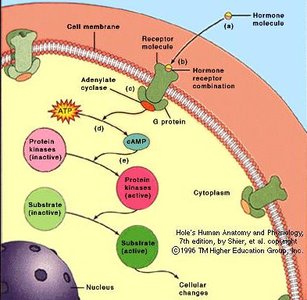
Hormones are classified based on their chemical structure and mechanism of action. - Steroid hormones: Lipid-soluble, pass through cell membranes, bind to intracellular receptors, and directly influence gene expression. 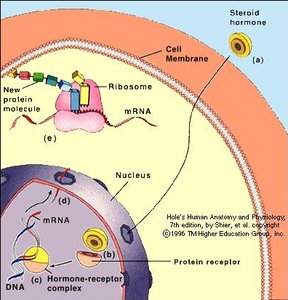 - Peptide hormones: Water-soluble, bind to cell surface receptors, activate second messenger systems (e.g., cAMP).
Coordination of Body Functions
Endocrine System vs. Nervous System
The endocrine and nervous systems both coordinate body activities, but differ in their methods and speed. - Endocrine system: Uses hormones, acts over long distances, slower onset (minutes to years), longer duration. - Nervous system: Uses neurotransmitters, acts over short distances, rapid onset (milliseconds), short duration. 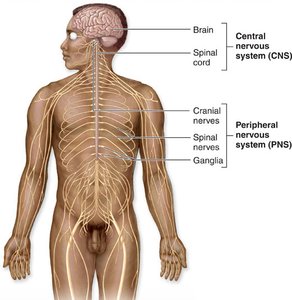
Hypothalamus and Pituitary Gland
Anatomy and Connections
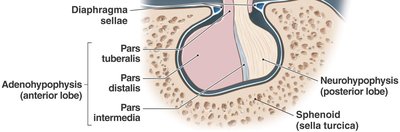
The pituitary gland is connected to the hypothalamus by the infundibulum and is housed in the sella turcica. The hypothalamus controls the pituitary through vascular and neural connections. 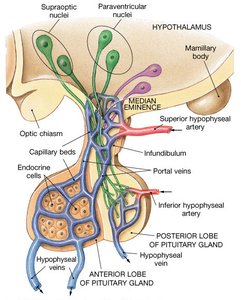
Hypothalamic Control Mechanisms
- Hypophyseal portal system: Vascular connection for anterior pituitary regulation. - Hypophyseal tract: Neural connection for posterior pituitary regulation. 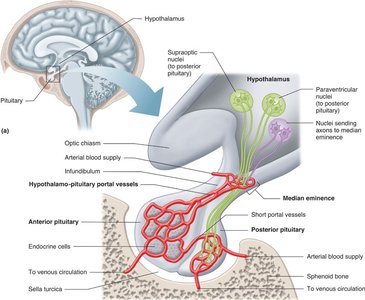
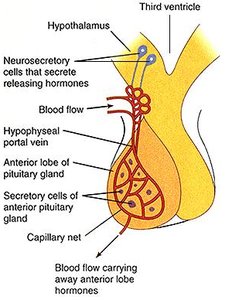
Anterior Pituitary (Adenohypophysis)
The anterior pituitary is regulated by hypothalamic releasing and inhibiting hormones via the hypophyseal portal system. It manufactures and releases six major hormones: - TSH (Thyroid-stimulating hormone) - PRL (Prolactin) - ACTH (Adrenocorticotropic hormone) - GH (Growth hormone) - FSH (Follicle-stimulating hormone) - LH (Luteinizing hormone) 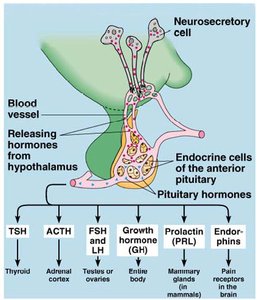
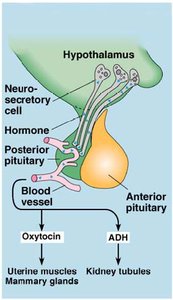
Posterior Pituitary (Neurohypophysis)
The posterior pituitary stores and secretes hormones produced by the hypothalamus, transported via neural connections. It releases: - ADH (Antidiuretic hormone): Regulates water balance. - OT (Oxytocin): Stimulates uterine contractions and milk ejection. 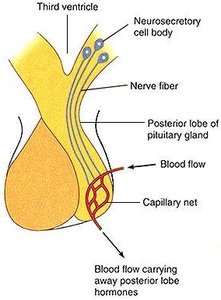
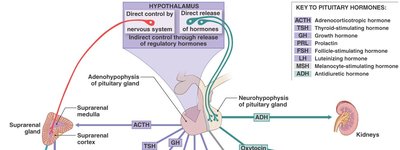
Major Endocrine Glands and Their Functions
Thyroid Gland
The thyroid gland controls metabolism by releasing thyroxine (T4) and triiodothyronine (T3). - Thyroxine (T4): Increases metabolic rate. - Triiodothyronine (T3): More potent, regulates growth and development. 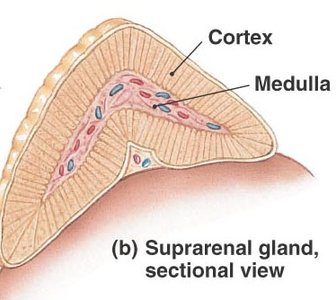
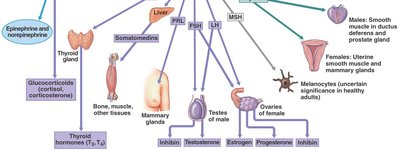
Pineal Gland
The pineal gland releases melatonin, which regulates circadian rhythms and sleep cycles. 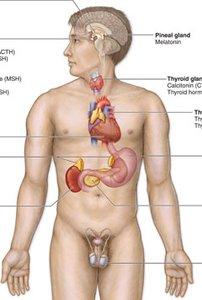
Testes and Ovaries
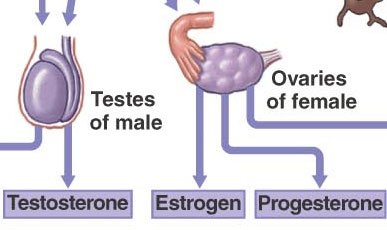
These glands maintain sex characteristics and support gamete development. - Testes: Release testosterone. - Ovaries: Release estrogen and progesterone. 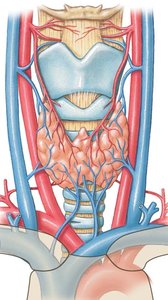
Pancreas
The pancreas maintains blood glucose levels by releasing: - Insulin: Lowers blood glucose. - Glucagon: Raises blood glucose. 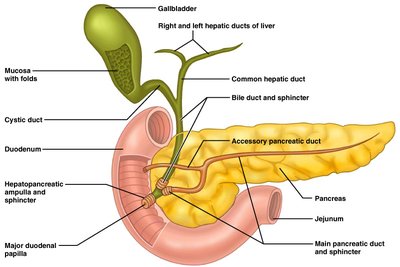
Adrenal Gland
The adrenal gland manages stress levels by releasing cortisol and other hormones. - Cortex: Produces corticosteroids (e.g., cortisol, aldosterone). - Medulla: Produces catecholamines (e.g., epinephrine, norepinephrine). 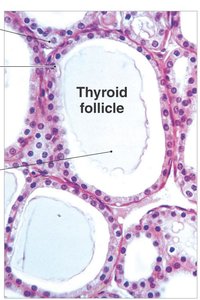
Clinical Implications of Endocrine Malfunctions
Hormone Disorders Table
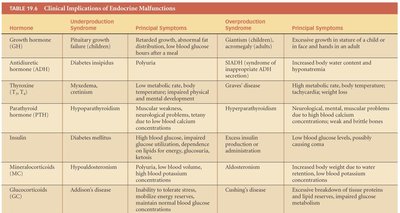
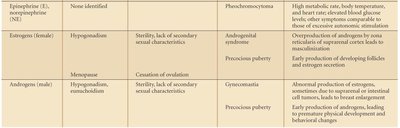
The following table summarizes the clinical implications of endocrine malfunctions, including underproduction and overproduction syndromes and their principal symptoms.
Hormone | Underproduction Syndrome | Principal Symptoms | Overproduction Syndrome | Principal Symptoms |
|---|---|---|---|---|
Growth hormone (GH) | Pituitary growth failure | Retarded growth, abnormal fat distribution | Gigantism (children), acromegaly (adults) | Excessive growth in stature or adult face/hands |
Antidiuretic hormone (ADH) | Diabetes insipidus | Polyuria | SIADH | High water retention, hyponatremia |
Thyroxine (T4), Triiodothyronine (T3) | Hypothyroidism | Low metabolic rate, weight gain | Hyperthyroidism | High metabolic rate, weight loss |
Insulin | Diabetes mellitus | High blood glucose, impaired glucose utilization | Excess insulin | Low blood glucose, possible coma |
Mineralocorticoids (MC) | Hypoaldosteronism | Low blood sodium, high potassium | Hyperaldosteronism | High blood sodium, low potassium |
Glucocorticoids (GC) | Addison's disease | Low blood glucose, poor stress tolerance | Cushing's disease | High blood glucose, altered fat distribution |
Epinephrine/Norepinephrine | None identified | — | Pheochromocytoma | High metabolic rate, hypertension |
Estrogens (female) | Hypogonadism | Sterility, lack of secondary sexual characteristics | Androgenital syndrome | Overproduction of androgens |
Menopause | Cessation of ovulation | — | — | — |
Androgens (male) | Hypogonadism, eunuchoidism | Sterility, lack of secondary sexual characteristics | Gynecomastia | Abnormal production of estrogens |
Summary Table of Endocrine Glands and Hormones
Major Glands, Hormones, and Functions
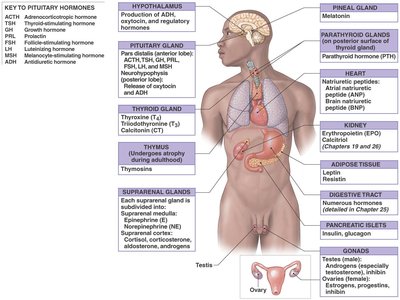
Gland | Hormone(s) | Function |
|---|---|---|
Hypothalamus | Regulatory hormones, ADH, oxytocin | Controls pituitary gland |
Pituitary gland | TSH, ACTH, FSH, LH, GH, PRL, ADH, OT | Regulates other endocrine glands |
Thyroid gland | T3, T4, calcitonin | Regulates metabolism, calcium levels |
Adrenal gland | Cortisol, aldosterone, epinephrine | Manages stress, water/salt balance |
Pancreas | Insulin, glucagon | Regulates blood glucose |
Testes | Testosterone | Male sex characteristics |
Ovaries | Estrogen, progesterone | Female sex characteristics |
Pineal gland | Melatonin | Regulates circadian rhythm |
Additional info:
- The hypothalamus is considered the "master gland" due to its regulatory control over the pituitary and other endocrine glands. - Hormones can be classified as steroid or peptide, affecting their mechanism of action and target cell response. - Endocrine disorders can have widespread effects due to the systemic nature of hormone signaling. ----------------------------------------
