 Back
BackAnatomy & Physiology II Syllabus and Course Structure – Odessa College
Study Guide - Smart Notes
 Tailored notes based on your materials, expanded with key definitions, examples, and context.
Course Overview
Introduction to Anatomy & Physiology II
Anatomy & Physiology II (BIOL 2402) is the second part of a two-course sequence designed to provide an in-depth study of the structure and function of the human body. This course builds upon foundational knowledge from Anatomy & Physiology I and focuses on the anatomical and physiological interrelationships of the endocrine, cardiovascular, immune, lymphatic, respiratory, digestive, urinary, and reproductive systems. Emphasis is placed on the integration of these systems and their roles in maintaining homeostasis.
Course Topics and Modules
Module Structure and Chapter Coverage
Module 1:
Chapter 16: The Endocrine System
Chapter 17: The Cardiovascular System: Blood
Module 2:
Chapter 18: The Cardiovascular System: The Heart
Chapter 19: The Cardiovascular System: Blood Vessels and Circulation
Chapters 20 & 21: The Lymphatic and Immune System
Module 3:
Chapter 22: The Respiratory System
Chapter 23: The Digestive System
Chapter 24: Metabolism and Nutrition
Module 4:
Chapter 25: The Urinary System
Chapter 26: Fluid, Electrolyte, and Acid-Base Balance
Chapter 27: The Reproductive System
Additional info: These modules align with the standard sequence for Anatomy & Physiology II courses and cover the major organ systems and physiological processes required for pre-health science students.
Course Requirements and Policies
Prerequisites and Skills
Successful completion of Anatomy & Physiology I (BIOL 2401) with a grade of "C" or higher.
Basic computer skills, including website navigation, word processing, and email communication.
Access to a reliable computer, high-speed internet, webcam, and microphone for online exams.
Textbook and Materials
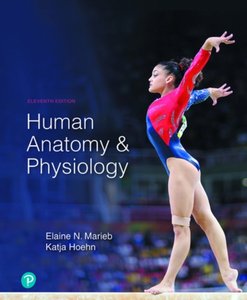
Required Textbook: Human Anatomy & Physiology, 11th Edition by Elaine N. Marieb & Katja Hoehn (Pearson, 2021).
Digital access is available for a monthly subscription fee.
All students must use their Odessa College email for official correspondence.
Grading Breakdown
Category | Percentage |
|---|---|
Exams | 20% |
Lab Exams | 30% |
Discussions | 10% |
Assignments (Practice Quizzes, OC Contract, etc.) | 20% |
Final Exam (OCCMA) | 20% |
Grading Scale: A = 90-100, B = 80-89, C = 70-79, D = 60-69, F = 0-59
Assignments and Exams
Practice Quizzes for each chapter (unlimited attempts before the exam; must be completed before the corresponding lecture exam).
Homework assignments include lecture and lab notes, quizzes, group projects, and multimedia presentations.
Exams are proctored online using Honorlock; webcam and microphone are required.
Lab Exams are fill-in-the-blank and require correct spelling.
Final Exam (OCCMA) is comprehensive and covers all course material.
Student Learning Outcomes (SLOs)
Lecture Outcomes
Use anatomical terminology to identify and describe locations of major organs.
Explain interrelationships among molecular, cellular, tissue, and organ functions.
Describe the interdependency and interactions of organ systems.
Explain contributions of organs and systems to homeostasis.
Identify causes and effects of homeostatic imbalances.
Describe modern technology and tools used to study anatomy and physiology.
Laboratory Outcomes
Apply appropriate safety and ethical standards.
Locate and identify anatomical structures.
Utilize laboratory equipment (microscopes, dissection tools, simulations, etc.).
Work collaboratively to perform experiments.
Demonstrate the scientific method and communicate results.
Use critical thinking and scientific problem-solving skills.
Course Policies and Academic Integrity
Attendance and Participation
Regular participation in online coursework is required (at least twice weekly).
First-week attendance assignment is mandatory to avoid being dropped from the course.
Academic Integrity
All work must be original; cheating, plagiarism, and collusion are strictly prohibited.
Honorlock proctoring is used for all exams; violations may result in a grade of zero or removal from the course.
Students must not use unauthorized resources during exams.
Technology and Support
Students must have backup plans for computer or internet issues.
Support services are available for technology, academic, and personal needs (see syllabus for contact list).
Course Schedule Overview
Week | Module & Assignments |
|---|---|
1 | Module 0: Intro Assignments, Endocrine System (Ch. 16), Blood (Ch. 17) |
2 | Heart (Ch. 18), Blood Vessels (Ch. 19), Lymphatic & Immune (Ch. 20 & 21) |
3 | Respiratory (Ch. 22), Digestive (Ch. 23), Metabolism & Nutrition (Ch. 24) |
4 | Urinary (Ch. 25), Fluid/Electrolyte/Acid-Base (Ch. 26), Reproductive (Ch. 27) |
5 | Final Exam (OCCMA) |
Additional info: Assignments are due weekly, and students are encouraged to submit work early to avoid last-minute issues.
Institutional Core Objectives (ICOs)
Critical Thinking Skills
Communication Skills
Empirical and Quantitative Skills
Teamwork
Personal Responsibility
Social Responsibility
Support Services and Resources
Student accommodations, counseling, food pantry, and academic support are available.
Contact information for all support services is provided in the syllabus.
