 Back
BIO 163: Human Anatomy & Physiology I – Study Notes (Chapters 1–5)
Study Guide - Smart Notes
 Tailored notes based on your materials, expanded with key definitions, examples, and context.
Chapter 1: The Human Body – An Orientation
Introduction to Anatomy and Physiology
Anatomy and physiology are foundational sciences for understanding the structure and function of the human body. Anatomy focuses on the form and organization of body parts, while physiology explores how these parts work together to sustain life.
Anatomy: Study of body structure; includes gross (visible) and microscopic (cellular/tissue) anatomy.
Physiology: Study of body function; structure determines function.
Levels of Organization: Atoms → Molecules → Cells → Tissues → Organs → Organ Systems → Organism.
Homeostasis and Feedback Mechanisms
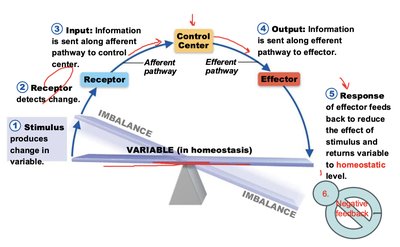
Homeostasis is the maintenance of a stable internal environment. The body uses feedback loops to regulate physiological variables and maintain equilibrium.
Negative Feedback: Most common; reduces the effect of the stimulus (e.g., body temperature regulation).
Positive Feedback: Rare; amplifies the stimulus (e.g., blood clotting, childbirth).
Components of a Feedback Loop: Stimulus, Receptor, Control Center, Effector, Response.
Body Systems Overview
The human body is organized into organ systems, each with specific functions essential for survival.
Integumentary System: Skin, hair, nails; protection, temperature regulation, sensation.
Skeletal System: Bones, cartilage, ligaments; support, movement, blood cell formation.
Muscular System: Skeletal muscles; movement, posture, heat production.
Nervous System: Brain, spinal cord, nerves; fast control, response to stimuli.
Endocrine System: Glands; hormone secretion, slow control of growth, metabolism.
Cardiovascular System: Heart, blood vessels; transport of nutrients, gases, wastes.
Lymphatic System: Lymph nodes, vessels; immunity, fluid balance.
Respiratory System: Lungs, airways; gas exchange.
Digestive System: GI tract, accessory organs; nutrient breakdown and absorption.
Urinary System: Kidneys, bladder; waste elimination, water and electrolyte balance.
Reproductive System: Gonads, ducts; production of offspring.
Functional Characteristics of Life
All living organisms share certain characteristics, including maintaining boundaries, movement, responsiveness, digestion, metabolism, excretion, reproduction, and growth.
Anatomical Position, Directional Terms, and Body Regions
Standardized anatomical terminology is used to describe body positions, directions, and regions to avoid confusion.
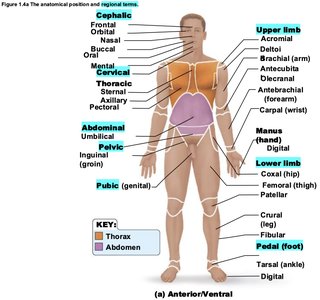
Anatomical Position: Standing erect, feet parallel, arms at sides, palms forward.
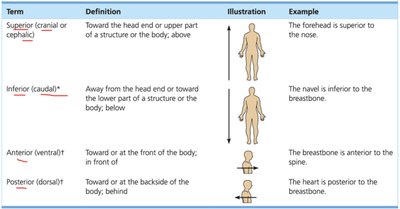
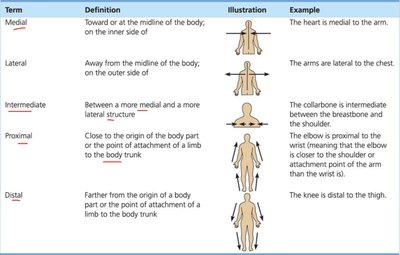
Directional Terms: Superior/inferior, anterior/posterior, medial/lateral, proximal/distal, superficial/deep.

Body Regions
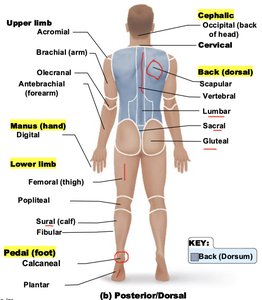
Body Planes and Sections
Body planes are imaginary lines used to divide the body for anatomical study.
Sagittal Plane: Divides body into left and right parts.
Frontal (Coronal) Plane: Divides body into anterior and posterior parts.
Transverse Plane: Divides body into superior and inferior parts.
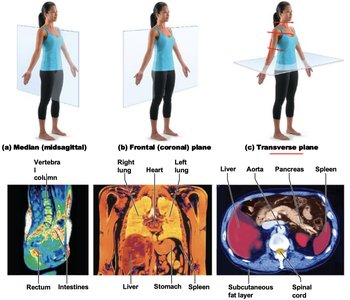
Body Cavities and Subdivisions
The body contains internal cavities that protect organs and allow for organ movement and expansion.
Dorsal Cavity: Cranial (brain) and spinal (spinal cord) cavities.
Ventral Cavity: Thoracic (heart, lungs) and abdominopelvic (digestive, urinary, reproductive organs) cavities.
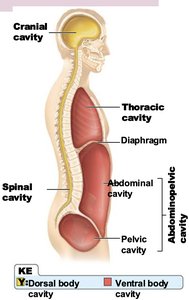
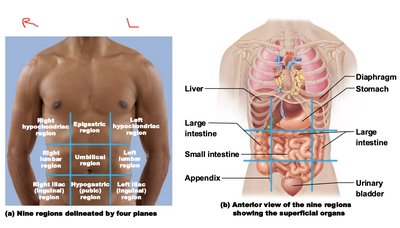
Abdominopelvic Quadrants and Regions
Quadrants: Right upper (RUQ), left upper (LUQ), right lower (RLQ), left lower (LLQ).
Nine Regions: Used for more precise localization of abdominal organs.
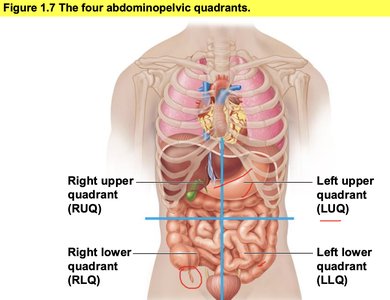
Chapter 2: Basic Chemistry (Selected Content)
Elements of the Human Body
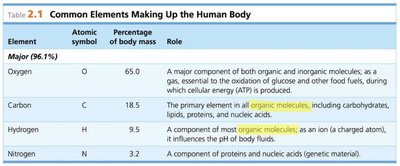
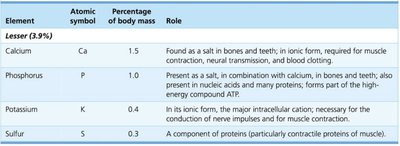
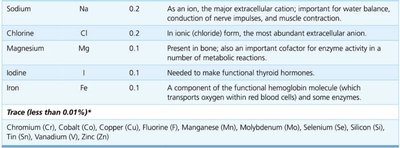
The human body is composed of major, lesser, and trace elements, each with specific biological roles.
Element | Symbol | % Body Mass | Role |
|---|---|---|---|
Oxygen | O | 65.0 | Component of water, needed for ATP production |
Carbon | C | 18.5 | Backbone of organic molecules |
Hydrogen | H | 9.5 | Component of water and organic molecules |
Nitrogen | N | 3.2 | Component of proteins and nucleic acids |
Carbohydrates and Chemical Reactions
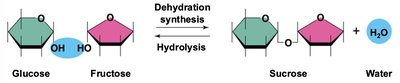
Carbohydrates are essential biomolecules, and their synthesis and breakdown involve dehydration and hydrolysis reactions.
Dehydration Synthesis: Forms bonds by removing water.
Hydrolysis: Breaks bonds by adding water.
Chapter 3: Cells and Tissues
Structure of the Generalized Cell
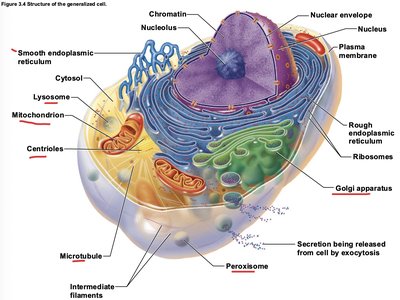
Cells are the basic units of life, each with specialized structures (organelles) that perform distinct functions.
Main Regions: Nucleus, cytoplasm, plasma membrane.
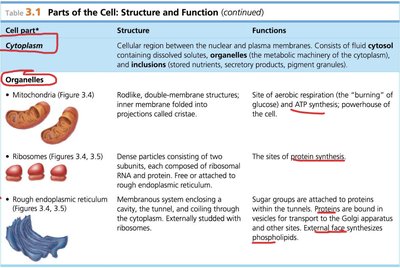
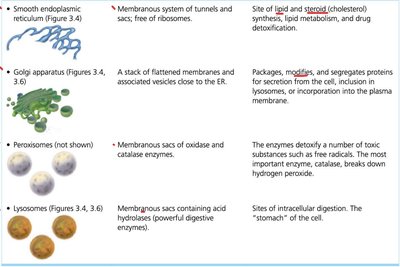
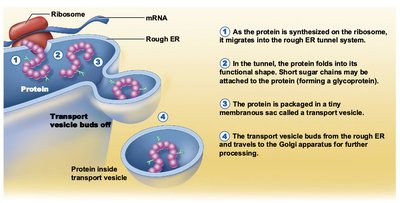
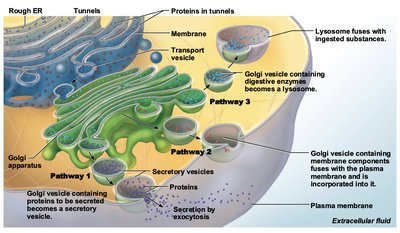
Organelles: Mitochondria (ATP synthesis), ribosomes (protein synthesis), endoplasmic reticulum (protein/lipid synthesis), Golgi apparatus (modification and packaging), lysosomes (digestion), peroxisomes (detoxification).
Plasma Membrane Structure and Function
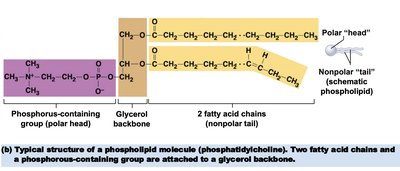
The plasma membrane is a selectively permeable barrier composed of a phospholipid bilayer with embedded proteins, cholesterol, and carbohydrates.
Phospholipids: Hydrophilic heads face outward; hydrophobic tails face inward.
Proteins: Serve as channels, carriers, receptors, and enzymes.
Carbohydrates: Involved in cell recognition and adhesion.
Cell Junctions
Cells are connected by specialized junctions that provide adhesion, impermeability, or communication.
Tight Junctions: Impermeable, prevent leakage.
Desmosomes: Anchoring, resist mechanical stress.
Gap Junctions: Allow communication between cells.
Additional info:
Further chapters (e.g., on tissues, skin, skeletal system) are covered in the full course and build on these foundational concepts. The above notes provide a comprehensive overview of the introductory material essential for success in Anatomy & Physiology I.
