 Back
Biochemistry Foundations: Elements, Atoms, and Chemical Bonds in the Human Body
Study Guide - Smart Notes
 Tailored notes based on your materials, expanded with key definitions, examples, and context.
Biochemistry and the Human Body
Elements: The Building Blocks of Matter
Elements are pure substances that cannot be broken down into simpler substances by chemical reactions. They are fundamental to all matter, including the human body.
Definition: An element is a substance consisting of only one type of atom, distinguished by its atomic number.
Occurrence: 94 elements occur naturally, while 24 have been synthesized in laboratories.
Examples: Gold (Au), Copper (Cu), Oxygen (O)
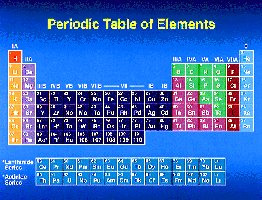
Elemental Composition of the Human Body
The human body is primarily composed of a few key elements, with the majority of body mass coming from just four elements.
Major Elements: Oxygen (O), Carbon (C), Hydrogen (H), Nitrogen (N)
Distribution: These four elements make up over 96% of the human body by mass.
Element | Percent of Body Mass | Approximate Weight (160 lbs) |
|---|---|---|
Oxygen (O) | 65.0% | 104.0 lbs |
Carbon (C) | 18.5% | 29.6 lbs |
Hydrogen (H) | 9.5% | 15.2 lbs |
Nitrogen (N) | 3.3% | 5.3 lbs |
Other Elements | 3.7% | 5.9 lbs |
Essential and Trace Elements
Some elements are required in large amounts (essential elements), while others are needed only in minute quantities (trace elements).
Essential Elements: Oxygen, Carbon, Hydrogen, Nitrogen, Calcium, Phosphorus, Potassium, Sodium, Magnesium, etc.
Trace Elements: Iron (Fe), Iodine (I), and others are required in very small amounts but are vital for health.

Example: Iodine deficiency can cause goiter, a swelling of the thyroid gland. Iodized salt helps prevent this condition.
Atoms: Structure and Properties
Atomic Structure
Atoms are the smallest units of elements that retain their chemical properties. They are composed of subatomic particles:
Protons: Positively charged particles found in the nucleus.
Neutrons: Neutral particles also located in the nucleus.
Electrons: Negatively charged particles that orbit the nucleus in energy shells.
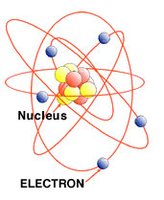
Neutral Atom: The number of protons equals the number of electrons, resulting in no overall charge.
Electron Shells and Orbitals
Electrons occupy energy levels or shells around the nucleus. The arrangement of electrons determines an atom's chemical behavior.
First shell: Holds up to 2 electrons.
Subsequent shells: Hold up to 8 electrons each.
Electrons fill the lowest energy shells first (from the inside out).
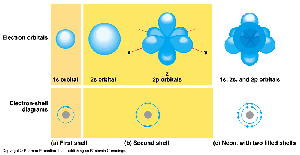
Example: Neon (Ne) has 10 electrons: 2 in the first shell, 8 in the second shell (full outer shell, making it chemically inert).
Chemical Reactions and Bonds
Chemical Reactions
Chemical reactions involve the making or breaking of bonds between atoms, primarily determined by the behavior of electrons in the outermost shells (valence electrons).
Atoms tend to react to achieve a full outer shell, which is a stable configuration.
Molecules and Compounds
Atoms combine to form molecules and compounds through chemical bonds.
Molecule: Two or more atoms bonded together (e.g., O2, N2).
Compound: A substance composed of two or more different elements (e.g., NaCl, H2O, C6H12O6).
Chemical Bonds: Types and Properties
Chemical bonds are forces that hold atoms together in molecules and compounds. The type of bond affects the properties of the resulting substance.
Ionic Bonds
Covalent Bonds
Polar Covalent Bonds
Ionic Bonds
An ionic bond forms when one atom donates an electron to another, resulting in the formation of charged ions. Opposite charges attract, holding the ions together.
Cation: Positively charged ion (lost electron)
Anion: Negatively charged ion (gained electron)
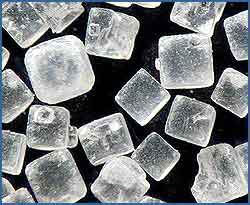
Example: Sodium (Na) donates an electron to chlorine (Cl), forming Na+ and Cl-, which combine to make sodium chloride (NaCl).
Covalent Bonds
Covalent bonds involve the sharing of electron pairs between atoms. The shared electrons allow each atom to achieve a full outer shell.
Single bond: One pair of electrons shared
Double bond: Two pairs of electrons shared
Triple bond: Three pairs of electrons shared
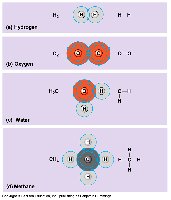
Example: In a water molecule (H2O), each hydrogen shares one electron with oxygen, forming two single covalent bonds.
Polar Covalent Bonds
Polar covalent bonds occur when electrons are shared unequally between two atoms, resulting in partial charges on the atoms.
Electronegativity: The ability of an atom to attract electrons in a bond. Oxygen is more electronegative than hydrogen.
In water (H2O), electrons spend more time near the oxygen atom, giving it a partial negative charge and hydrogen a partial positive charge.
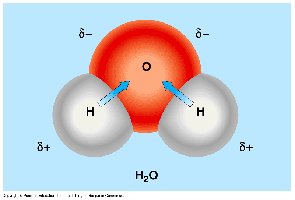
Example: The polarity of water molecules is essential for many biological processes, including hydrogen bonding and solubility of substances in water.
Summary Table: Types of Chemical Bonds
Bond Type | Mechanism | Example | Properties |
|---|---|---|---|
Ionic | Electron transfer | NaCl | Forms ions, strong in solid state, dissolves in water |
Covalent | Electron sharing | H2O, O2 | Strong, forms molecules |
Polar Covalent | Unequal electron sharing | H2O | Partial charges, leads to polarity |
Key Equations and Concepts
Atomic Number (Z): Number of protons in the nucleus
Mass Number (A): Number of protons + neutrons
Electron Shell Capacity:
First shell: where (max 2 electrons)
Second shell: where (max 8 electrons)
Example Equation:
Additional info: Understanding the chemical basis of life is foundational for further study in anatomy and physiology, as all physiological processes are ultimately chemical in nature.
