 Back
BackBlood: Structure, Composition, and Function
Study Guide - Smart Notes
 Tailored notes based on your materials, expanded with key definitions, examples, and context.
Blood: Structure, Composition, and Function
Overview of Blood
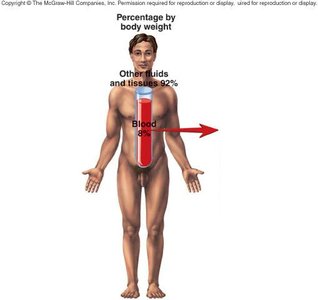
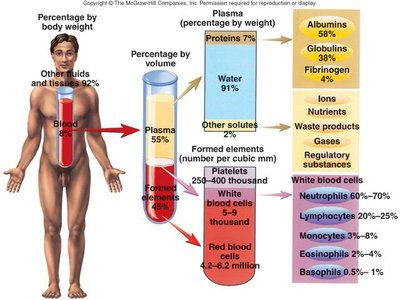
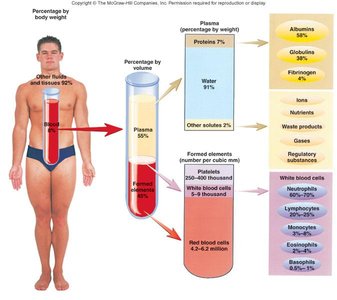
Blood is a specialized fluid connective tissue that plays a critical role in the transport of substances, regulation of physiological parameters, and protection against disease. It constitutes approximately 8% of total body weight and circulates continuously through the cardiovascular system.
Key Functions:
Transport of gases (oxygen and carbon dioxide), nutrients, waste products, processed molecules, and regulatory molecules.
Regulation of pH and osmosis.
Maintenance of body temperature.
Protection against foreign substances (immune defense).
Clot formation to prevent blood loss.
Composition of Blood
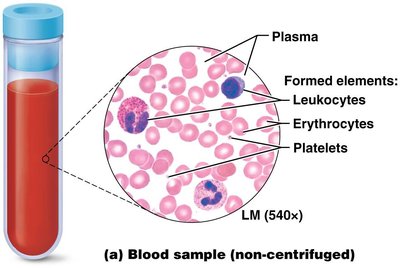
Blood consists of two major components: plasma and formed elements. Plasma is the liquid extracellular matrix, while formed elements include cells and cell fragments suspended in plasma.
Plasma: Makes up about 55% of blood volume; contains water, proteins, and solutes.
Formed Elements: Comprise erythrocytes (red blood cells), leukocytes (white blood cells), and platelets.
Blood Layers and Hematocrit
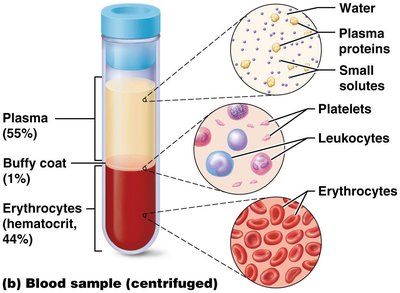
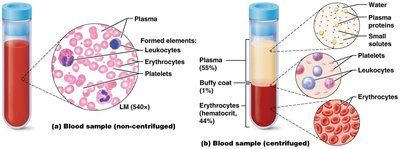
When blood is centrifuged, it separates into three distinct layers:
Top layer: Plasma (55% of total volume)
Middle layer: Buffy coat (leukocytes and platelets, 1% of total volume)
Bottom layer: Erythrocytes (44% of total volume); the percentage of erythrocytes is called hematocrit.
Plasma Components
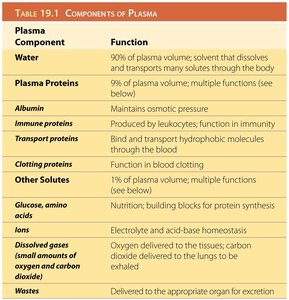
Plasma is primarily water (90%), with proteins and other solutes making up the remainder. Plasma proteins form a colloid and are essential for various physiological functions.
Albumin: Maintains osmotic pressure and draws water into blood by osmosis.
Immune proteins (gammaglobulins): Function in immunity; produced by leukocytes.
Transport proteins: Bind and transport hydrophobic molecules.
Clotting proteins: Essential for blood clotting.
Other solutes: Include glucose, amino acids, ions, dissolved gases, and wastes.
Plasma Component | Function |
|---|---|
Water | Solvent; transports solutes |
Albumin | Maintains osmotic pressure |
Immune proteins | Immunity |
Transport proteins | Transport hydrophobic molecules |
Clotting proteins | Blood clotting |
Glucose, amino acids | Nutrition |
Ions | Electrolyte and acid-base homeostasis |
Dissolved gases | Oxygen and carbon dioxide transport |
Wastes | Excretion |
Formed Elements of Blood
The formed elements include erythrocytes, leukocytes, and platelets, each with distinct functions:
Erythrocytes (Red Blood Cells): Transport oxygen and carbon dioxide.
Leukocytes (White Blood Cells): Defend against pathogens and remove debris.
Platelets: Involved in hemostasis and clot formation.
Summary Table: Blood Composition
Component | Percentage | Main Functions |
|---|---|---|
Plasma | 55% | Transport, regulation, immunity, clotting |
Buffy coat | 1% | Immune defense, clotting |
Erythrocytes | 44% | Gas transport |
Microscopic Structure of Blood
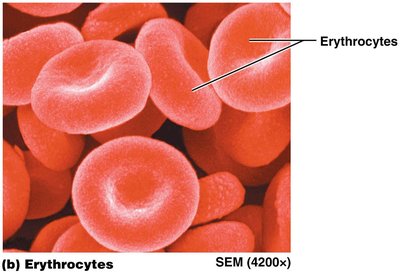
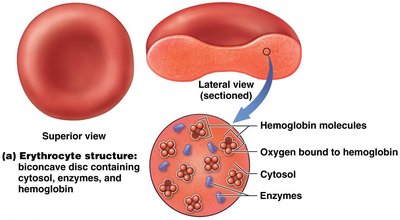
Blood contains various cell types, each with unique morphology and function. Erythrocytes are biconcave discs, leukocytes are diverse in shape and function, and platelets are small fragments.
Hemoglobin Structure
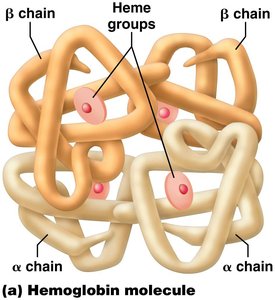
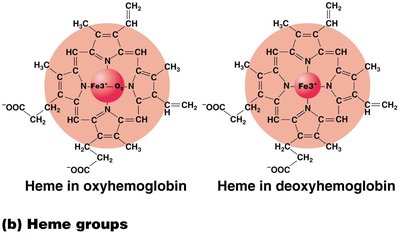
Hemoglobin is a large protein in erythrocytes responsible for oxygen transport. It consists of four polypeptide chains (two alpha and two beta), each bound to a heme group containing iron.
Oxyhemoglobin (HbO2): Formed when iron binds oxygen.
Carbaminohemoglobin: Formed when hemoglobin binds carbon dioxide.
Carboxyhemoglobin: Formed when hemoglobin binds carbon monoxide; prevents oxygen delivery.
Erythropoiesis: Formation of Red Blood Cells
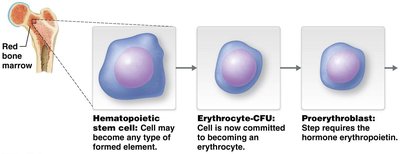
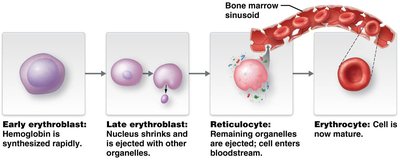
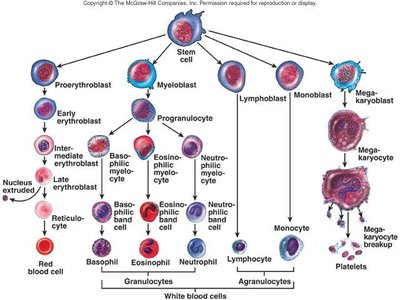
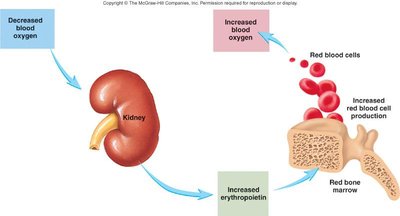
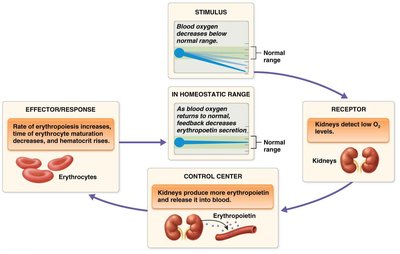
Erythropoiesis is the process by which new erythrocytes are produced in the red bone marrow from hematopoietic stem cells. It is regulated by the hormone erythropoietin, primarily produced by the kidneys in response to low blood oxygen levels.
Stages: Hematopoietic stem cell → Erythrocyte-CFU → Proerythroblast → Erythroblast → Reticulocyte → Erythrocyte
Regulation: Negative feedback loop involving oxygen levels, kidney detection, erythropoietin release, and increased erythrocyte production.
Erythrocyte Death and Hemoglobin Breakdown
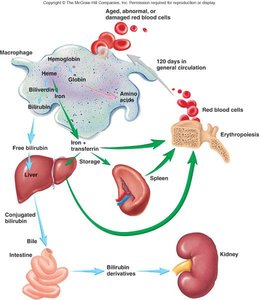
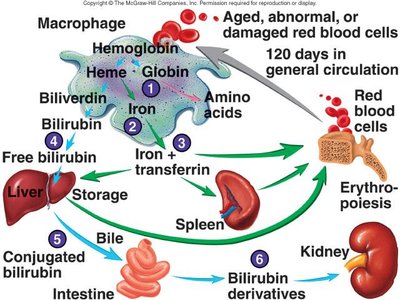
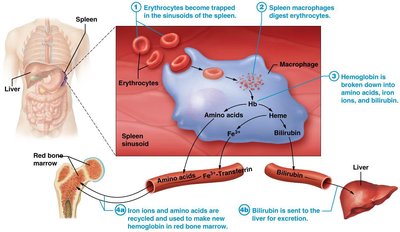
Erythrocytes have a lifespan of about 120 days. Old or damaged erythrocytes are removed by macrophages in the spleen, and hemoglobin is broken down into amino acids, iron, and heme. Iron and amino acids are recycled, while heme is converted to biliverdin and then bilirubin for excretion.
Blood Disorders: Anemia and Sickle Cell Disease
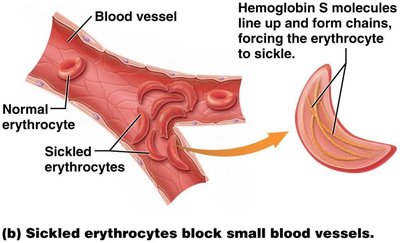
Anemia is a condition characterized by decreased oxygen-carrying capacity of blood, caused by decreased hemoglobin, decreased hematocrit, or abnormal hemoglobin. Sickle cell disease is a genetic disorder resulting in abnormal hemoglobin S, causing erythrocytes to sickle and block blood vessels.
Symptoms: Pallor, fatigue, weakness, shortness of breath.
Causes: Iron deficiency, chronic disease, vitamin deficiencies, blood loss, hemolytic anemia, aplastic anemia.
Leukocytes: Types and Functions
Leukocytes (white blood cells) are essential for immune defense and removal of debris. They are classified as granulocytes (neutrophils, eosinophils, basophils) and agranulocytes (lymphocytes, monocytes).
Neutrophils: Phagocytic, most common, multi-lobed nucleus.
Eosinophils: Bilobed nucleus, red granules, respond to parasites and allergies.
Basophils: S-shaped nucleus, dark purple granules, mediate inflammation.
Summary Table: Granulocytes
Type | Nucleus | Granule Color |
|---|---|---|
Neutrophil | 3-5 lobes | Light lilac |
Eosinophil | Bilobed | Red |
Basophil | S-shaped | Dark purple |
Additional info:
Blood is a fluid connective tissue, and its composition and function are central to homeostasis and health.
Hematocrit is a key diagnostic measure for assessing blood health.
Plasma proteins, especially albumin, are critical for maintaining blood volume and pressure.
