 Back
Blood: Structure, Composition, and Function
Study Guide - Smart Notes
 Tailored notes based on your materials, expanded with key definitions, examples, and context.
Blood: Internal Transport System
Overview of Blood Functions
Blood is a life-sustaining fluid that serves as the primary transport vehicle of the cardiovascular system. It performs three essential functions: transport, regulation, and protection.
Transport: Delivers oxygen and nutrients to cells, removes metabolic wastes, and transports hormones.
Regulation: Maintains body temperature, pH balance, and fluid volume.
Protection: Prevents blood loss via clotting and defends against infection through immune agents.
Composition of Blood
Physical Characteristics and Components
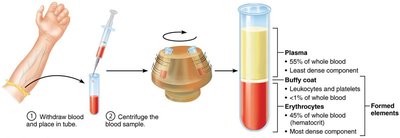
Blood is the only fluid tissue in the body and is classified as a connective tissue. It consists of a nonliving matrix called plasma and living cells known as formed elements. When centrifuged, blood separates into three distinct layers:
Plasma: The least dense component, making up about 55% of whole blood.
Buffy coat: Contains leukocytes (white blood cells) and platelets, less than 1% of whole blood.
Erythrocytes: Red blood cells, the most dense component, about 45% of whole blood (hematocrit).
Blood Plasma
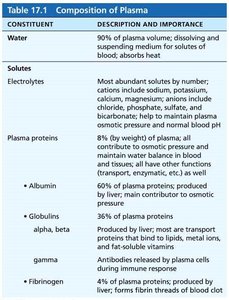
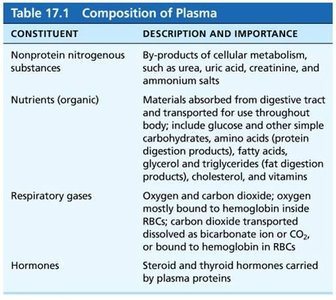
Plasma is a straw-colored, sticky fluid that constitutes about 90% water and contains over 100 dissolved solutes. These include nutrients, gases, hormones, wastes, proteins, and inorganic ions. Plasma proteins are the most abundant solutes and are primarily produced by the liver.
Albumin: Makes up 60% of plasma proteins; functions as a carrier, blood buffer, and maintains osmotic pressure.
Globulins: Transport proteins and antibodies.
Fibrinogen: Forms fibrin threads of blood clots.
Formed Elements
The formed elements of blood include erythrocytes, leukocytes, and platelets. Only leukocytes are complete cells; erythrocytes lack nuclei and organelles, and platelets are cell fragments. Most formed elements survive only a few days in the bloodstream and originate in bone marrow. 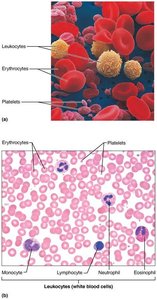
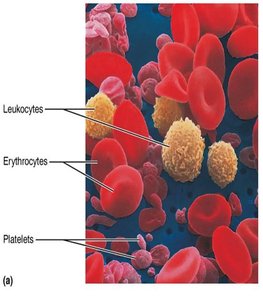
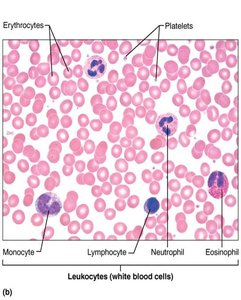
Erythrocytes (Red Blood Cells)
Structural Characteristics
Erythrocytes are small, biconcave cells (7.5 μm diameter) specialized for gas transport. They are anucleate and lack most organelles, filled primarily with hemoglobin. Their shape provides a large surface area for gas exchange and flexibility for passage through capillaries. 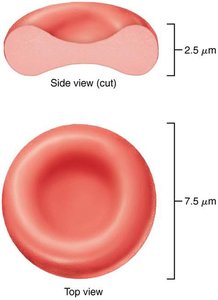
Hemoglobin Structure and Function
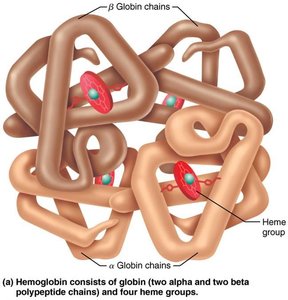
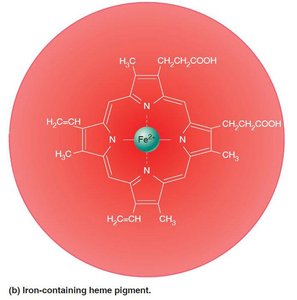
Hemoglobin is the protein responsible for oxygen transport in erythrocytes. It consists of four polypeptide chains (two alpha, two beta) and four heme groups, each containing an iron atom that binds oxygen.
Oxygen loading: Forms oxyhemoglobin (ruby red).
Oxygen unloading: Forms deoxyhemoglobin (dark red).
CO2 transport: Forms carbaminohemoglobin.
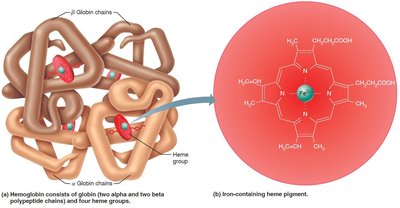
Erythropoiesis: Formation of Red Blood Cells
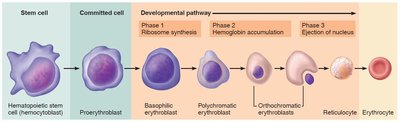
Erythropoiesis is the process of RBC formation, occurring in red bone marrow. It involves several stages:
Hematopoietic stem cell (hemocytoblast)
Proerythroblast
Basophilic erythroblast
Polychromatic erythroblast
Orthochromatic erythroblast
Reticulocyte
Mature erythrocyte
Regulation of Erythropoiesis
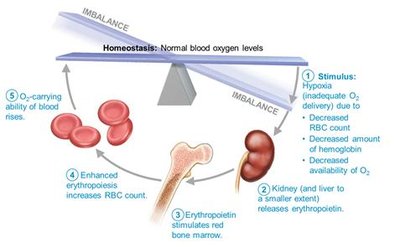
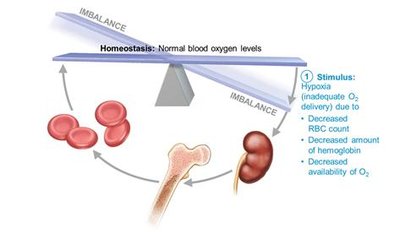
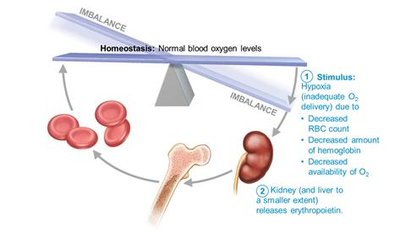
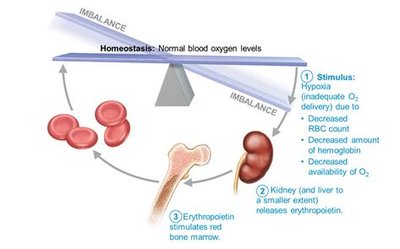
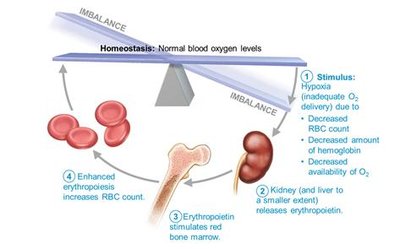
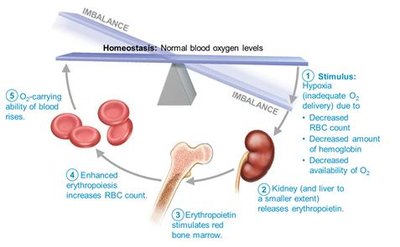
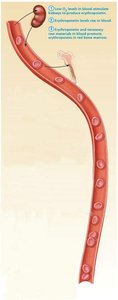
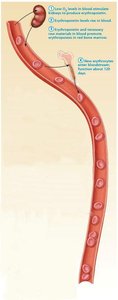
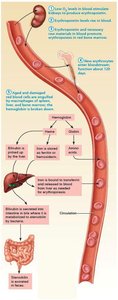
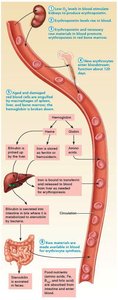
The production of erythrocytes is regulated by erythropoietin (EPO), a hormone released by the kidneys in response to hypoxia (low oxygen levels). EPO stimulates red bone marrow to increase RBC production.
Dietary requirements: Amino acids, lipids, carbohydrates, iron, vitamin B12, and folic acid are essential for erythropoiesis.
Fate and Destruction of Erythrocytes
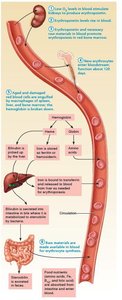
Erythrocytes have a lifespan of 100–120 days. Old RBCs are removed by macrophages in the spleen, and their components are recycled:
Iron: Stored for reuse.
Heme: Degraded to bilirubin, excreted in bile.
Globin: Broken down into amino acids.
Leukocytes (White Blood Cells)
Types and Functions
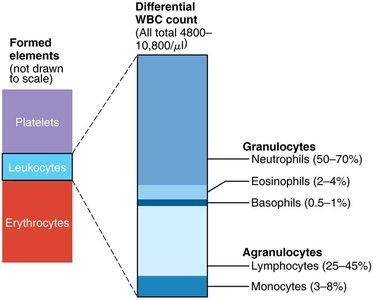
Leukocytes are complete cells that defend the body against disease. They are classified into two main groups:
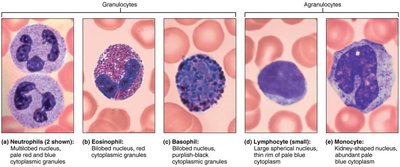
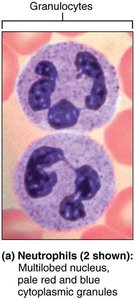
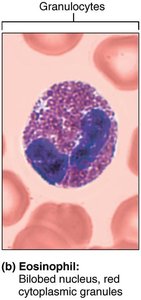
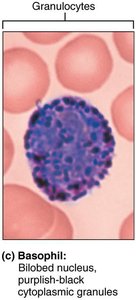
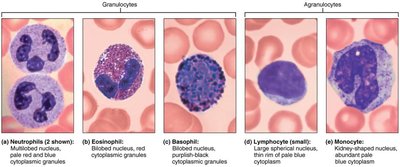
Granulocytes: Neutrophils, eosinophils, basophils (contain visible granules).
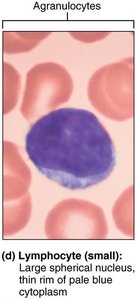
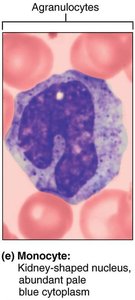
Agranulocytes: Lymphocytes, monocytes (lack visible granules).
Granulocytes
Neutrophils: Most numerous, phagocytic, kill bacteria.
Eosinophils: Attack parasitic worms, modulate immune response.
Basophils: Release histamine, involved in inflammation.
Agranulocytes
Lymphocytes: Crucial to immunity; T cells attack infected cells, B cells produce antibodies.
Monocytes: Differentiate into macrophages, phagocytize pathogens.
Platelets
Structure and Function
Platelets are fragments of megakaryocytes and play a vital role in blood clotting. They contain chemicals necessary for clot formation and form temporary plugs at sites of vessel injury.
Summary Table: Formed Elements of Blood
Main Purpose
The table summarizes the characteristics and functions of erythrocytes, leukocytes, and platelets.
Element | Main Function | Key Features |
|---|---|---|
Erythrocytes | Oxygen transport | Biconcave, anucleate, hemoglobin-rich |
Leukocytes | Defense against disease | Complete cells, various types |
Platelets | Clotting | Cell fragments, contain clotting chemicals |
Key Equations and Concepts
Hematocrit Calculation
Hematocrit: Percentage of blood volume occupied by erythrocytes.
Oxygen Binding to Hemoglobin
Each hemoglobin molecule binds up to four oxygen molecules.
Additional info:
Blood is classified as a connective tissue due to its matrix and cellular components.
Plasma proteins play a critical role in maintaining osmotic balance and immune function.
Leukocytes are essential for both innate and adaptive immunity.
