 Back
Blood Vessels, Capillaries, and Blood Pressure Regulation
Study Guide - Smart Notes
 Tailored notes based on your materials, expanded with key definitions, examples, and context.
Blood Vessel Structure
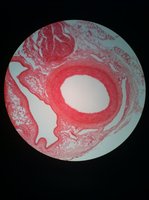
Layers of Blood Vessels
Blood vessels are composed of three main layers, each with distinct structural and functional properties:
Tunica intima (endothelium): The innermost layer, consisting of a single layer of endothelial cells that lines the lumen of all vessels. It provides a smooth surface to minimize resistance to blood flow.
Tunica media: The middle layer, primarily composed of smooth muscle and elastic fibers. This layer is responsible for vasoconstriction and vasodilation, regulating vessel diameter and blood pressure.
Tunica externa (adventitia): The outermost layer, made of connective tissue that protects and reinforces the vessel and anchors it to surrounding structures.
Capillaries and Capillary Beds
Types of Capillaries
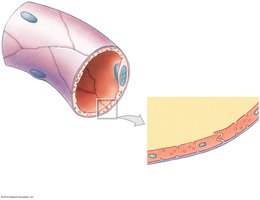
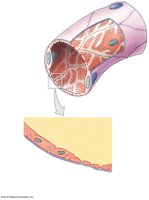
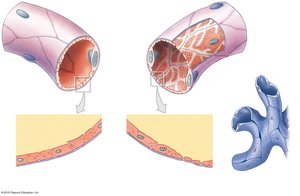
Capillaries are the smallest blood vessels and are the primary sites for exchange between blood and tissues. There are three main types:
Continuous capillaries: Most common; found in skin and muscles. Endothelial cells are joined by tight junctions, but intercellular clefts allow limited passage of fluids and small solutes. In the brain, tight junctions form the blood-brain barrier.
Fenestrated capillaries: Have pores (fenestrations) in the endothelium, increasing permeability. Found in areas of active filtration or absorption (e.g., kidneys, small intestine, endocrine glands).
Sinusoids: Highly modified, leaky capillaries with large lumens and gaps between cells. Found in the liver, bone marrow, and lymphoid tissues, allowing passage of large molecules and cells.
Capillary Beds and Microcirculation
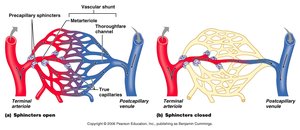
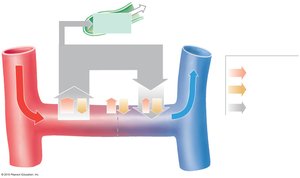
Capillary beds are networks of capillaries that connect arterioles to venules. Blood flow through capillary beds is regulated by precapillary sphincters, which open and close in response to local tissue needs.
True capillaries: Actual exchange vessels.
Vascular shunt (metarteriole-thoroughfare channel): Directly connects arteriole and venule, bypassing true capillaries when sphincters are closed.
Blood Pressure and Its Regulation
Systemic and Arterial Blood Pressure
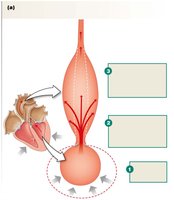
Blood pressure (BP) is the force per unit area exerted on a vessel wall by the contained blood. It is highest in the aorta and declines throughout the systemic circulation, reaching its lowest point in the right atrium.
Systolic pressure: Pressure during ventricular contraction.
Diastolic pressure: Pressure during ventricular relaxation.
Pulse pressure: Difference between systolic and diastolic pressure.
Mean arterial pressure (MAP): Average pressure that propels blood to tissues. Calculated as
Factors Affecting Blood Flow and Resistance
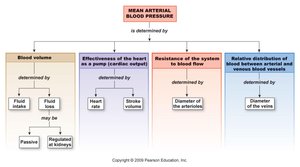
Blood flow is determined by the pressure gradient and resistance. Resistance is mainly influenced by:
Blood viscosity: Increased viscosity increases resistance.
Blood vessel length: Longer vessels increase resistance.
Blood vessel diameter: The most significant factor; small changes in diameter greatly affect resistance (inversely proportional to the fourth power of the radius).
Peripheral resistance is primarily regulated at the level of arterioles.
Short-Term Regulation of Blood Pressure
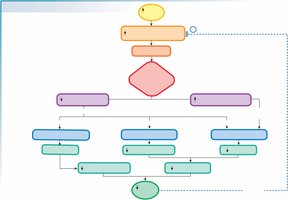
Short-term mechanisms adjust blood pressure by altering peripheral resistance and cardiac output. These include:
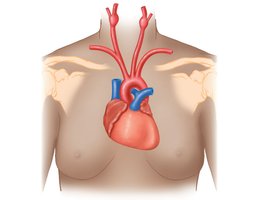
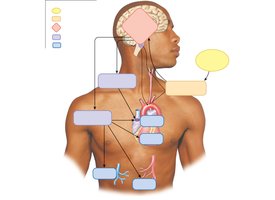
Neural controls: Baroreceptor reflexes in the carotid sinuses and aortic arch detect changes in BP and adjust heart rate, vessel diameter, and cardiac output via the medullary cardiovascular center.
Autoregulation: Local control of blood flow in response to tissue needs (e.g., O2 demand, CO2 buildup, pH changes).
Chemical controls: Hormones such as norepinephrine, epinephrine, ADH, angiotensin II (increase BP), and ANP, nitric oxide, histamine (decrease BP).
Long-Term Regulation: Renal Mechanisms
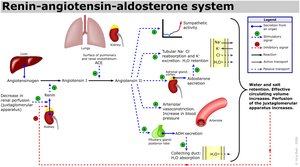
Long-term regulation of blood pressure is achieved by controlling blood volume through the kidneys:
Direct mechanism: Adjusts urine output in response to blood pressure changes.
Indirect mechanism (Renin-Angiotensin-Aldosterone System): Low BP triggers renin release, leading to angiotensin II production, vasoconstriction, aldosterone secretion, and increased Na+ and water reabsorption.
Capillary Exchange and Bulk Flow
Mechanisms of Capillary Exchange
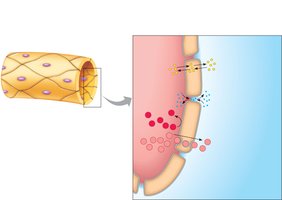
Exchange of gases, nutrients, and wastes occurs between blood and tissues via:
Diffusion: Movement of small, lipid-soluble molecules directly through endothelial membranes.
Intercellular clefts and fenestrations: Allow passage of water-soluble substances.
Transcytosis: Transport of larger molecules via vesicles.
Bulk Flow: Filtration and Reabsorption
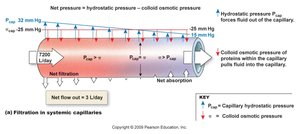
Bulk flow is the movement of fluid across capillary walls, driven by hydrostatic and osmotic pressures. The balance of these forces determines net filtration pressure (NFP):
Hydrostatic pressure (HP): Pushes fluid out of capillaries.
Osmotic pressure (OP): Pulls fluid into capillaries due to plasma proteins.
Net filtration pressure (NFP):
At the arterial end, filtration dominates; at the venous end, reabsorption dominates. Excess fluid is returned to the circulation via the lymphatic system.
Venous Blood Pressure and Return
Venous Blood Pressure
Venous pressure is much lower than arterial pressure and changes little during the cardiac cycle. Several mechanisms assist venous return:
Respiratory pump: Pressure changes during breathing move blood toward the heart.
Muscular pump: Skeletal muscle contractions "milk" blood toward the heart.
Venous valves: Prevent backflow of blood.
Summary Table: Types of Capillaries
Type | Structure | Location | Function |
|---|---|---|---|
Continuous | No pores, tight junctions, intercellular clefts | Muscle, skin, brain (blood-brain barrier) | Limited exchange, forms barriers |
Fenestrated | Pores (fenestrations) in endothelium | Kidneys, small intestine, endocrine glands | Increased permeability for filtration/absorption |
Sinusoid | Large gaps, incomplete basement membrane | Liver, bone marrow, spleen | Passage of large molecules and cells |
