Back
BackBones and Bone Structure: Study Guide for Anatomy & Physiology
Study Guide - Smart Notes
 Tailored notes based on your materials, expanded with key definitions, examples, and context.
Bones and Bone Structure
Functions of the Skeletal System
The skeletal system is essential for structural support, movement, and protection in the human body. It consists of bones, cartilages, ligaments, and other connective tissues that stabilize and interconnect the bones.
Structural Support: Provides the framework for the body and supports soft tissues.
Storage of Minerals and Lipids: Stores calcium, phosphorus, and lipids in bone marrow.
Blood Cell Production: Hematopoiesis occurs in red bone marrow.
Protection: Shields vital organs (e.g., brain, heart, lungs).
Leverage: Bones act as levers for muscles to produce movement.
Classification of Bones
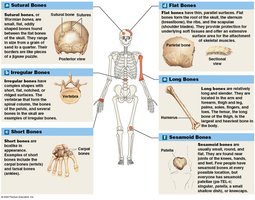
Bones are classified by their shape and structure, each serving distinct functional roles in the body.
Sutural Bones: Small, flat, irregular bones found between skull bones.
Irregular Bones: Complex shapes (e.g., vertebrae, pelvic bones).
Short Bones: Boxy, found in wrists (carpals) and ankles (tarsals).
Flat Bones: Thin, parallel surfaces (e.g., skull roof, sternum, ribs, scapulae).
Long Bones: Long and slender (e.g., humerus, femur, fingers).
Sesamoid Bones: Small, round, flat bones within tendons (e.g., patella).
Bone Markings
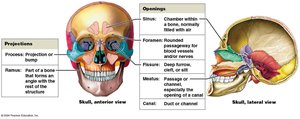
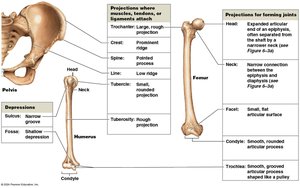
Bone markings are surface features that serve as sites for muscle attachment, articulation, and passage of nerves and blood vessels.
Projections: For attachment and articulation (e.g., process, ramus).
Openings and Depressions: For passage of vessels and nerves (e.g., foramen, canal, fossa).
Structure of Long and Flat Bones
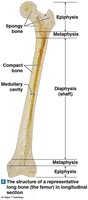
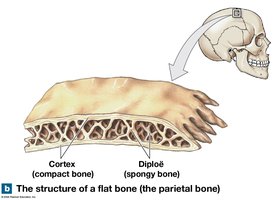
Long bones have a tubular shaft (diaphysis), articulating ends (epiphysis), and a connecting zone (metaphysis). Flat bones consist of a core of spongy bone (diploë) between two layers of compact bone.
Diaphysis: Compact bone surrounding a medullary cavity.
Epiphysis: Mostly spongy bone.
Metaphysis: Connects diaphysis and epiphysis.
Bone Tissue
Bone tissue (osseous tissue) is a dense connective tissue composed of specialized cells and a solid extracellular matrix.
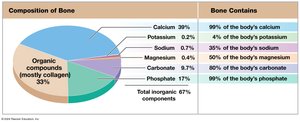
Matrix: Two-thirds calcium phosphate (hydroxyapatite crystals), one-third collagen fibers.
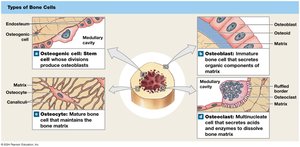
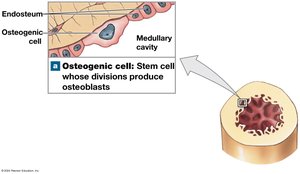
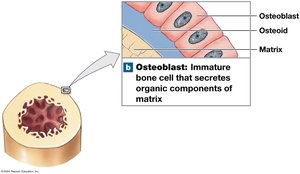
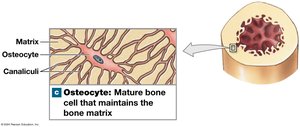
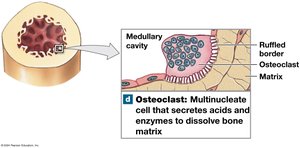
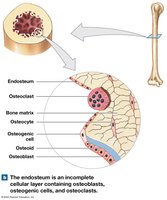
Cells: Osteogenic cells, osteoblasts, osteocytes, osteoclasts.
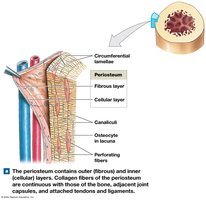
Periosteum: Covers outer surfaces of bones, except at joints.
Types of Bone Cells
Cell Type | Function |
|---|---|
Osteogenic (osteoprogenitor) cells | Stem cells for bone repair and growth |
Osteoblasts | Produce new bone matrix (osteogenesis) |
Osteocytes | Maintain bone matrix, repair damaged bone |
Osteoclasts | Absorb and remove bone matrix (osteolysis) |
Compact Bone and Spongy Bone
Compact bone and spongy bone have distinct structures and functions, contributing to bone strength and flexibility.
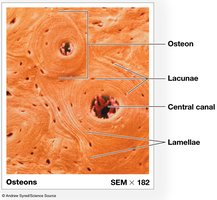
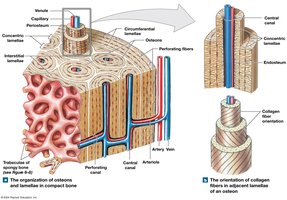
Compact Bone: Contains osteons (functional units), central canals, lamellae, and lacunae.
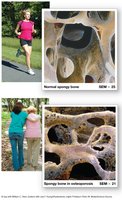
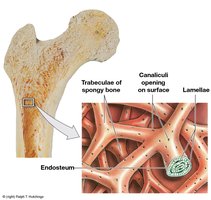
Spongy Bone: Matrix arranged as trabeculae, supports red bone marrow, lighter and can withstand stress from multiple directions.
Distribution of Forces
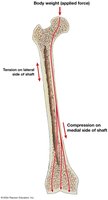
The femur demonstrates how trabeculae transfer weight and how compact bone resists compression and tension.
Surface Coverings: Periosteum and Endosteum
Periosteum: Membrane covering outside of bones, involved in growth and repair.
Endosteum: Incomplete cellular layer lining inner surfaces, active during growth and remodeling.
Bone Formation and Growth
Bone formation (ossification) occurs via two mechanisms: endochondral ossification and intramembranous ossification.
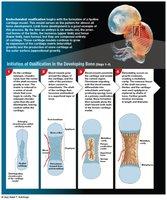
Endochondral Ossification
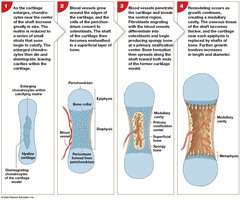
Bone replaces cartilage.
Primary ossification center: Chondrocytes enlarge, matrix calcifies, blood vessels invade.
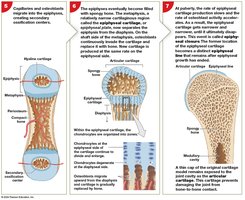
Secondary ossification centers: Form in epiphyses.
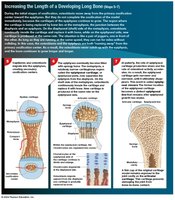
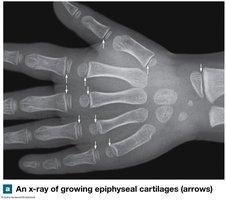
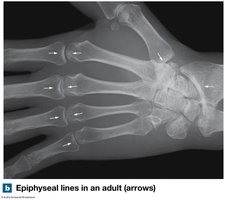
Epiphyseal plate: Site of growth in length.
Bone Growth
Interstitial Growth: Growth in length at epiphyseal plate.
Appositional Growth: Growth in width by adding lamellae.
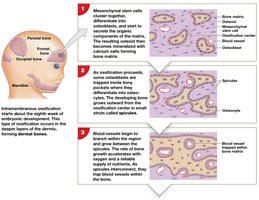
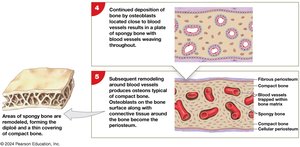
Intramembranous Ossification
Bone forms from mesenchymal cells.
Produces dermal bones: Flat bones of skull, mandible, clavicles.
Steps: Mesenchymal cells differentiate, osteoid is secreted and calcified, spicules form, blood vessels invade, remodeling produces compact bone.
Blood Supply to Bones
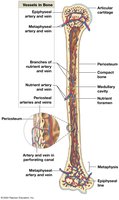
Nutrient artery and vein: Supply diaphysis.
Metaphyseal vessels: Supply epiphyseal cartilages.
Periosteal vessels: Supply superficial osteons.
Bone Remodeling and Homeostasis
Bone remodeling is a continuous process involving osteocytes, osteoblasts, and osteoclasts. It maintains bone strength and mineral balance.
Balanced activity: Maintains bone mass.
Imbalance: Osteoclasts weaken bone; osteoblasts strengthen bone.
Exercise, Nutrition, and Hormones
Bone health is influenced by physical activity, nutrition, and hormones.
Exercise: Stimulates bone strength and maintenance.
Minerals: Calcium, phosphorus, magnesium, fluoride, iron, manganese.
Vitamins: D, C, A, K.
Hormones: Growth hormone, thyroxine, sex hormones, parathyroid hormone, calcitonin.
Abnormal Bone Development
Pituitary growth failure: Short bones.
Gigantism: Tall stature.
Acromegaly: Thick bones after epiphyseal closure.
Marfan syndrome: Tall, slender limbs.
Calcium Homeostasis
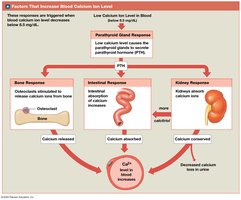
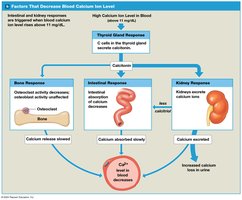
Bones store 99% of the body's calcium, which is vital for physiological processes. Calcium levels are regulated by hormones.
Hormonal Regulation
Parathyroid Hormone (PTH): Increases blood calcium by stimulating osteoclasts, increasing intestinal absorption, and decreasing kidney excretion.
Calcitonin: Decreases blood calcium by inhibiting osteoclasts, increasing kidney excretion, and decreasing intestinal absorption.
Disorders
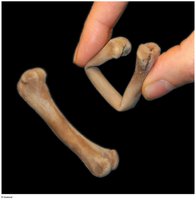
Osteomalacia: Weak, flexible bones due to poor mineralization.
Rickets: Osteomalacia from vitamin D deficiency.
Fractures and Repair
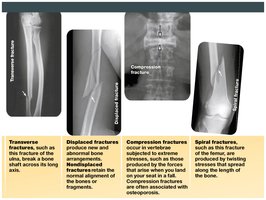
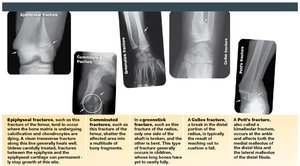
Fractures are cracks or breaks in bones. They are classified by their characteristics and location.
Type | Description |
|---|---|
Open (compound) | Projects through skin |
Closed (simple) | Internal |
Transverse | Break across long axis |
Displaced | Abnormal bone arrangement |
Compression | Crushed bone |
Spiral | Twisting stress |
Epiphyseal | At growth plate |
Comminuted | Multiple fragments |
Greenstick | Partial break |
Colles | Distal radius |
Pott's | Distal tibia/fibula |
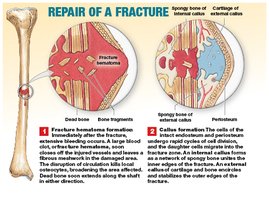
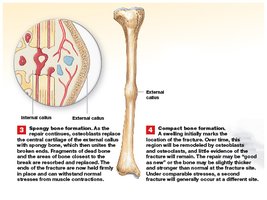
Fracture Repair Steps
Fracture Hematoma: Blood clot forms, bone cells die.
Callus Formation: Internal and external calluses stabilize fracture.
Spongy Bone Formation: Osteoblasts replace cartilage with spongy bone.
Compact Bone Formation: Remodeling restores bone structure.
Effects of Aging on Bones
Aging leads to decreased bone mass and increased risk of fractures.
Osteopenia: Reduction of bone mass, begins between ages 30-40.
Osteoporosis: Severe loss of bone mass, common in postmenopausal women.
Consequences: Fragile limbs, reduced height, tooth loss.